
Forest slug
Arion silvaticus
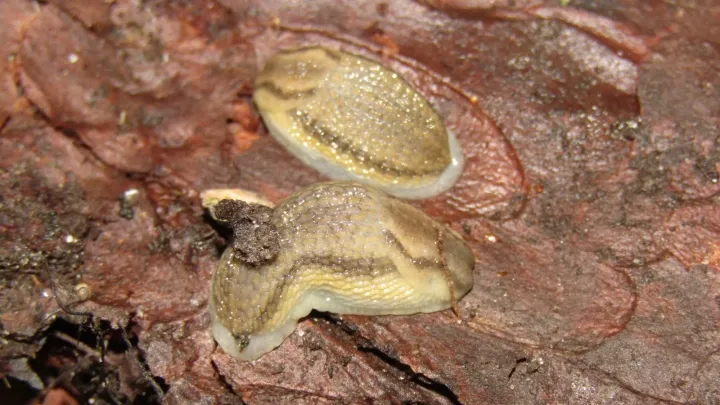
Description
How to identify
Arion silvaticus is a species of air-breathing land slug belonging to the family Arionidae. These small slugs typically measure between 30 and 50 mm when fully extended.
The coloration of the body is generally gray or brownish, characterized by distinct dark lateral stripes running along the sides of the mantle and body.
The sole of the foot is usually whitish or light-colored, which serves as a key diagnostic feature for distinguishing it from other closely related slug species.
As a moisture-dependent organism, the forest slug requires a high-humidity environment to prevent dehydration. It thrives in woodland debris but frequently invades gardens and agricultural plots.
The life cycle lasts up to two years. They are hermaphrodites and reproduce by laying eggs in damp soil, under logs, or within moist decaying plant material.
What it damages
The forest slug is a generalist herbivore (polyphage) that feeds on a wide range of vegetable, fruit, and ornamental plants, causing significant economic loss.
Common targets include lettuce, cabbage, cucumbers, strawberries, and young seedlings of legumes, which are particularly vulnerable during their initial growth stages.
They consume leaf tissue, often leaving irregular holes, and can entirely defoliate young plants, leading to stunted growth or total plant mortality.
Fruit damage is a major concern, as slugs burrow deep into strawberries and other ground-level produce, rendering the crop unmarketable and susceptible to rot.
- Consumption of young leaves and soft plant stems
- Deep gouging of strawberries and low-growing fruits
- Economic loss due to ruined vegetable produce
- Secondary infections caused by slime trails and tissue damage
Signs of infestation
The most prominent sign of a forest slug infestation is the presence of shiny, silvery mucus trails found on soil, plant foliage, and fruit skins.
Damage is characterized by ragged, uneven holes in leaves. In severe cases, the foliage may appear skeletonized, with only the harder veins remaining.
Daytime activity is rare; the slugs hide in dark, humid places such as beneath stones, garden boards, thick mulch, or dense vegetation.
Plants often exhibit signs of rotting or fungal growth at the site of the damage, as the slug's slime and mechanical injury create entry points for pathogens.
Nighttime monitoring with a flashlight is the most effective way to observe the slugs directly while they are actively feeding on the crop.
Control measures
Managing Arion silvaticus requires an integrated approach that prioritizes habitat modification, mechanical control, and responsible chemical intervention.
Cultural practices are essential: keeping the garden clean, removing weeds, and eliminating piles of debris will reduce the available shelters for these pests.
Mechanical trapping is highly effective for smaller garden areas. Containers filled with beer or fermented sugary solutions serve as reliable attractants for collecting and removing slugs.
Physical barriers like coarse sand, crushed eggshells, or diatomaceous earth applied around the base of plants can deter slugs, though these must be replenished after rain.
When necessary, molluscicides containing iron phosphate are recommended. These are safer for domestic animals and wildlife compared to older metaldehyde-based formulations.
Taxonomy
- Latin name
- Arion silvaticus
- Order
- Molluscs
- Family
- Arionidae
- EPPO code
- ARIOSY
Discussion
No discussions yet — be the first.