
Arhopalus productus
Arhopalus productus
Description
How to identify
Arhopalus productus is a species of longhorn beetle (family Cerambycidae) known for its role as a wood-boring pest in various coniferous forest ecosystems.
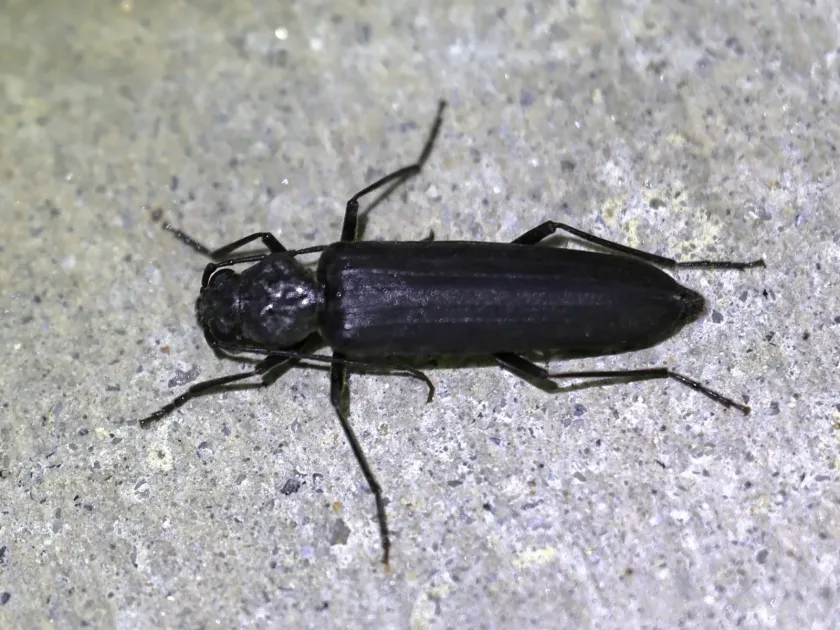
Adult beetles typically range from 15 to 25 mm in length, possessing an elongated, flattened body that is generally dark brown or black in coloration.
The insect's head features prominent mandibles and medium-length antennae, while the pronotum is structured to assist in maneuvering through narrow bark crevices.
The larval stage consists of creamy-white, legless grubs that have a heavily sclerotized head capsule specifically designed for tunneling into dense wood fibers.
Pupation occurs within a specialized chamber (pupal cell) created by the mature larva, usually located just beneath the bark surface or within the sapwood.
What it damages
This pest primarily attacks coniferous trees, with a strong preference for pine (Pinus), spruce (Picea), and occasionally fir (Abies) species.
The beetle typically targets weakened, stressed, or fallen trees, although it can occasionally infest healthy trees under specific environmental stressors.
Larval boring activity causes extensive tunneling in the sapwood and heartwood, which significantly degrades the structural integrity and value of the timber.
By creating deep galleries, the larvae facilitate the entry of wood-decay fungi, which accelerate the decomposition of the wood and the decline of the host tree.
In forest management, high populations can lead to widespread damage, causing economic losses in timber production and plantation silviculture.
When it appears
Adult beetles are most active during the summer months, typically appearing between June and August depending on the local climate and temperature.
They are primarily nocturnal or crepuscular, spending the daylight hours hiding under bark scales or in dark crevices of the host tree's trunk.
The life cycle of Arhopalus productus typically spans one to two years, with the majority of the developmental time spent in the larval stage inside the wood.
Mating occurs shortly after emergence, and females lay eggs within bark cracks, allowing larvae to bore directly into the nutrient-rich cambium layer.
Overwintering takes place in the larval stage, deep within the wood, which provides insulation against cold temperatures and protection from many predators.
Signs of infestation
The presence of this pest is often indicated by the accumulation of frass (fine wood dust) near entry holes on the bark of the infested tree.
Resin flow or bleeding on the trunk surface is a common defensive response by the tree as it attempts to repel the boring efforts of the invading larvae.
- Presence of characteristic oval-shaped exit holes once the adults have completed their transformation and emerged.
- Winding, tightly packed galleries under the bark, often containing larval frass and wood shavings.
- Yellowing of needles or crown dieback as the vascular system of the tree is compromised by larval feeding.
If the bark is removed, distinct meandering tunnels in the sapwood become visible, which confirm the activity of the larvae within the tree.
Audible sounds of gnawing coming from the trunk during quiet periods of the late summer can indicate an active infestation of wood-boring larvae.
Control measures
Effective forest hygiene is the primary control method, involving the prompt removal and processing of infested or fallen timber before adults emerge.
Proper scheduling of logging operations and storage management is essential to prevent fresh logs from becoming targets during the beetle's flight period.
Pheromone-baited traps are useful for monitoring population levels and assessing the risk of infestation in specific forest stands or nursery areas.
Insecticidal sprays are generally reserved for high-value ornamental trees or nursery seedlings and must be applied strictly according to regional guidelines.
Encouraging natural predators such as woodpeckers and parasitic wasps helps maintain the beetle population at sustainable levels within balanced forest ecosystems.
Taxonomy
- Latin name
- Arhopalus productus
- Order
- Coleoptera (beetles)
- Family
- Cerambycidae
- EPPO code
- ARHOPR
Discussion
No discussions yet — be the first.