
Arhopalus
Arhopalus
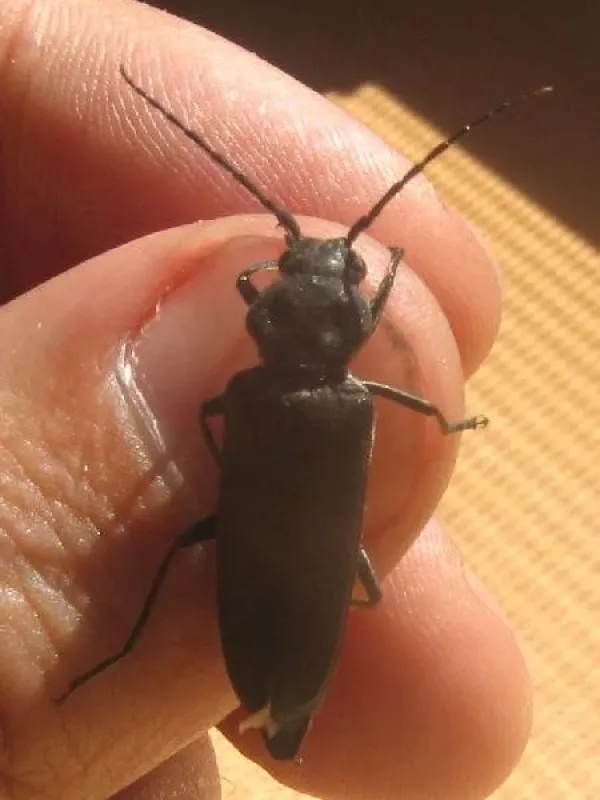
Description
How to identify
Arhopalus is a genus of longhorn beetles belonging to the family Cerambycidae and the order Coleoptera. The most common species, Arhopalus rusticus, is widely distributed throughout coniferous forests in the Northern Hemisphere.
Adult beetles have an elongated body, typically measuring 15 to 30 mm in length. Their coloration ranges from dark brown to black, and their elytra (wing covers) have a characteristic matte texture with longitudinal ridges.
The larvae are white, legless, and possess powerful mandibles designed for boring through wood. A distinct chitinized plate on the prothorax serves as a key identification feature when examining larvae found in galleries.
The life cycle of Arhopalus usually spans two to three years, depending on environmental conditions, host tree quality, and regional climate. This extended period allows larvae to develop deep within the wood tissue.
These beetles are nocturnal or crepuscular. During the day, they remain hidden in deep bark crevices or beneath loose bark, avoiding light, which makes them difficult to observe during standard daylight inspections.
What it damages
The primary hosts of Arhopalus are coniferous trees, especially pine, spruce, and fir. The beetle generally targets weakened, dying, fallen, or recently harvested timber rather than healthy, vigorous trees.
Larvae create extensive and winding galleries within the sapwood and eventually penetrate the heartwood. This activity destroys the structural integrity of the wood, rendering it unsuitable for high-quality lumber.
In forestry, Arhopalus is considered a significant technical pest. The holes created by larvae significantly reduce the commercial value of logs, leading to major economic losses for the timber industry.
Lumber yards and storage facilities are particularly vulnerable if logs are left exposed for long periods. If wood is not processed or treated in time, mass infestation can occur, destroying large volumes of stored materials.
While their role in decomposing woody debris is ecologically important, their presence in commercial pine forests requires careful monitoring to ensure that timber quality remains within industry standards.
When it appears
The adult flight period typically occurs during the summer months, starting in early June and lasting until late August. This is the time when females actively search for suitable hosts to lay eggs.
Peak activity is observed during warm, humid summer nights. During these times, beetles are attracted to artificial light sources, which can sometimes be used as a monitoring tool for population density.
Larvae are active throughout the entire year, feeding and growing within the wood. While their metabolic rate decreases during colder winter months, they continue to develop provided the internal wood temperature remains favorable.
Pupation occurs within specialized chambers prepared by the larvae. This stage usually lasts a few weeks, occurring in late spring or early summer before the adults emerge to begin the cycle again.
The duration of the flight period can vary annually based on weather fluctuations, making it essential to schedule forestry operations, such as harvesting, to avoid the peak flight times of these beetles.
Signs of infestation
The most prominent sign of infestation is the presence of distinct oval-shaped exit holes on the surface of the bark, which indicate that a new generation of adult beetles has successfully emerged.
The accumulation of frass (fine wood shavings mixed with excrement) at the base of the trunk or within bark fissures is a clear indicator that larvae are actively boring into the wood.
In quiet settings, one might hear the faint clicking or crunching sounds of larvae feeding deep within the wood, which is often more noticeable during the nighttime or early morning hours.
Loose or sloughing bark, revealing the underlying galleries etched into the wood surface, is a sign of advanced infestation, commonly seen on downed timber or dead stumps.
General tree decline and thinning foliage, while often caused by multiple factors, frequently occur alongside colonization by wood-boring beetles like Arhopalus, signaling a need for further inspection.
Control measures
The most effective management strategy is timely sanitation. Removing fallen trees, windthrows, and freshly cut logs from the forest floor prevents the buildup of beetle populations.
For stored timber, chemical treatment with appropriate insecticides during the peak flight season can prevent female beetles from laying eggs on the log surfaces.
Debarking logs immediately after harvest is a highly recommended physical control method, as the larvae spend their initial developmental stage directly under the bark layer.
- Utilizing trap logs to attract and collect beetles before they infest healthy areas.
- Scheduling timber harvesting and processing to ensure wood is moved out of the forest before the adult emergence period.
- Encouraging natural predators such as woodpeckers and specialized parasitic wasps.
Effective pest management relies on strict compliance with forestry regulations and keeping logging sites clean of woody waste to minimize habitat availability for Arhopalus.
Taxonomy
- Latin name
- Arhopalus
- Order
- Coleoptera (beetles)
- Family
- Cerambycidae
- EPPO code
- ARHOSP
Discussion
No discussions yet — be the first.