
Argiope lobata
Argiope lobata
Description
How to identify
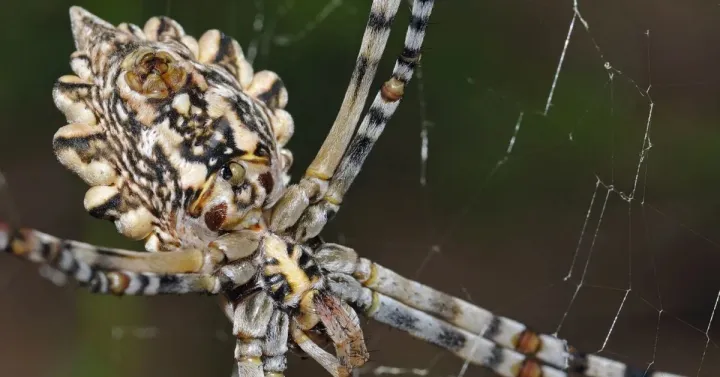
Argiope lobata is a prominent species of orb-weaver spider characterized by its striking appearance and the unique shape of its abdomen. Females are notably larger than males and feature deep lobes along the edges of the abdomen.
The coloration typically consists of silver, white, and dark patterns, providing excellent camouflage against vegetation. The long legs exhibit distinct banding, which is a hallmark of this species.
Males are much smaller and less conspicuous, often going unnoticed as they remain near the outskirts of the female's large web. The sexual dimorphism is pronounced and easily observable during the breeding season.
Female body length can reach up to 25 millimeters. A key identification feature is the web, which includes a zig-zag patterned structure in the center, known as a stabilimentum.
These spiders prefer sunny, open areas and are commonly found in agricultural fields, tall grasses, and gardens, where they construct their webs between plants.
What it damages
It is important to clarify that Argiope lobata is not a herbivore; it does not feed on plant tissues. It is a predatory spider that functions as a natural biological control agent in the field.
Potential damage is limited to mechanical stress on small or young plants, as the weight of the large web can pull on stems and potentially interfere with the growth of tender shoots.
From an agronomic perspective, the presence of these spiders is often beneficial because they capture a wide range of insects, including many agricultural pests that get trapped in their webs.
In ornamental plant nurseries, the presence of spider webs may be considered a nuisance, as it affects the aesthetic appeal and marketability of the plants for retail sale.
There is no economic justification for targeted chemical control of this species, as it does not pose a threat to crop yields or plant health.
When it appears
Adult activity of Argiope lobata is primarily observed during the late summer, peaking from July through the onset of autumn. This is when they are most actively building webs and reproducing.
Earlier in the season, younger individuals are present but remain smaller and less visible within the dense foliage of the habitat.
Breeding occurs toward the end of summer, after which females produce large, jug-shaped cocoons to protect their eggs through the winter months.
The life cycle is highly temperature-dependent, with warmer summers leading to faster development and potentially higher population density by late summer.
After the reproductive phase, adult spiders die off as cold weather approaches, leaving behind the protected egg sacs for the next generation.
Signs of infestation
The most reliable sign of the presence of Argiope lobata is the existence of large, vertical orb-webs stretched between vegetation, featuring the signature zig-zag stabilimentum in the center.
The spider itself is easily spotted sitting head-down in the center of the web during the day, waiting for prey.
During autumn, one may observe brownish, hardened cocoons attached to stalks or branches, which serve as the over-wintering site for the next generation.
- Large radial webs with a zig-zag center.
- Visible spider occupying the center of the web.
- Brown, jug-shaped egg sacs on plant stems.
- Reduction in flying insects in the immediate area.
These signs indicate a healthy, balanced micro-ecosystem where these predatory spiders are actively foraging.
Control measures
As Argiope lobata is a beneficial predator, there are no recommended control measures to eradicate them from agricultural settings.
If the webs interfere with specific horticultural or manual tasks, they can be removed carefully with a tool without harming the surrounding plant structure.
Using broad-spectrum insecticides will eliminate the spider population but is discouraged, as it removes a natural pest controller and disrupts the biodiversity of the field.
In ornamental settings, maintaining good sanitation and managing weed growth can naturally limit the number of spiders by reducing the number of suitable sites for web attachment.
The best approach is to encourage the presence of these spiders as part of an Integrated Pest Management (IPM) strategy to naturally suppress insect pest populations.
Taxonomy
- Latin name
- Argiope lobata
- Family
- Araneidae
- EPPO code
- ARGOLO
Discussion
No discussions yet — be the first.