
Yellow garden spider
Argiope aurantia
Description
How to identify
The yellow garden spider (Argiope aurantia) is a prominent member of the orb-weaver family. Females are easily recognized by their striking black and yellow markings and large, sturdy bodies.
A distinctive feature of this species is the stablementum, a heavy, zig-zagging silk structure woven into the center of the orb web to attract prey and provide stability.
These spiders are solitary hunters. Males are significantly smaller and less conspicuous, often seeking out females for mating during late summer months.
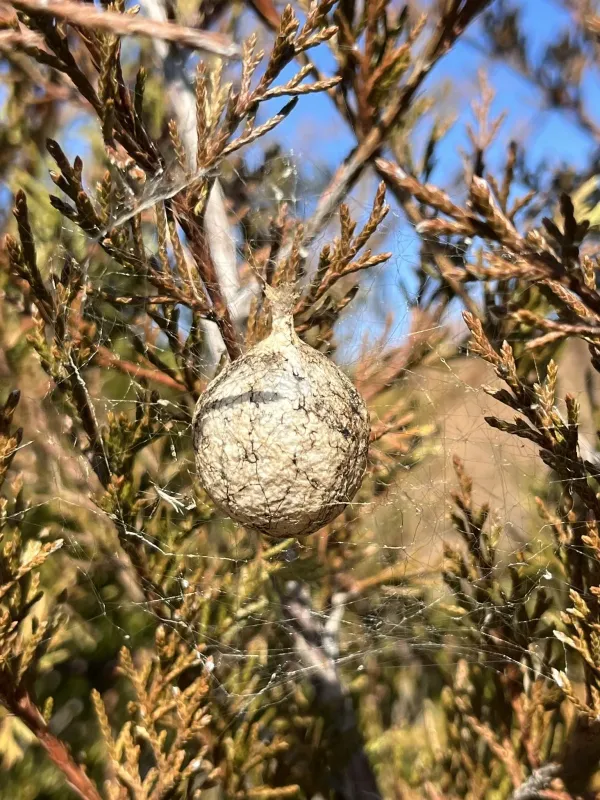
The lifecycle is strictly annual. The species overwinters in the egg stage within protective, papery cocoons often attached to vegetation or structures.
Biologically, they prefer open, sunny areas with high concentrations of flying insects, making gardens and meadows ideal habitats for their webs.
What it damages
The yellow garden spider is not a plant pest. It feeds exclusively on insects and does not consume or damage any part of cultivated plants.
There is no economic damage associated with this species. Its presence in a field or greenhouse does not negatively impact crop yields or plant vitality.
Some growers might perceive the web as a nuisance, but it remains a structural element for hunting, not a parasitic or sap-sucking threat to foliage.
As a predator, this spider actually contributes to integrated pest management by consuming common agricultural pests like flies, wasps, and beetles.
Since they do not interact with the plant's vascular or photosynthetic systems, they should be considered beneficial allies rather than threats to agriculture.
When it appears
Adults become most active and visible during the late summer and early autumn, which corresponds with peak insect activity in most temperate regions.
The spiderlings emerge from their egg sacs in the spring once temperatures are consistently warm enough to support their hunting activities.
As the summer progresses, the spiders expand their webs to capture larger prey, allowing the females to reach full maturity and reproductive capacity.
With the arrival of the first hard frosts, the mature adults perish, having laid their eggs in secure cocoons to ensure the next generation's survival.
The seasonal presence is highly predictable, making it easy for growers to observe their development throughout the growing season.
Signs of infestation
The most obvious sign of presence is the large, circular web positioned between stems of tall plants or nearby structures, featuring the characteristic zig-zag pattern.
The spider is usually stationed directly at the center of this web, often holding its legs in an 'X' shape, waiting for vibrations caused by trapped insects.
Underneath the web, growers may find the discarded remains of prey, which is a clear indicator that the spider is actively patrolling the area.
During late autumn, one may spot the brown, urn-shaped egg sacs suspended in protected vegetation, which indicates the population will persist until next year.
Their large, colorful appearance makes them very difficult to miss during routine inspections of vegetable rows or flower beds.
Control measures
No chemical or biological control methods are necessary as these spiders are not pests and provide ecological benefits to the garden environment.
If web location interferes with human activity, they can be gently removed with a broom or stick and relocated to a less obstructive area of the garden.
Avoid broad-spectrum insecticide use, as this will eliminate beneficial predators like the garden spider, leading to potential outbreaks of actual insect pests.
Promoting a balanced garden ecosystem ensures that these spiders remain a part of the natural control network, keeping harmful insect populations in check.
- Manual removal of unwanted webs with a soft brush.
- Maintaining garden cleanliness to reduce suitable web attachment points.
- Preserving natural habitat corridors around the field edges.
- Avoiding non-selective pesticide applications near spider habitats.
Taxonomy
- Latin name
- Argiope aurantia
- Family
- Araneidae
- EPPO code
- ARGOAU
Discussion
No discussions yet — be the first.