
Argiope appensa
Argiope appensa
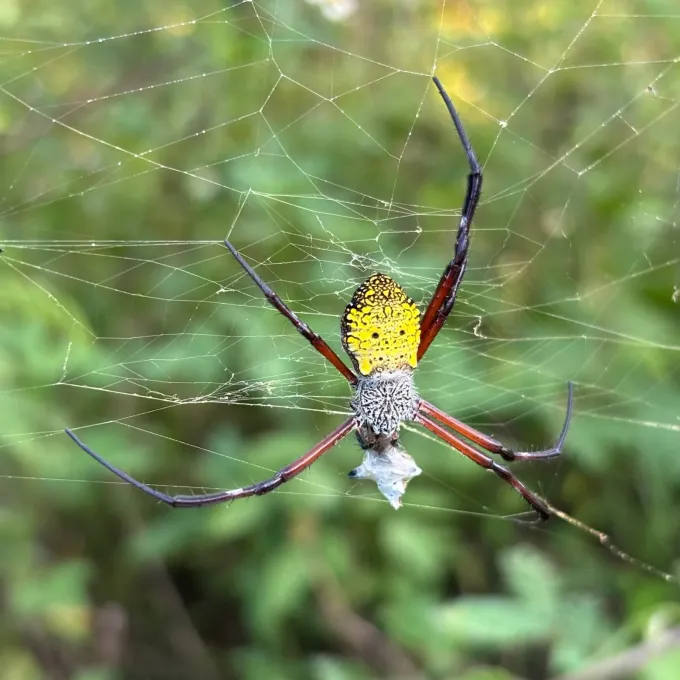
Description
How to identify
Argiope appensa, commonly known as a type of garden spider, belongs to the family Araneidae. This species is famous for its striking appearance and the construction of large, intricate, orb-shaped webs that are prominently displayed in gardens and agricultural fields.
Adult females are significantly larger than males and possess a vibrant pattern of yellow and black stripes on their abdomen. This specific coloration is a defensive mechanism, as it mimics toxic or distasteful insects to deter potential avian predators.
The biological lifecycle of Argiope appensa involves the production of egg sacs, which are carefully placed in protected areas during the late season. These sacs contain numerous eggs that survive through the colder months, ensuring the emergence of the next generation in the following spring.
The species constructs a stabilizing structure in the center of its web, known as a stabilimentum. This zig-zag pattern of silk is thought to enhance the visibility of the web for birds to avoid, or potentially to camouflage the spider while it waits for prey.
As a predator, this spider plays a crucial role in maintaining the balance of the ecosystem. It specializes in capturing various insects that fly into its web, including many species that are considered pests in agricultural or garden settings.
What it damages
Argiope appensa is not considered an agricultural pest. It does not feed on plant tissues, does not bore into stems, and does not transmit plant diseases. Its diet consists entirely of insects and small invertebrates, making it an entirely predatory species.
The only potential for damage is indirect. In some instances, the presence of large, sticky webs in commercial crops can become a nuisance. They may interfere with routine inspections, pruning, or the mechanical harvesting of crops, especially in densely planted rows.
In greenhouses, excessive spider webs may collect dust and debris, which can impact the overall hygiene of the facility. While this does not damage the plants themselves, it may require additional maintenance to keep the growing environment tidy.
There is sometimes a concern that they might capture beneficial insects, such as pollinators. However, studies show that Argiope appensa is a generalist predator and typically catches a wide variety of insects, with little significant negative impact on pollination rates in managed systems.
Therefore, farmers are encouraged to view these spiders as allies rather than enemies. They provide free, natural pest control services by reducing the overall insect load on a farm throughout the growing season.
When it appears
The activity of Argiope appensa is highly seasonal, primarily coinciding with the warmer months of the year. Juveniles emerge in the late spring, and as they feed and grow, they begin building larger webs to accommodate their increasing size.
Mid-to-late summer is the period of peak activity for this species. This is when the spiders are at their most visible, as the adult females maintain large webs in open, sunny areas to maximize their potential catch of large prey like grasshoppers or beetles.
As autumn approaches, the spiders focus on reproduction. The webs become essential for the survival of the species, as the nutrients gained from prey are redirected toward egg production. After mating and laying eggs, the adults typically reach the end of their lifecycle.
The winter months are spent in the egg stage. The durable, silk-wrapped sacs are designed to withstand environmental fluctuations, protecting the next generation until the return of favorable temperatures.
For agricultural planning, understanding this cycle allows for better management of fields. If necessary, any maintenance or removal of webs should be done with an understanding that the spider population will naturally decline as the season cools.
Control measures
No chemical control measures should ever be used against Argiope appensa. Using insecticides to target spiders is counterproductive, as it kills the natural predators that keep pest insect populations in check and disrupts the biological control of the field.
If physical removal is necessary due to obstruction of equipment or labor, simple mechanical removal is the most efficient and recommended method. Using a stick or brush to gently clear the web is sufficient, and the spider will often move to a less intrusive location.
Cultural control practices are the best way to limit the spiders' presence. Maintaining clear walkways, regularly pruning excessive foliage, and keeping field margins mowed reduces the number of structural points where the spiders can anchor their webs.
In indoor environments or glasshouses, controlling moisture and improving airflow can discourage spiders from establishing large webs. However, even in these settings, it is often better to leave a few individuals if they are not causing direct operational issues.
Overall, the best management strategy is integration. By encouraging the presence of natural predators like Argiope appensa, growers can reduce their reliance on synthetic chemicals, fostering a more sustainable and healthy agricultural environment.
Taxonomy
- Latin name
- Argiope appensa
- Family
- Araneidae
- EPPO code
- ARGOAP
Discussion
No discussions yet — be the first.