
Rose sawfly
Arge similis
Description
How to identify
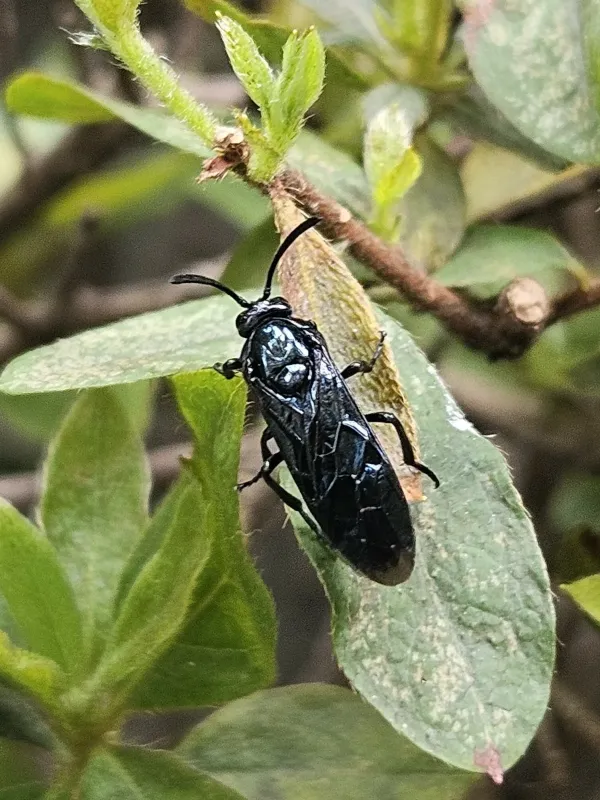
The Rose sawfly (Arge similis) is a member of the Argidae family within the order Hymenoptera. Adults are characterized by their glossy black bodies, reaching 10-12 mm in length, and clear wings with distinct dark markings.
The larvae, often referred to as false caterpillars, display a yellowish-green coloration with black spots and a prominent dark head capsule. They are known for their habit of curling into a spiral shape when disturbed or threatened.
The life cycle consists of complete metamorphosis: egg, larva, pupa, and adult. This development process allows the species to thrive and adapt efficiently to varied environmental conditions.
Overwintering occurs at the prepupal stage within tough, silken cocoons nestled in the soil or among plant debris beneath the host bushes.
Identification is easiest during the larval stage, as their gregarious feeding habits make them highly visible on the undersides of leaves during the peak growth season.
What it damages
This pest specifically targets members of the Rosaceae family. Rose bushes, both wild and cultivated, are the primary hosts, suffering significant aesthetic and physiological impacts from larval feeding.
Larvae possess chewing mouthparts that consume leaf tissue, starting from the margins or creating irregular holes. In severe cases, they can defoliate entire branches, leaving behind only the larger veins.
Defoliation significantly reduces the plant's photosynthetic capacity, leading to weakened immune systems. This makes the affected roses susceptible to secondary pathogens like black spot or powdery mildew.
The female's egg-laying activity creates incisions in the tender young stems, which can cause localized necrosis, stem distortion, and stunted growth of the new shoots.
Prolonged damage affects the overall vigor of the rose bush, leading to decreased flower production and a general decline in the plant's health over successive growing seasons.
When it appears
Adult emergence typically begins in late May and continues into early June, coinciding with the critical stage of flower bud formation in roses.
After mating, females lay eggs within incisions in the soft stems. The incubation period lasts for approximately 8 to 12 days before the young larvae hatch and begin feeding.
Larval activity reaches its peak during June and July. This is the period of highest risk for gardens and nurseries, requiring close monitoring and timely intervention.
Depending on regional climatic conditions, the pest may produce two generations per year, with the second generation emerging later in the summer, potentially through August.
Once feeding is complete, larvae move down to the soil to pupate, setting the stage for the next generation or preparing for winter diapause.
Signs of infestation
The most reliable sign of an infestation is the presence of longitudinal dark scars or wrinkled tissue on young rose shoots, marking where females have deposited eggs.
Skeletonized leaves and irregular holes in foliage are primary indicators of larval feeding. Close inspection often reveals the larvae resting on the undersides of leaves.
Their defensive behavior—curling into a characteristic coil when the plant is touched—is a definitive diagnostic sign of the Rose sawfly presence in a garden.
Shoot dieback or wilting at the tips can occur as a direct result of the stem tissue being damaged during the oviposition process or larval boring activities.
- Dark scarring on young stems.
- Ragged holes and leaf skeletonization.
- Larval colonies congregating on leaf undersides.
- Visible curling of larvae upon disturbance.
Control measures
Cultural control is highly effective; regular cultivation or hoeing of the soil around the base of the bushes during the pupation period can disrupt the cocoon stage and reduce population numbers.
Manual removal of larvae is a viable option for small-scale gardens. Collecting them early in the morning, when they are least active, is both efficient and chemical-free.
For larger infestations, systemic insecticides are recommended as they provide long-lasting protection by translocating throughout the plant's tissues.
Application of contact insecticides should be timed to hit the early larval stages, ensuring thorough coverage of the undersides of the leaves where they congregate.
Integrated Pest Management (IPM) practices, including the preservation of natural predators and the use of biological control agents, help maintain the pest population below economic thresholds.
Taxonomy
- Latin name
- Arge similis
- Order
- Hymenoptera
- Family
- Argidae
- EPPO code
- ARGESI
Discussion
No discussions yet — be the first.