
Rose sawfly
Arge scita
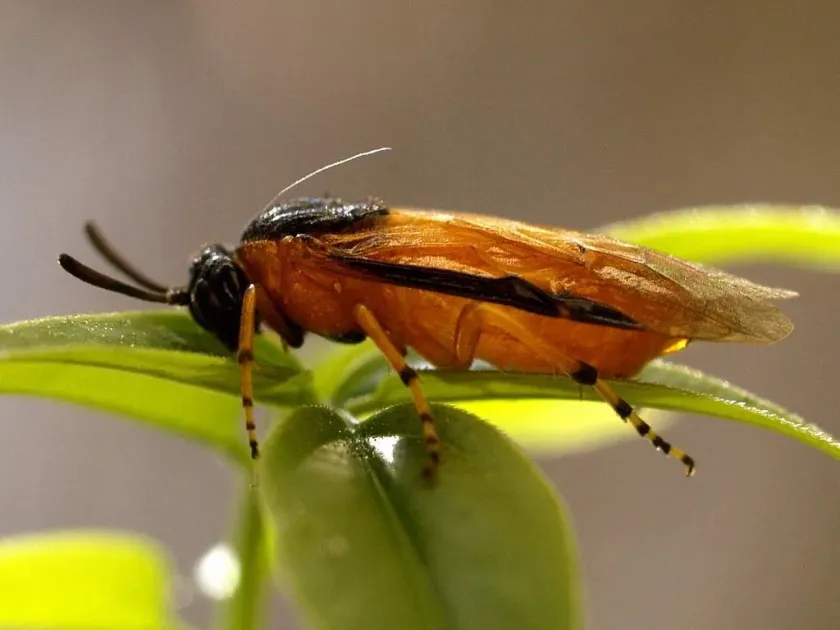
Description
How to identify
The rose sawfly (Arge scita) belongs to the Hymenoptera order and the Argidae family. The adult insect is characterized by a metallic blue or black body and clear wings with a distinct dark patch, making it relatively recognizable.
The larvae, often called false caterpillars, can grow up to 20 mm in length. Their body is yellowish-green with numerous black dots, which is a key diagnostic feature for identifying this specific species in the garden.
Adults are active during sunny days, frequently found on rose leaves. Their activity includes mating and egg-laying, which typically occurs on the younger, tender stems of the host plant.
The pupal stage occurs within dense cocoons, usually located in the top layer of the soil or among plant debris under the rose bushes. This stage allows the pest to survive winter conditions successfully.
The insect undergoes a complete metamorphosis (holometabolous development). Understanding this cycle is essential for timing interventions effectively, as the larvae are the primary stage responsible for plant damage.
What it damages
Rose sawflies primarily infest various types of ornamental roses and wild rose species (Rosa). They can cause significant distress to young or stressed bushes if left untreated.
The damage is caused by the larvae feeding on the foliage. They typically begin by eating the edges of the leaves and progress to skeletonizing the entire leaf blade, leaving only the primary veins behind.
Severe infestations reduce the photosynthetic capacity of the plants, which weakens the bushes before winter. Consequently, affected plants often show poor growth and increased susceptibility to cold damage.
Besides leaf damage, female sawflies cause injury to stems while laying eggs. This can lead to localized necrosis or deformation of shoots, reducing the overall aesthetic appeal of the rose collection.
Open wounds on leaves and stems provide entry points for pathogens. This often leads to secondary infections by fungi, causing spots or mildew that further damage the plant's health.
When it appears
Adults typically emerge in late spring, coinciding with the rapid development of new rose shoots. This is the period when they start the cycle by laying eggs in plant tissues.
Larval feeding peaks during June and July. Gardeners should monitor their bushes closely during these months, as the larvae are most active and visible on the underside of the leaves.
Depending on regional climatic conditions, the pest may produce one or two generations per year. The second generation is usually smaller but can still impact the plant's vigor toward the end of summer.
By late summer, the larvae complete their feeding cycle and descend into the soil to pupate. This migration marks the end of the active damage period for the current year.
The prepupal stage spent in the soil during autumn is the most vulnerable time to disrupt the population through soil cultivation practices.
Signs of infestation
The first indicator of a sawfly presence is the appearance of small cuts or incisions on young stems. These are made by females using their ovipositors to insert eggs.
Skeletonized leaves with ragged or eaten edges are the most prominent sign of larval activity. Upon inspection, you may find the larvae resting on the underside of the leaves.
Dark granular droppings found on the lower leaves or on the ground beneath the bush are a clear indication of a heavy infestation in the upper canopy.
Wilting tips of shoots, caused by internal damage during the egg-laying process, serve as an early warning sign that an infestation is beginning.
- Larvae with distinctive black spots on their bodies.
- Leaves stripped of tissue, showing only veins.
- Necrotic marks or scars on green stems.
Control measures
Cultural control involves regular hoeing or cultivating the soil beneath the rose bushes. This disturbs the cocoons and exposes the pupae to predators or desiccation.
Pruning and destroying infested stems at the first sign of damage can effectively limit the population growth and prevent the next generation of larvae.
Hand-picking larvae from the foliage is a highly effective, non-toxic method for small gardens, especially if performed in the early morning when insects are sluggish.
Biological treatments, such as those utilizing beneficial nematodes or microbial insecticides (e.g., Bacillus thuringiensis), can provide effective control with minimal impact on garden pollinators.
Chemical control should be reserved for severe cases. When using insecticides, always apply them outside of peak bloom times to ensure the safety of bees and other beneficial insects.
Taxonomy
- Latin name
- Arge scita
- Order
- Hymenoptera
- Family
- Argidae
- EPPO code
- ARGESC
Discussion
No discussions yet — be the first.