
Birch sawfly
Arge pectoralis
Description
How to identify
The Birch sawfly, scientifically known as Arge pectoralis, belongs to the family Argidae. The adult insect is a small wasp-like creature with a shiny black body and clear wings.
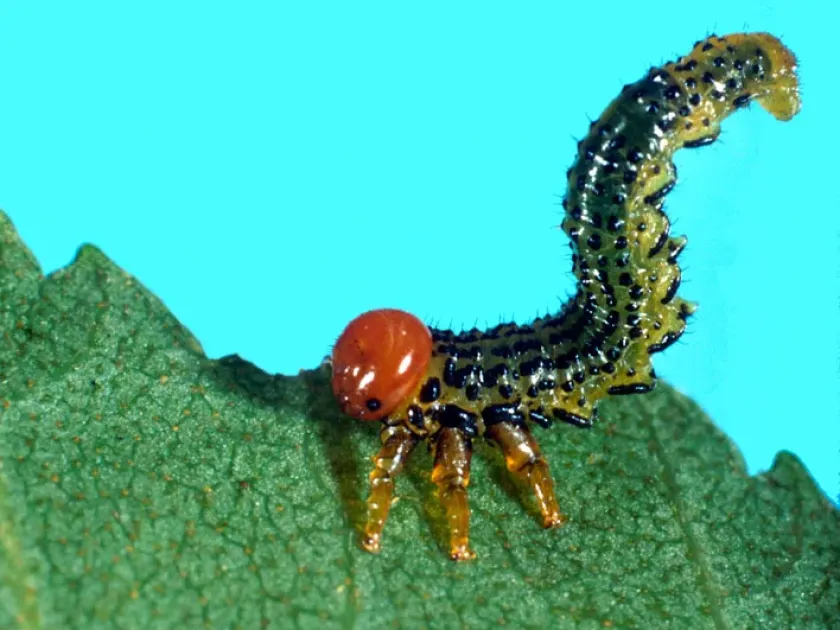
The larvae are often called false caterpillars. They are distinct, featuring a yellowish-green body with black spots, and they possess well-developed prolegs for movement.
The life cycle involves complete metamorphosis, consisting of the egg, larval, pupal, and adult stages. Females use a saw-like ovipositor to insert eggs into leaves.
These insects overwinter as prepupae in cocoons located in the soil or leaf litter at the base of the host tree, protecting them against environmental stress.
The synchronization of the adult emergence with the leaf flushing of birch trees ensures that larvae have immediate access to their primary food source.
What it damages
The primary host for this pest is the birch tree. In some cases, the sawfly may cause damage to related species within the Betula genus depending on the region.
The larvae are the destructive stage of the insect. They are highly gregarious and can strip a tree of its foliage in a relatively short period of time.
Repeated defoliation throughout the growing season weakens the tree, reducing its ability to photosynthesize and store energy for the winter months.
While mature trees can often withstand some damage, repeated infestations make them susceptible to secondary attacks from borers or fungal diseases.
In nursery settings, damage to young trees is particularly critical as it can result in stunted growth, loss of vigor, and even tree mortality.
When it appears
Adult sawflies typically emerge in late spring when temperatures rise, aligning their activity with the availability of tender new birch foliage.
After mating, females lay eggs, and larvae hatch within a couple of weeks to begin their aggressive feeding cycle during the early summer months.
Depending on the climatic zone, the Birch sawfly may complete one or two generations per year, leading to overlapping populations during mid-summer.
By late summer, the larvae finish feeding and descend to the ground to enter the soil, where they construct cocoons to prepare for hibernation.
The population density is highly dependent on weather conditions during the larval development stage, with warm, dry springs often favoring larger outbreaks.
Signs of infestation
The most obvious sign of an infestation is the skeletonization of leaves, where the soft tissue is consumed, leaving only the primary veins behind.
Feeding often occurs in groups, meaning that entire branches can appear stripped, contrasting sharply with the rest of the healthy canopy of the tree.
Frass (larval droppings) accumulating on the ground or on lower foliage is a clear indicator that a colony is currently active in the upper branches.
Larvae can be observed during the day; they often curl their bodies in an S-shape or drop to the ground when they sense vibrations or disturbances.
Thinning of the crown and premature browning or leaf drop during the summer season are significant indicators of a severe Birch sawfly presence.
Control measures
Manual removal of infested branches is a practical solution for smaller trees or individual infestations in gardens, as larvae are easy to locate.
Biological control using Bacillus thuringiensis (Bt) is highly effective against young larvae and minimizes the impact on beneficial insects and birds.
When infestations reach economic injury levels, systemic insecticides can be applied to provide long-lasting protection against active feeding stages.
Cultivating the soil around the base of the birch trees in late autumn can disrupt the overwintering pupae, significantly reducing the next season's population.
Ensuring the tree is well-watered and mulched helps the birch tree maintain vigor, making it more resilient to the stress caused by sawfly defoliation.
Taxonomy
- Latin name
- Arge pectoralis
- Order
- Hymenoptera
- Family
- Argidae
- EPPO code
- ARGEPE
Discussion
No discussions yet — be the first.