
Rose sawfly
Arge ochropus
Description
How to identify
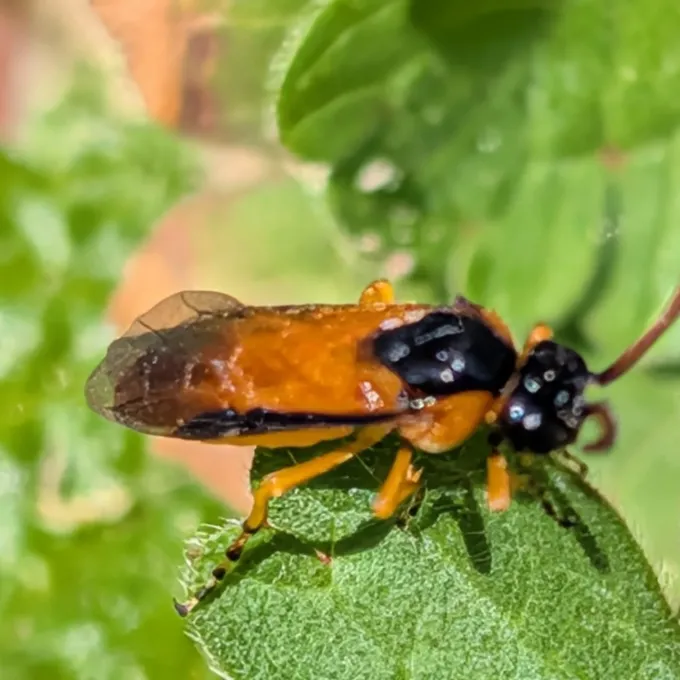
The adult rose sawfly (Arge ochropus) is a hymenopteran insect reaching 9-12 mm in length. It is characterized by a shiny black body and distinctive orange-yellow abdomen, with tinted wings.
The larvae, often mistaken for caterpillars, are pale greenish-gray with black spots along their sides. Their heads are usually yellowish or black, and they grow to about 25 mm long.
The life cycle involves complete metamorphosis. Depending on the climate, the species typically completes two generations per year, creating persistent pest pressure.
They overwinter as pre-pupae inside firm, soil-encased cocoons located in the top layers of the earth directly beneath the host plant.
The female possesses a saw-like ovipositor, which she uses to cut slits into the tender stems of rose shoots to deposit her eggs inside the plant tissue.
What it damages
Rose sawflies target various garden and wild rose species (Rosa). The primary damage is caused by the larvae, which are voracious foliage feeders.
Young larvae initially skeletonize the leaves, eating the soft tissue while leaving the veins. As they grow, they consume entire leaves, often leaving only the main stems.
Heavy infestations can lead to total defoliation of the rose bush, severely hampering the plant's ability to perform photosynthesis and weakening its structure.
The damage caused by egg-laying in shoots can lead to stem deformity and tip dieback, which is particularly detrimental to the plant's seasonal blooming cycle.
Stressed plants with defoliated stems are more susceptible to secondary fungal infections, such as black spot and powdery mildew, further decreasing plant vigor.
When it appears
Adults emerge in late spring (May to June), typically coinciding with the rose bush's active vegetative growth and the development of early buds.
A second generation emerges during July and August, often causing more extensive damage as the larvae are highly active during the peak of summer.
The larval feeding stage lasts approximately 3 to 4 weeks, after which the insects drop to the soil to begin the pupation process for the next cycle.
Warm and humid weather conditions often accelerate the development of the larvae, making late summer a critical monitoring period for gardeners.
Continuous observation is necessary from spring through late summer to prevent the buildup of pest populations that could threaten the plant's health.
Signs of infestation
Small, linear, or zigzag scarring on the stems of young shoots is the primary indicator of female sawflies laying their eggs.
The presence of skeletonized leaves in the lower canopy is a clear sign that young larvae are actively feeding on the foliage.
Finding larvae curled into a spiral shape on the underside of leaves is a definitive behavioral trait used to identify Arge ochropus.
The accumulation of frass (larval droppings) on the leaves or the ground beneath the plant serves as a late-stage warning of high pest density.
Distorted, curled, or browning leaves that do not show signs of typical aphid infestation often conceal sawfly larvae hiding inside.
Control measures
Manual removal is effective for small gardens; regularly inspecting leaves and picking off larvae by hand can prevent significant damage.
Pruning out infested shoots that show signs of egg-laying or larval damage can disrupt the life cycle and reduce the population.
Cultivating the soil around the base of the bushes in autumn can expose overwintering cocoons to predators and harsh weather conditions.
Biological treatments, such as those containing Bacillus thuringiensis, provide effective control against larvae while being safe for beneficial pollinators.
- Always spray in the evening to minimize impact on bees and other beneficial insects.
- Use systemic insecticides only as a last resort in cases of severe, widespread infestation.
Taxonomy
- Latin name
- Arge ochropus
- Order
- Hymenoptera
- Family
- Argidae
- EPPO code
- ARGEOC
Discussion
No discussions yet — be the first.