
Raspberry sawfly
Arge gracilicornis
Description
How to identify
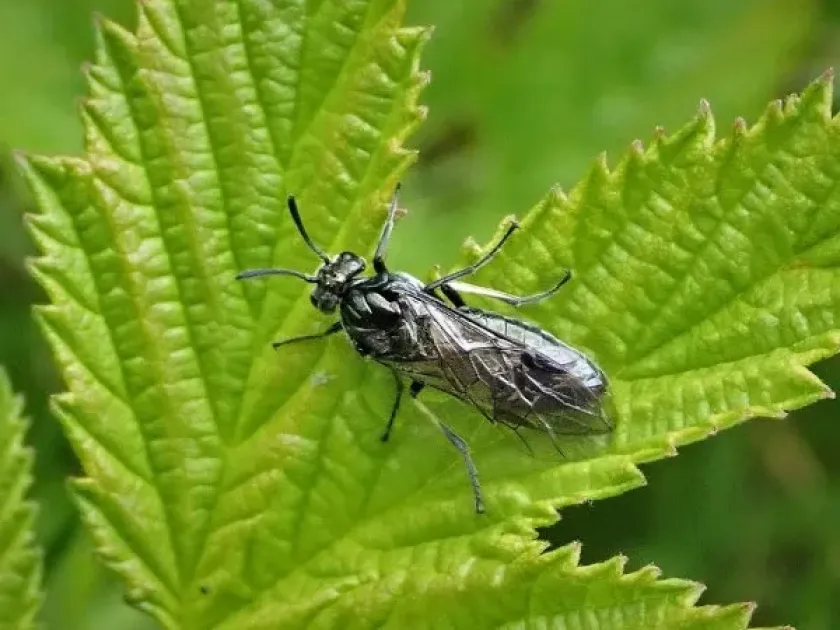
The raspberry sawfly (Arge gracilicornis) is an insect belonging to the order Hymenoptera and the family Argidae. The adult is a small, distinctively colored insect with transparent wings, which can often be found near raspberry plantations during the spring period.
The larvae, often mistaken for moth caterpillars, have a yellowish-green body with black spots. They are highly active and spend most of their developmental stage feeding on the foliage of host plants, which is the primary period for damage.
The life cycle involves complete metamorphosis: egg, larva, pupa, and adult. The insect typically overwinters in the pupal stage, encased in a cocoon buried in the soil or protected by leaf litter around the base of the raspberry canes.
The emergence of adults coincides with the onset of the growing season. Females lay their eggs into the leaf tissues, and after hatching, the larvae begin to feed, causing visible damage to the plant structures shortly after.
Depending on the climate, the sawfly may produce one or more generations per year. Warm and stable temperatures significantly accelerate the development of the larvae, leading to more frequent and intense feeding cycles.
What it damages
The primary host plant for this sawfly is the raspberry (Rubus idaeus). It prefers both domestic and wild varieties, frequently attacking commercial plantings if the pest is present in the surrounding ecosystem.
The larvae are responsible for the damage, as they consume leaf tissue. They skeletonize the leaves by eating the softer parts of the blade while leaving the central and secondary veins intact, which significantly weakens the plant's ability to photosynthesize.
Severe infestations lead to premature defoliation, which causes significant stress to the raspberry canes. This weakening reduces the plant's winter hardiness, making it more susceptible to frost damage and secondary fungal infections.
Yield loss is a common consequence of heavy sawfly pressure. The lack of sufficient energy reserves in the roots, caused by the destruction of the leaf surface, results in lower fruit production in both the current and the following season.
In addition to direct feeding, the constant damage makes the plants less vigorous, preventing the development of strong replacement canes which are essential for sustainable raspberry production.
Signs of infestation
The most recognizable sign is the presence of irregular holes or lacy leaf patterns on the raspberry foliage. Larvae usually start feeding from the edges, moving towards the center of the leaf as they grow.
By inspecting the underside of the leaves, one can often find the larvae grouped together. Their characteristic defensive behavior, such as curling into an S-shape when disturbed, makes them easier to spot during field checks.
Fine, dark granular frass left on the leaves below the feeding area is a clear indication of a recent or ongoing infestation. Detecting this early allows for a more targeted response before the damage becomes widespread.
During sunny days, adults can be observed flying around the raspberry patches, which indicates that egg-laying is likely taking place. Early identification of these adults is crucial for timely pest management.
Stunted growth of new canes and an overall sickly appearance of the foliage compared to healthy plants in the same row are signs that the sawfly population has been active in the area for some time.
Control measures
Cultural control measures, such as deep cultivation around the base of the plants in late autumn and early spring, are effective for destroying the overwintering pupae hidden in the soil surface.
Biological control includes the use of B. thuringiensis or other insect-pathogenic fungi that specifically target the larvae while remaining safe for beneficial pollinators like honeybees and bumblebees.
Chemical intervention should be considered a last resort when the infestation exceeds economic thresholds. It is essential to apply any approved insecticides before the flowering stage to avoid harming beneficial insects.
Monitoring using yellow sticky traps can help detect the first arrival of adult sawflies, providing a window of opportunity to implement mechanical or biological controls before the larvae emerge.
- Maintain vigorous plant growth through proper fertilization and irrigation.
- Keep the area free of weeds that might serve as alternative host plants.
- Encourage natural predators such as parasitic wasps and predatory bugs.
Taxonomy
- Latin name
- Arge gracilicornis
- Order
- Hymenoptera
- Family
- Argidae
- EPPO code
- ARGEGR
Discussion
No discussions yet — be the first.