
Arethusana
Arethusana
Description
How to identify
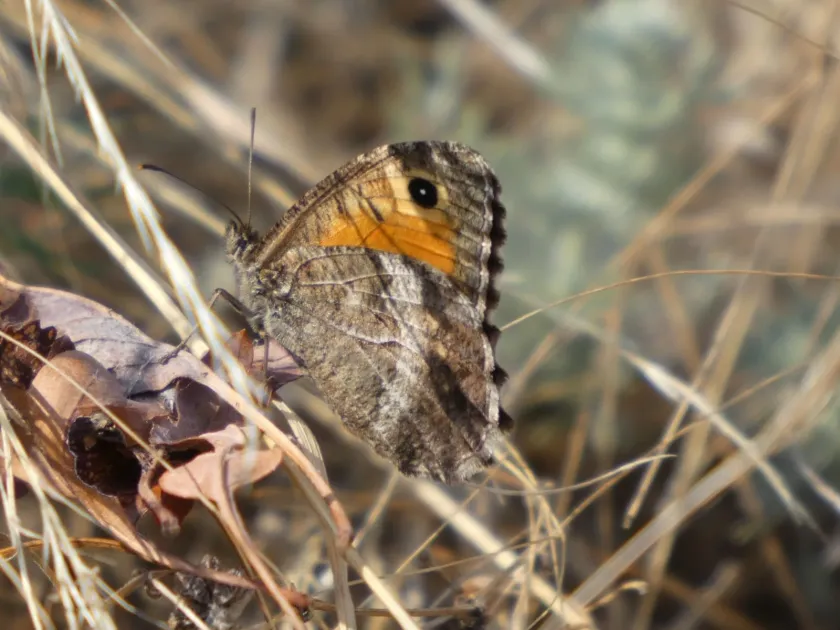
Arethusana (Latin Arethusana arethusa) is a butterfly belonging to the Nymphalidae family and the Satyrinae subfamily. The adult butterfly typically has a wingspan of 40–50 mm, with a brown upper wing surface featuring ochre bands and dark eyespots.
The underside of the wings is colored in lighter greyish-brown tones, providing excellent camouflage when resting on soil or dry grass. The body is covered in dense hairs, which is characteristic of many representatives of the Satyrinae subfamily.
The larva (caterpillar) of the Arethusana is spindle-shaped, reaching up to 30 mm in length, and is usually light green or yellowish-grey with longitudinal light stripes. The tail end features two short appendages, which are useful for species identification.
The pupa is typically formed in a light cocoon among plant debris or directly on the soil surface. It has a brownish hue and a smooth surface, allowing it to blend perfectly into its natural habitat.
This species is highly adapted to open landscapes, dry meadows, and forest clearings where perennial grasses grow, which serve as the primary food source for the larval stage.
What it damages
The damage is primarily caused during the larval stage as the caterpillars feed on the aerial parts of various grasses. While not considered a major agricultural pest, it can occasionally impact the productivity of pastures and hay meadows.
The larvae prefer a wide range of perennial grasses, including species from the Festuca, Poa, and Stipa genera. Feeding leads to the yellowing and necrosis of leaf tips, which reduces the overall biomass of the plant.
Damage is most prevalent in fields adjacent to uncultivated land, forest edges, or fallow grounds. In cases of high population density, the larvae may significantly thin out the stand, affecting grazing quality.
While trophic links to cereal crops exist, the species rarely poses a direct threat to commercial grain yields when proper field management is practiced.
The economic impact of Arethusana in modern agriculture is classified as minor, requiring monitoring primarily in areas with abundant natural steppe ecosystems.
When it appears
The lifecycle of Arethusana consists of one generation per year, which limits its period of activity. Adults typically emerge in mid-summer, with peak flight activity occurring between late July and August.
Females lay eggs singly or in small groups on the stems and leaves of host grasses. Embryonic development lasts approximately two weeks, after which the young larvae emerge.
The larvae overwinter in the early stages of development, usually residing in the root zone of host plants or within a layer of leaf litter, which provides protection from extreme winter temperatures.
In spring, as temperatures rise and plant growth resumes, the larvae restart their feeding cycle. Pupation occurs in early summer, effectively completing the development cycle for the season.
Therefore, the most critical period for field observation and pest management interventions is the spring, when larvae are actively consuming vegetation after overwintering.
Signs of infestation
The primary sign of Arethusana presence is the appearance of irregularly eaten leaf edges on grasses. Since the caterpillars are primarily nocturnal or active on cloudy days, direct observation can be challenging.
The presence of fine, dark excrement pellets on the leaves and at the base of the plant indicates active feeding. Severely damaged sections may turn yellow and wither prematurely.
Stunted growth or thin patches in the grass stand may also indicate the presence of larval feeding sites. If multiple patches are detected, the population density may warrant further investigation.
Observing adult butterflies flying low over the grass confirms the presence of the species and suggests potential egg-laying activity in the area.
- Yellowed tips on grass blades
- Fine frass pellets found at the plant base
- Signs of foliage grazing at leaf margins
- Patchy areas of reduced grass vigor
Control measures
Effective control of Arethusana is based on integrated agrotechnical methods. Regular mowing of grass along field margins and non-arable lands prevents the buildup of pest populations near crops.
Autumn plowing of fields is a highly effective practice that destroys overwintering sites and disrupts the natural cycle of the pest, significantly reducing the spring population.
The use of biological insecticides containing entomopathogenic bacteria is recommended only in cases of high population density where the economic risk justifies the cost of application.
Crop rotation that alternates host grasses with non-host species helps reduce the overall infestation pressure in the long term.
Chemical control is rarely necessary for Arethusana, as the species usually remains well below the economic injury level in commercial farming operations.
Taxonomy
- Latin name
- Arethusana
- Order
- Lepidoptera (butterflies)
- Family
- Nymphalidae
- EPPO code
- ARETSP
Discussion
No discussions yet — be the first.