
Archlagocheirus
Archlagocheirus
Description
How to identify
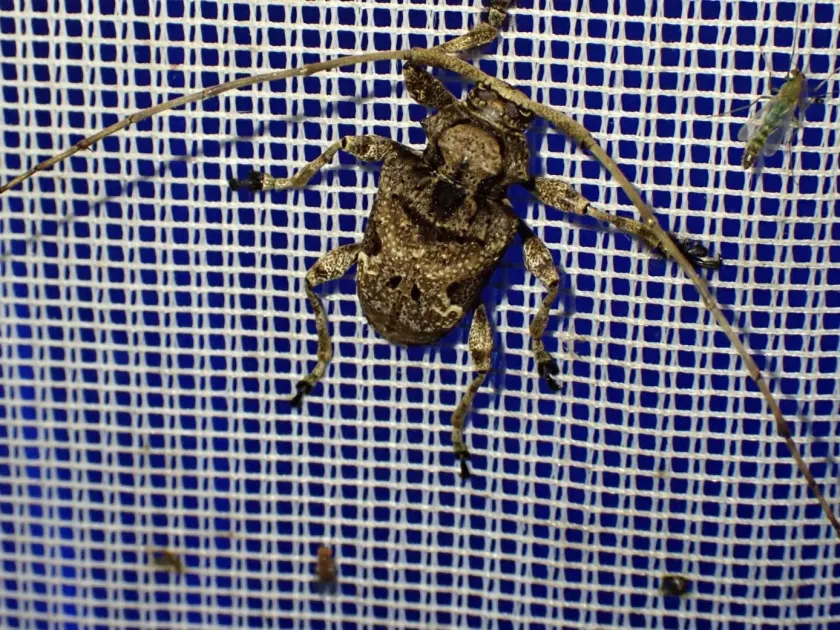
Archlagocheirus is a genus of beetles belonging to the large family Cerambycidae, within the order Coleoptera. Adult specimens typically exhibit an elongated body structure characteristic of the Lamiinae subfamily, often featuring antennae that exceed the total body length.
Their coloration ranges from grey to brown with mottled patterns, providing excellent camouflage against tree bark. The larvae of this genus display the typical longhorn beetle appearance: a cylindrical, white body with a well-developed prothorax and powerful mandibles adapted for wood-boring activities.
The insect's life cycle is strictly linked to woody plants. Adult beetles are primarily crepuscular or nocturnal, making them difficult to detect during daylight hours in infested areas.
The life cycle encompasses complete metamorphosis: egg, larva, pupa, and imago. The primary destructive work is performed by the larvae, which create extensive galleries within the bark and sapwood layers.
Identifying specific species within the genus requires detailed examination of the genitalia or specific elytral patterns, as they often resemble other members of the Acanthocinini tribe.
What it damages
This pest specializes in attacking various trees and shrubs. It poses a significant threat to fruit crops, ornamental plantings, and forest trees, particularly those stressed by drought or mechanical injuries.
Archlagocheirus larvae feed on the cambium and inner bark layers, disrupting the tree's nutrient and water transport systems. In cases of severe infestation, the host tree loses vigor and may perish.
The pest often selects trunk sections with existing bark damage or branch forks, where conditions are optimal for female beetles to deposit their eggs.
Larval boring activity creates internal cavities, which serve as entry points for secondary pathogens, such as fungal infections and bacterial rots.
The economic impact involves reduced productivity in fruit orchards, loss of aesthetic value in parks, and degraded wood quality in timber production.
Signs of infestation
The primary visual sign of infestation is the presence of holes in the bark, through which larvae expel frass — a mixture of wood dust and excrement.
In areas where larvae feed, the bark often swells, cracks, or dies, exposing the underlying galleries. This is frequently accompanied by the premature wilting of branches or the entire tree crown.
Inspection of the trunk may reveal egg-laying marks, which appear as small notches or depressions on the bark surface created by females before oviposition.
Autumnal or spring yellowing of foliage, unrelated to natural vegetation cycles, often indicates that stem damage has reached a critical stage.
During the night, adult beetles can sometimes be observed on the trunks of infested trees as they emerge for supplementary feeding or mating.
Control measures
A successful defense strategy against Archlagocheirus requires a comprehensive approach, prioritizing preventive measures and high-standard orchard management.
The most critical measure is the prompt sanitation cutting and disposal of infested branches and trees, as these act as breeding reservoirs for subsequent generations.
To protect healthy trees, trunks and major scaffold branches can be treated with lime-based washes mixed with insecticides, which deter females from ovipositing on the bark.
Pheromone traps are used to monitor adult beetle populations, allowing for targeted insecticide applications during the peak flight period.
- Regular pruning of dry and infested branches
- Removal of weeds around the base of trees
- Proper irrigation and fertilization to boost plant immunity
- Application of biological pesticides based on entomopathogenic fungi
Taxonomy
- Latin name
- Archlagocheirus
- Order
- Coleoptera (beetles)
- Family
- Cerambycidae
- EPPO code
- ARCLSP
Discussion
No discussions yet — be the first.