
Archiearis
Archiearis
Description
How to identify
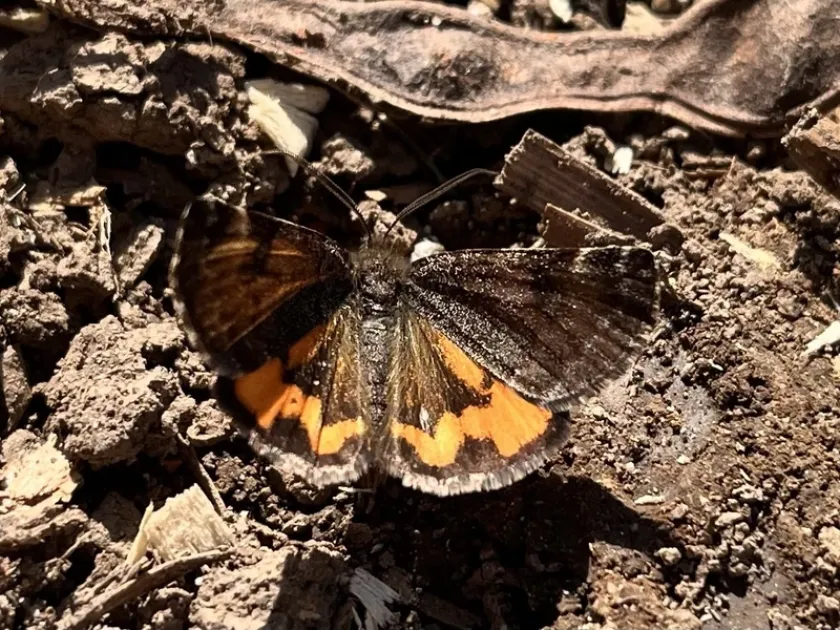
Archiearis is a genus of moths belonging to the Geometridae family. Adult moths are characterized by their medium size and distinctive bright markings on the hindwings, which serve as a defense mechanism.
Systematically, this genus falls under the order Lepidoptera. Unlike many other geometer moths, these insects are predominantly day-flying, making them more visible during the early spring months.
The larvae, or caterpillars, exhibit the typical "looper" or "inchworm" locomotion characteristic of the family, as they lack a full set of abdominal prolegs.
The caterpillars usually possess cryptic coloration, often in shades of green or brown, allowing them to blend seamlessly with the twigs and foliage of their host plants.
Pupation typically occurs in the soil or leaf litter, where the insects overwinter in the pupal stage, protected from severe weather conditions.
What it damages
The primary damage is inflicted during the larval stage, as the caterpillars have robust mandibles and a high appetite during the rapid growth phase of host trees.
Archiearis larvae primarily infest deciduous woody species, including birch, poplar, and willow, and can occasionally impact orchard trees during mass outbreaks.
Feeding damage manifests as skeletonizing or complete consumption of the leaf blades, which significantly impairs the tree's photosynthetic capability.
Heavy infestations can lead to premature leaf drop, which reduces annual wood increment and stresses the trees, potentially decreasing their overall cold hardiness.
In forestry and ornamental gardening, periodic population surges require vigilant monitoring, especially during the crucial early spring vegetation period.
When it appears
Adult Archiearis activity begins in early spring, often before the full canopy has developed, aligning with the phenological development of their host plants.
The life cycle is univoltine, meaning there is one generation per year, with eggs laid on the bark or near developing buds at the start of the season.
Larval emergence is highly synchronized with bud break, ensuring the young caterpillars have immediate access to the most nutritious plant tissues.
The larval feeding period lasts for several weeks, after which the caterpillars descend to pupate, completing their active stage before the onset of summer heat.
Consequently, the primary risk of significant damage occurs during April and May, when the new foliage is most susceptible to herbivory.
Signs of infestation
The first sign of infestation is the appearance of irregular holes in emerging leaves, accompanied by the presence of frass (caterpillar droppings) on leaf surfaces.
During inspection, one can find the larvae resting along twigs, where they use their camouflage to mimic small branches or petioles.
Silken webbing, used by the larvae to anchor themselves to the foliage, is another important visual indicator of an active pest population.
Severe infestations cause noticeable thinning of the canopy, which can be identified from a distance as the leaves are progressively consumed.
- Presence of frass on leaf surfaces.
- Skeletonized or tattered leaf margins.
- Sparse or thinning foliage in the lower crown.
- Direct observation of loopers on tender shoots.
Control measures
Management of Archiearis involves a combination of cultural and chemical strategies, depending on the pest density and the value of the host plants.
In small-scale settings like gardens, manual removal of larvae during the morning hours, when they are less active and easier to spot, is a highly effective control measure.
When populations reach economic threshold levels, biological control using Bacillus thuringiensis is recommended, as it effectively targets the larvae while sparing beneficial insect species.
Systemic or contact insecticides, particularly pyrethroids, are reserved for situations involving large-scale outbreaks where immediate protection is required.
Proactive management includes fostering populations of natural enemies and insectivorous birds, which serve as essential biological regulators in orchard and park ecosystems.
Taxonomy
- Latin name
- Archiearis
- Order
- Lepidoptera (butterflies)
- Family
- Geometridae
- EPPO code
- ARCRSP
Discussion
No discussions yet — be the first.