
Fat garden spider
Araneus grossus
Description
How to identify
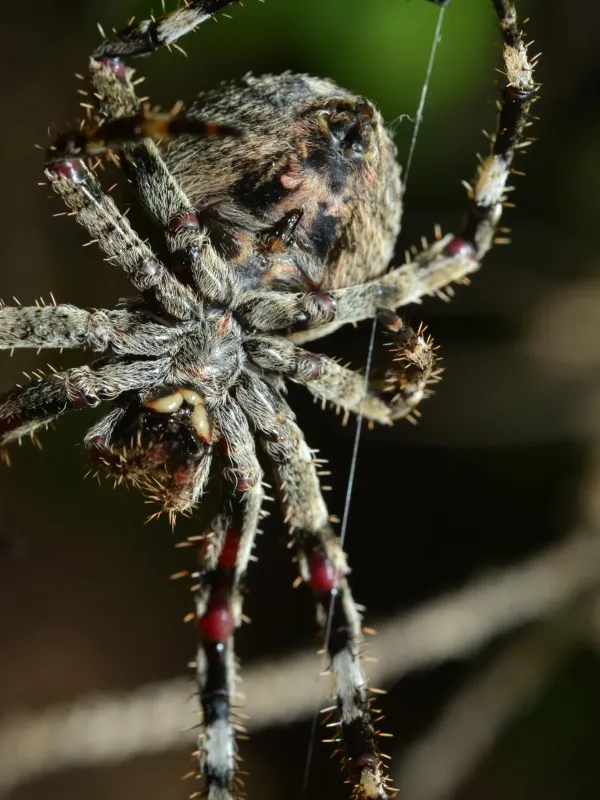
The fat garden spider (Araneus grossus) belongs to the Araneidae family, commonly known as orb-weavers. It is characterized by a large, globose abdomen and distinct dorsal markings often resembling a cross.
These spiders possess a cryptic coloration ranging from light brown to deep reddish-brown, which provides excellent camouflage against tree bark and foliage.
Females of the species are significantly larger than males and are the ones typically observed tending to the vertical, circular webs that serve as their hunting apparatus.
As nocturnal or diurnal hunters, they occupy various niches in gardens, particularly in areas with dense vegetation that supports the structural integrity of their webs.
Their systematic classification places them as apex predators of small invertebrates within the local garden micro-habitat.
What it damages
It is critical to note that the fat garden spider is not a plant pest. It does not feed on vegetation, nor does it cause any physiological damage to agricultural or ornamental crops.
They do not consume sap or plant tissues, and they do not oviposit within plant organs. Any potential "damage" is strictly limited to the presence of silk webs that may be viewed as unsightly in well-manicured gardens.
Unlike true pests that reduce yield, these spiders actively contribute to the suppression of various flying insects, some of which may be harmful to garden plants.
From an agronomic perspective, they are classified as beneficial organisms that contribute to the stability of the horticultural ecosystem.
There are no recorded instances of these spiders causing economic loss to farmers or gardeners, confirming their benign status regarding crop production.
Control measures
Because these spiders are beneficial, no control measures are required or recommended. The use of pesticides to target them would be counterproductive, as it would destroy beneficial biodiversity.
Should the presence of webs become an issue for aesthetic reasons, simple mechanical removal using a broom or water spray is sufficient to encourage the spider to relocate.
Standard horticultural practices, such as proper pruning and maintenance of vegetation, naturally limit the number of sites available for web construction.
Promoting a garden environment that includes natural predators and undisturbed areas helps maintain a healthy population of spiders that keeps other insect populations in check.
Integration of natural pest control is a core principle of sustainable agriculture, and preserving orb-weavers is a part of this ecological approach.
Taxonomy
- Latin name
- Araneus grossus
- Family
- Araneidae
- EPPO code
- ARAUGR
Discussion
No discussions yet — be the first.