
Apriona swainsoni
Apriona swainsoni
Description
How to identify
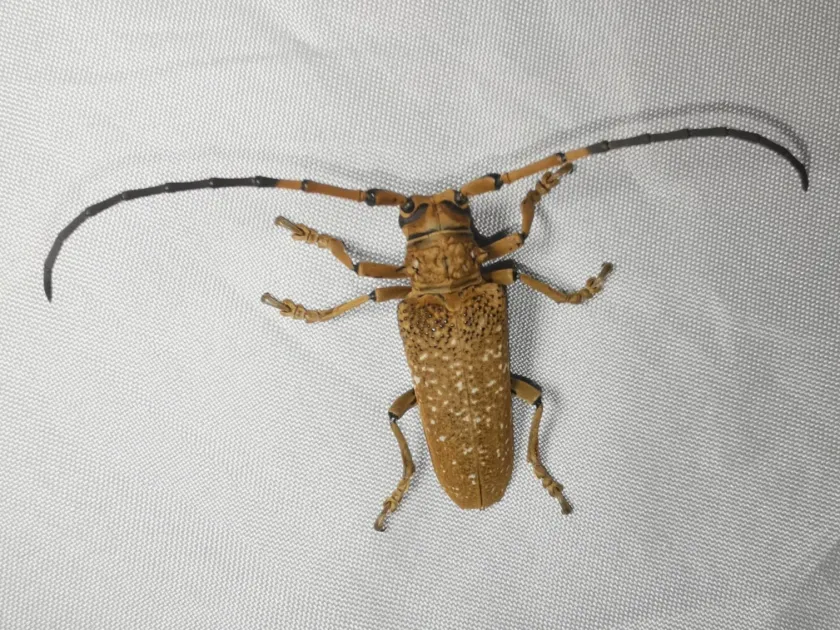
Apriona swainsoni is a species of longhorn beetle belonging to the Cerambycidae family within the order Coleoptera. These beetles are significant wood-borers that can cause extensive damage to various tree species.
Adult beetles are typically large, with elongated bodies and long antennae. They are equipped with specialized mouthparts designed to navigate and feed on woody structures.
The larvae are legless, white-to-cream colored, and possess powerful mandibles. Their primary function is to burrow into the heartwood, where they feed and develop, often remaining hidden from predators for years.
The species undergoes a complete metamorphosis, including egg, larval, pupal, and adult stages. Each stage is adapted to survive specific challenges within their host trees.
Their systematic classification highlights their evolutionary success in exploiting woody habitats, making them a persistent threat to both wild and cultivated forests.
What it damages
This pest targets a wide range of deciduous trees, including many popular fruit and ornamental varieties. The damage is primarily internal, caused by larval feeding galleries.
By consuming the cambium and heartwood, larvae disrupt the plant's vascular system, hindering the transport of water and nutrients from the roots to the crown.
Structural integrity is significantly compromised as larvae create extensive tunnels. This makes trees highly susceptible to breaking during storms or heavy winds.
Severe infestations often result in the gradual decline of the tree, characterized by canopy thinning, branch dieback, and eventually the death of the entire tree.
In nursery settings, the presence of these pests can lead to massive losses, as young trees are unable to withstand the trauma caused by larval tunnels.
Signs of infestation
Early identification of an infestation involves spotting oviposition scars, which appear as tiny slits on the tree bark where the female beetle laid her eggs.
A tell-tale sign of active infestation is the presence of frass (wood dust mixed with excrement) accumulating at the base of the tree or emerging from exit holes.
Observable canopy stress, such as yellowing leaves or wilting branches during the peak growth season, often points to internal damage caused by wood-borers.
Holes found on the trunk or large branches are indicators that the larvae have completed their development and the adult beetles have emerged to mate.
Localised bark necrosis or sap weeping near the tunnel sites are also common symptoms that warrant closer inspection of the tree's health.
Control measures
Effective control requires an integrated pest management approach, starting with the immediate removal and destruction of heavily infested limbs or trees.
Applying systemic insecticides during the peak activity period of the adult beetles can provide a barrier against egg-laying and initial larval entry.
Cultural practices, such as ensuring proper tree spacing, irrigation, and fertilization, help maintain tree vigor and improve natural resistance against pest colonization.
Monitoring the population of adult beetles using pheromone or light traps allows for the timely application of control measures before widespread infestation occurs.
- Conducting regular orchard inspections during the growing season.
- Applying protective trunk wraps to prevent female beetles from reaching suitable bark.
- Ensuring prompt sanitation by removing deadwood and stumps that serve as breeding grounds.
Taxonomy
- Latin name
- Apriona swainsoni
- Order
- Coleoptera (beetles)
- Family
- Cerambycidae
- EPPO code
- APRISW
Discussion
No discussions yet — be the first.