
Apriona flavescens
Apriona flavescens
Description
How to identify
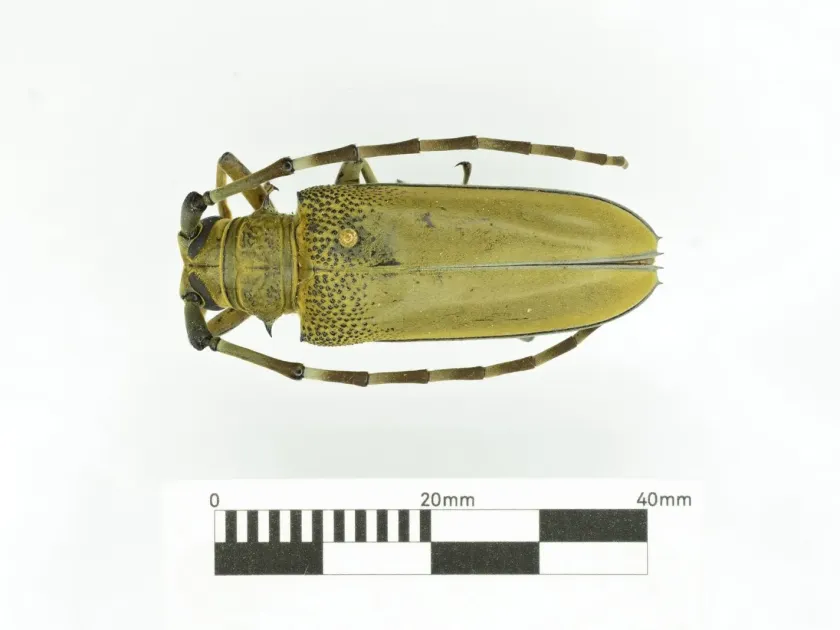
Apriona flavescens is a large species of longhorn beetle belonging to the family Cerambycidae, order Coleoptera. The adult beetle reaches a length of 35–45 mm and is covered in fine, yellowish-grey hair, which provides excellent camouflage against bark surfaces.
A key identifying feature is the extremely long antennae, which are especially prominent in males. The larvae are creamy white, cylindrical, and equipped with a heavily sclerotized head, allowing them to tunnel effectively through wood.
What it damages
This beetle is a significant wood-boring pest that targets a wide range of broad-leaved trees. Its primary hosts include various fruit species such as apple, pear, and peach, as well as forest trees like willow, elm, and poplar.
The larvae are the most destructive stage, feeding on the inner bark and sapwood, which disrupts the tree's vascular system. Adults also contribute to damage by feeding on young shoots, bark, and foliage during their maturation period.
When it appears
The life cycle of Apriona flavescens is relatively long, typically spanning 2 to 3 years to complete development from egg to adult. Adult beetles emerge in the summer, generally from June through August, to mate.
Females create small incisions in the bark to deposit their eggs. Once hatched, the larvae immediately begin tunneling beneath the bark surface, eventually moving deep into the heartwood to feed and overwinter until pupation.
Signs of infestation
The most visible sign of an infestation is the presence of frass—a mixture of wood shavings and larval excrement—piled up at the base of the trunk or at the crotches of branches.
Infested trees often display signs of severe physiological stress, including leaf yellowing, thinning canopy, and stunted growth. Large, circular exit holes on the trunk indicate that adult beetles have successfully emerged from the tree.
Control measures
Integrated pest management is crucial for control. This includes the regular inspection of orchards and the immediate removal and destruction of heavily infested limbs or trees to kill the developing larvae inside.
- Manual collection of adult beetles during the emergence period.
- Application of systemic insecticides to the trunk or canopy.
- Injecting insecticide-based pastes into larval tunnels to reach deep-seated pests.
- Promoting general tree vigor through proper fertilization and irrigation.
Taxonomy
- Latin name
- Apriona flavescens
- Order
- Coleoptera (beetles)
- Family
- Cerambycidae
- EPPO code
- APRIFL
Discussion
No discussions yet — be the first.