
Apriona cinerea
Apriona cinerea
Description
How to identify
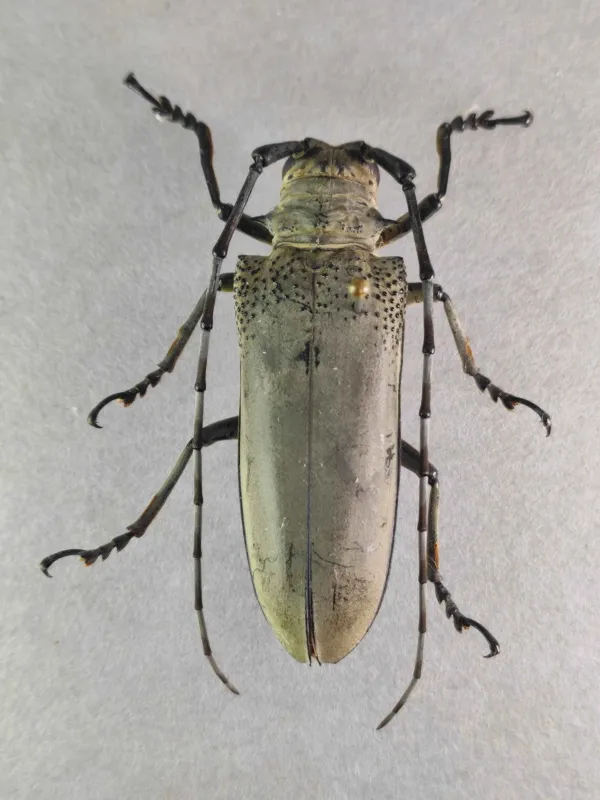
Apriona cinerea is a large beetle belonging to the longhorn beetle family (Cerambycidae), part of the Coleoptera order. Adult specimens feature an elongated body with an ash-grey color, providing excellent camouflage against tree bark.
The head of the pest is equipped with powerful mandibles capable of boring deep tunnels into wood. The adult's antennae are typically long, often exceeding the length of the body, which is a hallmark trait of the Cerambycidae family.
The larvae are legless, fleshy, and yellowish-white in color, possessing well-developed mouthparts. They live a cryptic lifestyle, spending their developmental stages deep inside the trunks and branches of host trees.
This species undergoes complete metamorphosis, including egg, larval, pupal, and adult stages. The duration of these stages varies significantly depending on the local climatic conditions.
In their natural habitat, these insects prefer regions with warmer climates where their activity period can extend over several months, facilitating rapid population growth and spread.
What it damages
This pest is a specialized wood-borer that attacks primarily deciduous tree species. Both natural forest stands and ornamental plantings in parks or private gardens are at risk of infestation.
Poplar, willow, elm, and certain fruit-bearing species are particularly susceptible. Larvae can decimate entire stands if timely preventive measures are not taken to contain the infestation source.
The host range is broad, providing optimal conditions for the insect to feed and reproduce. Trees weakened by drought or mechanical injury are the most attractive targets for oviposition.
Economic damage stems from the disruption of internal sap flow caused by deep, winding tunnels bored by the larvae. This leads to branch dieback and, in cases of heavy infestation, the total death of the tree.
Beyond direct structural damage, the exit holes serve as entry points for fungal infections and secondary pests, which drastically accelerate the decline of the infested tree.
Signs of infestation
The first visible sign of infestation is the appearance of characteristic round exit holes on the surface of the tree trunk and larger skeletal branches.
Frass, which resembles sawdust produced by the larvae while excavating internal tunnels, can often be found at the base of the tree or caught in bark crevices.
Leaves on infested branches may begin to yellow, wilt, and fall prematurely. In advanced cases, progressive crown dieback occurs, starting from the upper branches of the tree.
Close inspection of the trunk often reveals abnormal bark deformations or cracks, from which sap or gum may exude, indicating severe damage to the underlying cambium layers.
During the adult flight period, beetles may be spotted on foliage or young shoots, where they occasionally feed on bark, causing localized necrosis and growth retardation.
Control measures
The primary control method involves the sanitary removal and destruction of heavily infested trees. Wood should be burned or processed immediately to eliminate larvae trapped within the timber.
For high-value specimen trees, injecting systemic insecticides directly into the larval tunnels can be effective. This method delivers the active ingredient directly to the zone of larval feeding activity.
Maintaining high levels of horticultural care is a key preventive strategy. Regular irrigation, proper fertilization, and keeping trunks clear of moss help keep trees vigorous and less attractive to pests.
Using pheromone traps helps monitor adult populations during the flight season, which assists in timing other interventions to minimize egg-laying and prevent new infestations.
- Application of systemic insecticides via foliar spray during the adult flight period.
- Biological control: Encouraging woodpecker populations, which are natural predators of wood-boring larvae.
- Routine monitoring of tree health to ensure early detection of infestation hotspots.
Taxonomy
- Latin name
- Apriona cinerea
- Order
- Coleoptera (beetles)
- Family
- Cerambycidae
- EPPO code
- APRICI
Discussion
No discussions yet — be the first.