
Apriona
Apriona
Description
How to identify
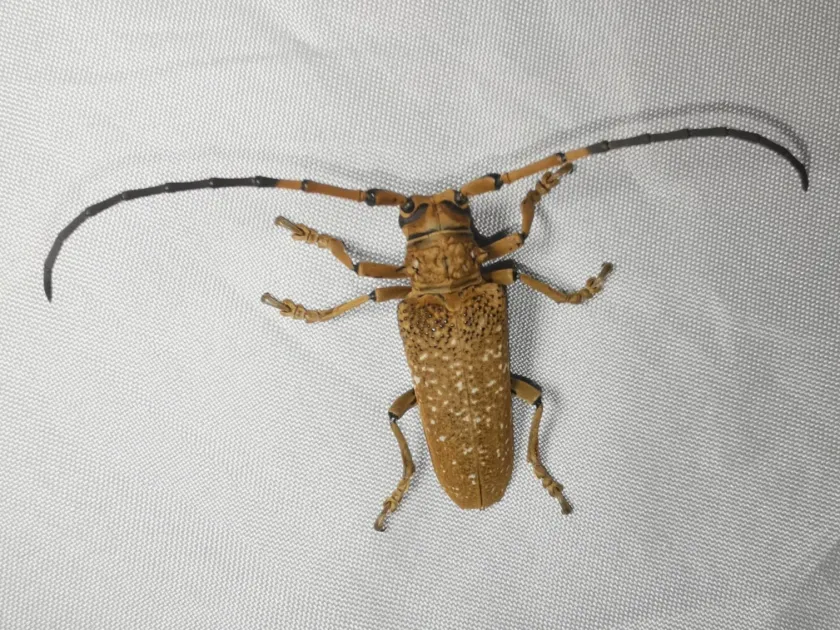
Apriona is a genus of longhorn beetles (family Cerambycidae). These pests are significant due to their wood-boring larvae that inhabit the trunks and branches of various trees.
The adult beetles are typically large, with elongated bodies and distinctive long antennae. They feed on plant bark and shoots, often causing minor damage compared to their larval stages.
The larvae are white or yellowish, legless grubs with powerful, sclerotized mouthparts designed to carve deep tunnels into the heartwood of the host plant.
The life cycle of these beetles is often long, typically lasting one to three years, during which the larvae remain hidden inside the wood for the majority of the time.
Females deposit their eggs by chewing notches into the bark, a behavioral trait that leaves visible marks on the surface of the tree trunks or twigs.
What it damages
Apriona species infest a wide range of deciduous trees, including fruit-bearing varieties like apple and pear, as well as forest and ornamental species like poplar and willow.
The primary damage is caused by larvae tunnelling through the xylem and phloem, which severs the tree's vascular system and prevents essential water and nutrient flow.
Such damage weakens the structural integrity of the trees, making them susceptible to wind breakage and leading to premature death of infested branches or entire trunks.
The tunnels created by the larvae provide entry points for various secondary pathogens, including wood-decay fungi and bacteria, further accelerating the tree's decline.
In orchards and nurseries, the presence of these borers can lead to severe financial losses due to reduced yields and the eventual mortality of infected trees.
Signs of infestation
The most reliable sign of an Apriona infestation is the presence of frass (a mixture of wood shavings and excrement) at the base of the tree or on the crotches of branches.
Adult emergence holes are clearly visible on the bark, appearing as oval-shaped openings through which the beetles exit after pupation within the tree.
Affected trees often show signs of canopy thinning, yellowing foliage, and dieback of the upper branches, indicating severe internal damage to the conducting tissues.
During the egg-laying season, observant growers may notice specific scar-like markings on the bark, which indicate where the female has prepared a site for her eggs.
Bark splitting and localized necrosis around the tunnels can also be observed, often accompanied by sap oozing in some susceptible tree species.
Control measures
Integrated pest management starts with regular inspections to identify the signs of infestation as early as possible before the larvae penetrate deep into the trunk.
Pruning and destroying infested branches is a critical physical control measure, which must be performed before the adult beetles emerge to reproduce.
For trunk infestations, targeted application of appropriate insecticides directly into the larval tunnels using a syringe can effectively eliminate the pests without systemic spraying.
Biological control, such as the application of entomopathogenic nematodes, has proven successful in targeting larvae hidden within the wood structure in a non-toxic manner.
General orchard hygiene and maintaining tree vigor are vital, as healthy trees are better able to withstand pest attacks and recover from minor levels of infestation.
Taxonomy
- Latin name
- Apriona
- Order
- Coleoptera (beetles)
- Family
- Cerambycidae
- EPPO code
- APRISP
Discussion
No discussions yet — be the first.