
Apomecyna
Apomecyna
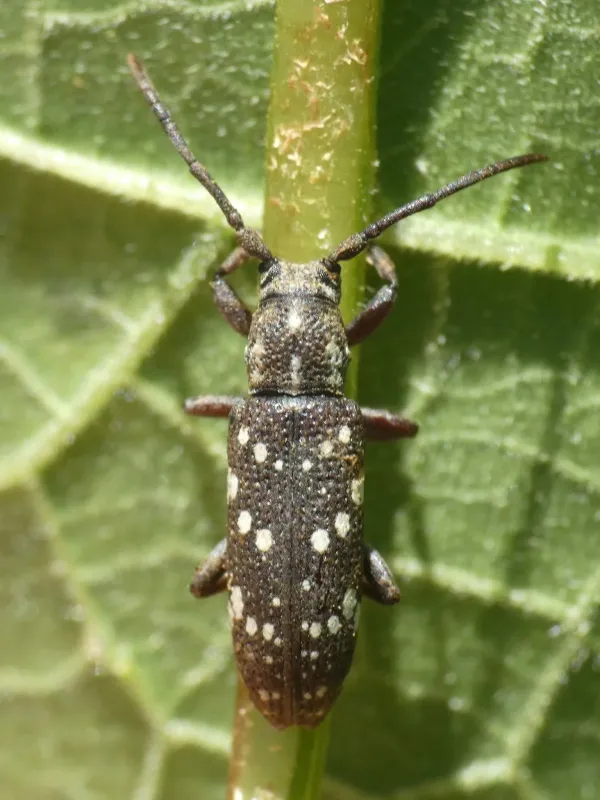
Description
How to identify
Apomecyna is a genus of longhorn beetles belonging to the family Cerambycidae, order Coleoptera. These beetles are characterized by their elongated bodies, long antennae, and a coloration that provides excellent camouflage against plant stems.
The larvae of this genus are legless, whitish grubs with powerful mandibles. They are specifically adapted to live within the plant tissue, where they feed on the inner pith of stems.
Adult beetles are often nocturnal or crepuscular, meaning they are most active during twilight hours or at night, which helps them evade predators and detection by field scouts.
The life cycle includes a complete metamorphosis: egg, larva, pupa, and adult. The female beetle deposits eggs in the stem, often near the base of the plant, where the larvae will find an immediate food source.
Various species exist within the Apomecyna genus, with Apomecyna saltator being a notable example of a pest that impacts vegetable production in warmer agricultural regions.
What it damages
The primary hosts for these beetles are plants within the Cucurbitaceae family, including melons, watermelons, pumpkins, and cucumbers. The pest causes significant economic losses by targeting these valuable crops.
Larval feeding destroys the internal structure of the stem. By creating tunnels within the pith, the larvae disrupt the vascular bundles, preventing the plant from transporting water and nutrients effectively.
This disruption leads to the wilting of branches, yellowing of foliage, and, in severe cases, the collapse of the entire plant structure. The stems become brittle and are prone to breaking under stress.
Adult beetles may feed superficially on leaves, creating minor holes, but the primary damage is caused by the larval stage developing internally over several weeks or months.
Crop yield is heavily impacted as plants infested by Apomecyna often fail to produce viable fruit or produce undersized, deformed produce that is unsuitable for market.
Signs of infestation
The most noticeable symptom is the sudden wilting of vine tips during the heat of the day, which persists despite adequate irrigation. This indicates internal damage to the water-conducting tissues.
Small entry holes at the base of the stem, often surrounded by frass (a mixture of excrement and chewed plant material), are key indicators of larval activity.
Affected stems may show signs of tissue decay, softening, or discoloration. When such a stem is split open, the tunnels created by the larvae are clearly visible, often containing the larva itself.
Stunted plant growth and premature leaf senescence compared to healthy neighboring plants are classic signs that a stem borer infestation has occurred.
Field scouting during the evening using lights can help detect adult beetles resting on stems, providing an early warning of an impending infestation for the next generation.
Control measures
Cultural control is the most effective strategy. Removing and destroying all infested plant debris immediately after harvest is essential to prevent the larvae from completing their development or overwintering.
Crop rotation is crucial; cucurbits should not be replanted in the same location for at least three to four years to break the pest's reproductive cycle.
Deep plowing of the soil post-harvest helps expose overwintering stages of the beetle to the surface, where they can be killed by temperature extremes or predators.
Chemical control focuses on protecting the crop during the adult beetle emergence period. Systemic insecticides can be applied to prevent females from laying eggs, as treating larvae inside the stem is practically impossible.
- Implement strict crop rotation schedules.
- Sanitize fields by removing crop residues.
- Perform deep tillage to disrupt the lifecycle.
- Use pheromone or light traps for monitoring.
- Apply systemic insecticides during adult activity phases.
Taxonomy
- Latin name
- Apomecyna
- Order
- Coleoptera (beetles)
- Family
- Cerambycidae
- EPPO code
- APOMSP
Discussion
No discussions yet — be the first.