
Pale brindled beauty
Apocheima
Description
How to identify
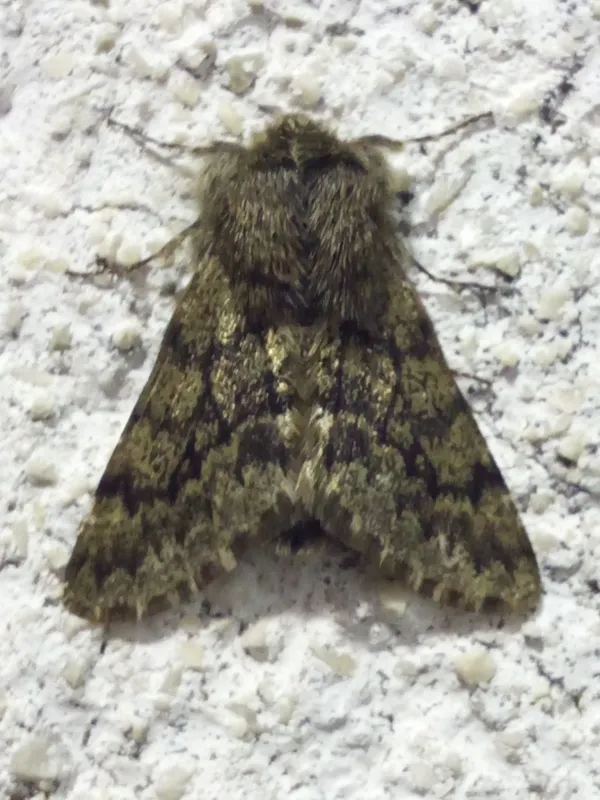
The Pale brindled beauty (Apocheima pilosaria) is a moth species belonging to the Geometridae family. The species exhibits strong sexual dimorphism: males have fully developed wings with a span of up to 40 mm, while females are wingless and resemble small, hairy, spider-like creatures.
The larvae, known as "loopers" or "inchworms," possess a distinct way of moving by looping their bodies. They are well-camouflaged, with colors ranging from grey to brown, which helps them blend seamlessly with the bark and twigs of host trees.
This species overwinters in the pupal stage, buried in the soil under the host tree canopy. The pupae are encased in tough, earthen cocoons that protect them from harsh winter conditions until early spring when the adults emerge.
Female moths climb the trunks of trees to lay their eggs, typically depositing them in crevices of the bark or near buds. This behavioral pattern ensures that larvae emerge exactly when the host plant is beginning its new seasonal growth.
The species completes one generation per year (monovoltine). Monitoring the emergence of adult moths in late winter and early spring is critical for predicting the level of potential infestation in the coming growing season.
What it damages
As a polyphagous insect, the Pale brindled beauty feeds on various deciduous trees, with a strong preference for fruit trees like apples, pears, cherries, and plums. It also frequently attacks common woodland trees such as oaks and birches.
The primary damage is caused by larvae that voraciously feed on buds and emerging foliage. In cases of severe infestations, they can cause significant defoliation, leaving the trees vulnerable to environmental stress and secondary infections.
Damage to the floral buds in the early spring can severely reduce fruit set. When a large percentage of buds is consumed before opening, the entire crop potential for the season may be compromised, leading to substantial economic losses.
Continuous defoliation forces the tree to expend energy reserves on secondary leaf growth. This late-season growth often fails to harden off before the onset of winter, which significantly reduces the tree's overall cold hardiness and winter survival rate.
Repeated yearly infestations can lead to the long-term decline of orchard trees, manifesting in stunted growth, branch dieback, and an increased susceptibility to wood-boring insects and fungal diseases due to the tree's weakened state.
Signs of infestation
The most obvious sign of an infestation is the presence of larvae actively feeding on leaves. These larvae typically consume leaf edges first, often leaving behind skeletonized leaves with only the central veins remaining.
Visible webbing between leaves is a classic indicator of caterpillar activity. They use silk to bind leaves together, creating a protective enclosure where they can feed and rest while being shielded from predators and adverse weather.
The presence of frass (caterpillar droppings) on the leaves or the ground beneath the tree canopy is a strong indicator of larval feeding. In dense infestations, this can be seen as a fine "dust" covering the lower branches and surrounding soil.
Early spring growth defects, such as buds that fail to bloom or shriveled, stunted leaf clusters, are early warning signs. If detected early, the larvae are still small and much easier to manage with control measures.
Increased bird activity within the orchard canopy can also serve as a bio-indicator. Chickadees, warblers, and other insectivorous birds often flock to trees infested with caterpillars, providing a natural form of population control.
Control measures
Mechanical control, such as soil cultivation in the autumn, is highly effective. Tilling the soil beneath the canopy disrupts the earthen pupal cocoons, exposing the pupae to freezing temperatures or avian predators during the winter months.
Sticky bands applied to tree trunks are a classic non-toxic control method. These bands prevent the wingless females from crawling up the trunk to lay eggs, effectively stopping the infestation cycle before it begins in the spring.
Biological control using Bacillus thuringiensis (Bt) sprays can be highly effective. These treatments target young caterpillars and are relatively safe for pollinators and beneficial predatory insects when applied according to the manufacturer’s instructions.
Chemical intervention should be reserved for scenarios where the infestation exceeds the economic threshold. If pesticides are necessary, it is best to apply them pre-bloom to minimize risks to bees and other essential orchard pollinators.
Encouraging biodiversity by providing nesting sites for birds and overwintering habitats for predatory beetles and wasps helps maintain natural equilibrium. A balanced orchard ecosystem is the most sustainable way to manage Pale brindled beauty populations.
Taxonomy
- Latin name
- Apocheima
- Order
- Lepidoptera (butterflies)
- Family
- Geometridae
- EPPO code
- APOCSP
Discussion
No discussions yet — be the first.