
Ringlet
Aphantopus
Description
How to identify
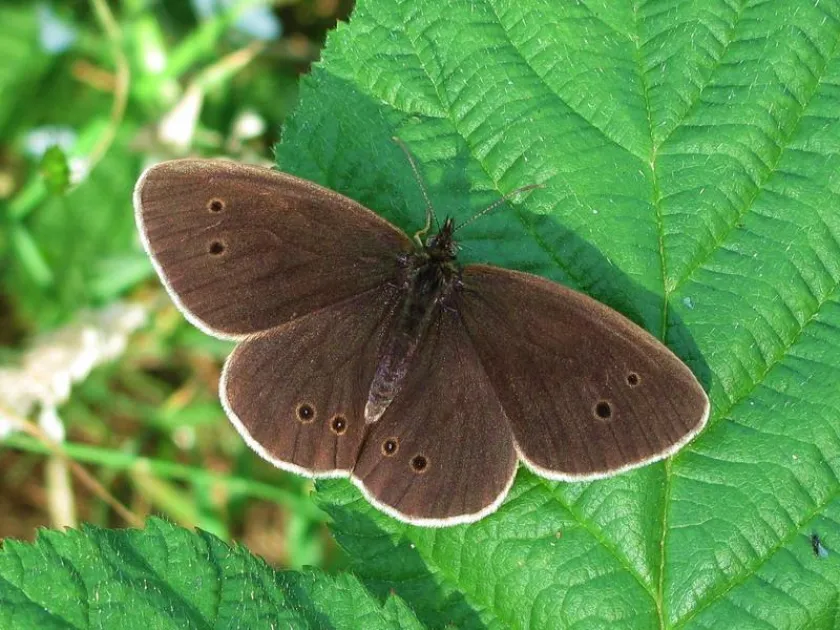
The Ringlet (Aphantopus hyperantus) is a butterfly species of the Nymphalidae family, easily recognized by its dark, almost black wings with characteristic pale-ringed spots resembling eyes.
The wingspan of the adult insect typically ranges from 40 to 50 mm. The larvae are spindle-shaped, usually yellowish-brown or greyish, well-adapted to camouflage within the base of grasses.
The life cycle is univoltine, meaning there is only one generation per year. The larvae overwinter as half-grown caterpillars protected by the dense cover of grass stalks and organic litter.
Pupation occurs in early summer, where the pupa stays near the ground, often loosely attached to the stem bases or hidden within the dry vegetation layers.
Adult butterflies are typically active during daylight hours, preferring sheltered areas with high grass density and moderate moisture levels, often near woodland edges.
What it damages
The larvae are primary feeders on a variety of perennial grasses, including species from the Poa, Phleum, and Dactylis genera, which are common components of meadows and grasslands.
While primarily a meadow dweller, the caterpillar can cause damage to cereal crops when agricultural fields are located in close proximity to their natural habitats or forest borders.
Damage involves the consumption of leaf tissue, starting from the margins and working inward, which impairs the plant's photosynthetic efficiency and reduces vigor.
In cases of high infestation, the cumulative leaf loss can hinder the growth rate of young crops, making them susceptible to secondary physiological stress and disease.
Economic impact is generally low in commercial farming, but in forage production areas, the reduction in biomass can be significant enough to warrant monitoring.
When it appears
Adults emerge in mid-summer, with peak flight activity occurring throughout June and July, depending on the climatic conditions of the region.
Larval development starts in late summer, continues throughout the autumn, and resumes in the spring once temperatures allow for active feeding on fresh grass shoots.
The timing of the adult flight is critical for agricultural monitoring, as it indicates the period of egg-laying and the start of the next cycle.
Spring is the period of highest larval activity, as caterpillars grow rapidly before the pupation stage, which typically lasts for 2 to 3 weeks.
Weather patterns, particularly during the transition from spring to summer, play a decisive role in the survival rate of the pupae and the subsequent emergence of butterflies.
Signs of infestation
Visible signs of infestation include jagged leaf margins and irregular notches on the leaves of grass plants, caused by the nocturnal feeding habits of the larvae.
The presence of grass-colored excrement at the base of the stems provides clear evidence of the activity and density of the caterpillar population.
Increased butterfly activity in grassy margins and buffer zones during sunny days is a reliable indicator of the population density in the area.
Yellowing of the foliage tips on affected crops can serve as a secondary sign of damage, particularly if the infestation is concentrated in specific patches of the field.
Direct inspection of the crown area of grasses during dawn or dusk is the most effective way to detect the presence of the larvae before significant damage occurs.
Control measures
Cultural control is the most effective method, starting with the regular mowing of weeds and grass borders surrounding the agricultural fields to reduce breeding grounds.
Autumn tillage helps disrupt the larval overwintering sites, significantly reducing the population density that will emerge in the following spring season.
Biological control using Bacillus thuringiensis sprays can be highly effective against the larval stage if applied during the early growth phase of the caterpillars.
Chemical intervention should be reserved for scenarios where monitoring indicates that economic thresholds are exceeded, choosing selective insecticides to protect beneficial species.
- Maintain clean field margins to prevent pest migration.
- Implement balanced crop rotation practices.
- Encourage natural predators and parasitoids in surrounding buffer zones.
Taxonomy
- Latin name
- Aphantopus
- Order
- Lepidoptera (butterflies)
- Family
- Nymphalidae
- EPPO code
- APHPSP
Discussion
No discussions yet — be the first.