
Lilac beauty
Apeira syringaria
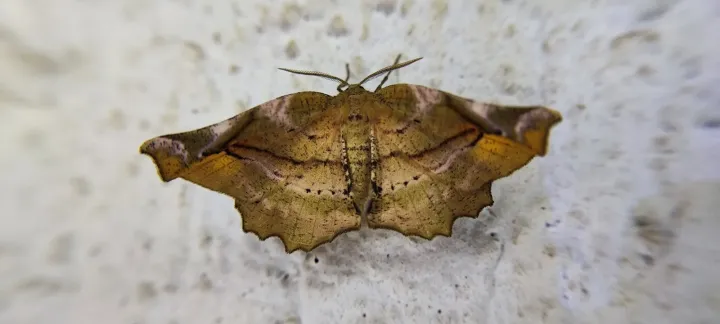
Description
How to identify
The lilac beauty (Apeira syringaria) is a moth species belonging to the family Geometridae. It is widely recognized for its exceptional camouflage capabilities.
The adult moth has a wingspan ranging from 40 to 50 mm. Its wings feature brown and yellowish patterns that mimic the appearance of dried leaves, providing excellent protection against predators.
The larvae, or caterpillars, are equally specialized in camouflage. They possess shapes and textures that allow them to resemble small, woody twigs while resting on plants.
The life cycle involves four stages: egg, larva, pupa, and imago. The species typically overwinters in the larval stage, attached firmly to the host plant branches.
Adult moths are nocturnal. They are frequently attracted to artificial light sources, which makes light trapping a viable method for monitoring population levels.
What it damages
The larvae of the lilac beauty primarily feed on the foliage of plants within the Oleaceae family, with lilacs (Syringa) and ash trees (Fraxinus) being the most affected.
Private gardens and commercial landscapes may also see damage on privet and other ornamental shrubs. Heavy infestations can lead to significant defoliation of the host plants.
Initially, the young larvae skeletonize the leaves by feeding on the soft tissue between the veins. As they grow, they consume larger parts of the leaf structure.
Persistent feeding reduces the plant's photosynthetic capacity, causing stunted growth and a general decline in the ornamental value of the affected shrub.
If not managed, the cumulative impact of larval feeding can stress the plant, making it more susceptible to secondary diseases or harsh environmental conditions.
When it appears
The lilac beauty generally undergoes two generations per year in temperate climates. The first flight of adult moths typically occurs late in the spring.
The larval stages are most active during the early and mid-summer periods, which coincides with the plant's peak vegetative growth phase.
A second generation of adults emerges later in the summer, leading to a new cohort of larvae that eventually prepare for the winter diapause.
Development speed is highly dependent on ambient temperature, with warmer summers potentially leading to faster life cycle completion and increased pest pressure.
By late autumn, the caterpillars settle into their wintering positions on the woody stems, remaining inactive until the following spring.
Signs of infestation
Common signs of infestation include irregular holes in the leaves and missing leaf margins, often leaving a tattered appearance to the foliage.
One of the most reliable identification methods is observing the caterpillars; they tend to hold their bodies stiff and extended, perfectly mimicking a small twig or dormant bud.
The presence of fine silk webbing connecting leaves is another diagnostic indicator, often used by larvae to pull leaves together for shelter or feeding.
Small, dark fecal pellets (frass) left on the foliage beneath feeding sites provide clear evidence of active caterpillar presence on the bush.
Extensive defoliation on specific branches, especially when other common pests like aphids are absent, points toward a possible infestation of lilac beauty larvae.
Control measures
Hand-picking the caterpillars is a practical and effective method for small-scale infestations or individual ornamental plants, preferably done in the early morning.
Pruning and destroying heavily infested branches can help eliminate focal points of infestation and prevent the spread to the rest of the shrub.
Biological control agents, such as Bacillus thuringiensis, offer a targeted and environmentally friendly solution for managing young larval populations.
For severe outbreaks, systemic insecticides may be applied, though it is crucial to avoid spraying during the flowering period to protect beneficial pollinators.
- Regular monitoring using light traps to track flight peaks.
- Encouraging natural predators such as insectivorous birds in the garden.
- Ensuring proper plant health through adequate watering and fertilization.
Taxonomy
- Latin name
- Apeira syringaria
- Order
- Lepidoptera (butterflies)
- Family
- Geometridae
- EPPO code
- PHLNSY
Discussion
No discussions yet — be the first.