
Anthores
Anthores
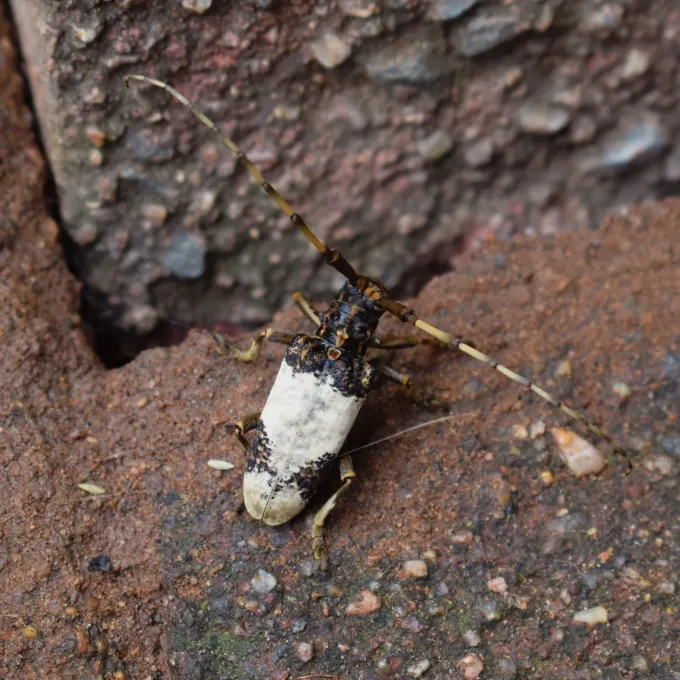
Description
How to identify
The genus Anthores belongs to the Cerambycidae family, commonly known as longhorn beetles. These insects are significant wood-boring pests that target specific types of woody plants.
Adult beetles are characterized by their elongated bodies and long antennae. Their coloration typically provides camouflage against the bark of host trees, making them difficult to spot during the day.
The larvae are specialized wood-borers with powerful mandibles. They live entirely within the wood, which protects them from most external environmental factors and many natural predators.
The life cycle involves the female laying eggs in bark crevices. Upon hatching, larvae bore directly into the xylem and phloem, where they feed for an extended period before pupating.
Understanding the biology of Anthores is essential for forestry and agricultural professionals. Knowing the timing of their emergence allows for targeted interventions to prevent population booms.
What it damages
Anthores beetles are particularly damaging to various hardwood species and plantation crops, including coffee trees. Their feeding behavior can lead to the rapid decline of entire groves.
The primary damage is caused by the larvae, which create extensive galleries inside the stems and branches. This tunneling disrupts the vascular system, preventing the transport of water and nutrients.
As the internal structure of the tree is hollowed out, the plant loses its structural integrity. This makes it highly susceptible to snapping under stress, such as strong winds or heavy rain.
Furthermore, the galleries created by the larvae serve as entry points for secondary pathogens, such as fungi and bacteria. These infections often accelerate the death of the host plant.
Agricultural losses can be significant if the infestation is not managed. Once a tree is severely colonized, it often becomes a source of infestation for neighboring healthy plants.
Signs of infestation
The most reliable sign of an Anthores infestation is the presence of frass—a mixture of sawdust and excrement—pushed out of the tree through small exit or entry holes.
Observing the bark carefully may reveal small, circular or oval holes. These are the result of adult emergence or larval activity. Sticky sap may also be observed oozing from these sites.
Early warning signs include a general loss of vigor, yellowing of the leaves, and the drying of specific branches. This indicates that the internal vascular system is struggling to supply the canopy.
In mature infestations, the bark may show signs of splitting or peeling near the tunnels. The overall shape of the tree might look distorted due to the weakened structural integrity.
- Sawdust/frass piles at the base of the tree
- Visible holes in the bark
- Wilting or chlorosis of the leaves
- Dead or dying skeletal branches
Control measures
The first line of defense is the immediate removal and destruction of heavily infested trees. Burning or chipping the wood kills the larvae inside and stops the spread of the next generation.
Maintaining tree vigor through proper fertilization and irrigation is a crucial preventive measure. Well-nourished plants are generally more capable of resisting initial larval attacks.
Chemical control focuses on applying systemic or contact insecticides to the bark during the adult beetle's flight season to prevent egg-laying and minimize new infestations.
Integrated Pest Management (IPM) strategies, including pheromone traps and encouraging natural predators, can help reduce beetle populations without relying solely on harsh chemicals.
Regular field scouting is mandatory in vulnerable areas. Detecting the first signs of frass can be the difference between losing a single tree and losing an entire harvest.
Taxonomy
- Latin name
- Anthores
- Order
- Coleoptera (beetles)
- Family
- Cerambycidae
- EPPO code
- ANHOSP
Discussion
No discussions yet — be the first.