
Anthocoris sarothamni
Anthocoris sarothamni
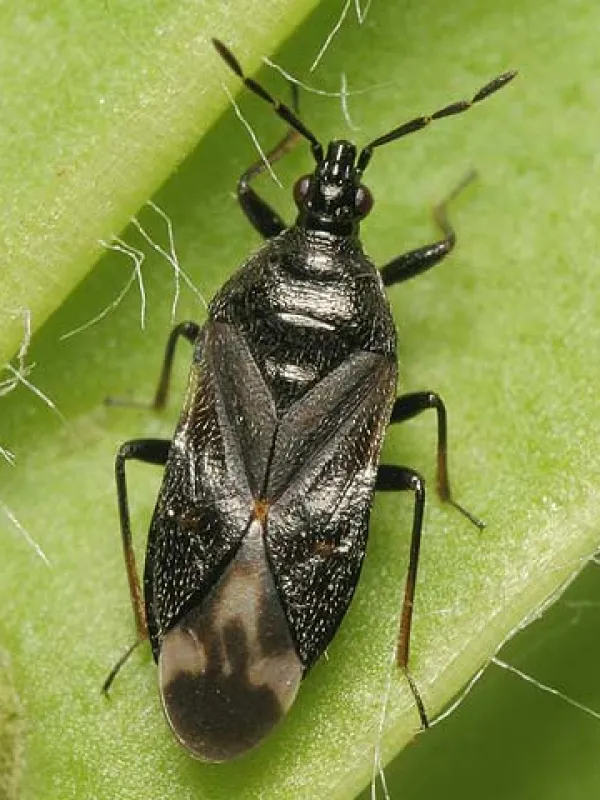
Description
How to identify
Anthocoris sarothamni is a species of true bug belonging to the family Anthocoridae (flower bugs), within the order Hemiptera. While often considered beneficial due to their predatory nature, they can act as pests under specific conditions.
The adult insect is typically small, measuring between 3 and 4 millimeters in length. Its body is flattened and ovate, with a color palette ranging from dark brown to black, often featuring yellowish markings on the hemelytra.
The mouthparts are of the piercing-sucking type, which allows the insect to feed on plant sap during periods when prey is scarce. The antennae are four-segmented, a key diagnostic feature for the Anthocoridae family.
Larvae resemble smaller, wingless versions of adults, shifting in color from yellowish to reddish-brown as they molt through several instars. They are highly active and move across host plants in search of food.
For professional identification, the species is distinguished by microscopic examination of the male genitalia and the specific shape of the pronotum, which shows distinct angular projections.
What it damages
The primary host plants for Anthocoris sarothamni are species within the Fabaceae family, particularly broom (Cytisus). The bugs target shoots, buds, and flowers for nourishment.
The primary damage occurs through the extraction of plant sap. This results in the loss of turgor in plant tissues, leading to stunted growth and, in severe cases, the necrosis of young shoots.
Although they are facultative predators (consuming aphids and mites), their predatory instinct is not always sufficient to prevent them from causing physiological stress to the host plant when prey populations are low.
Massive infestation often leads to the premature shedding of floral buds, significantly reducing the seed-bearing capacity of the plants and diminishing their ornamental value in gardens.
Additionally, the feeding punctures serve as entry points for secondary infections, including various fungal and bacterial pathogens that further weaken the plant's structural integrity.
When it appears
The life cycle of Anthocoris sarothamni is closely linked to the phenology of their host plants. Adults typically overwinter in sheltered locations, such as under tree bark or in leaf litter.
In spring, as temperatures rise, the insects emerge to feed on the tender, nutrient-rich shoots of early-season legumes. This is the period when mating occurs and females begin laying eggs.
The development from egg to adult takes approximately three to five weeks, heavily influenced by ambient temperature. In temperate climates, this allows for two to three generations per year.
The population peaks during the flowering season of host plants. The presence of abundant resources during this time facilitates rapid reproduction and expansion of the pest colony.
As autumn approaches, the insects seek diapause sites to endure the winter, effectively ending the active cycle of the current year’s generations.
Signs of infestation
Early symptoms of an infestation include the appearance of tiny, necrotic spots on leaves and stems caused by the feeding apparatus piercing the plant epidermis.
Persistent feeding leads to the curling of leaves and the deformation of apical shoots, which is a classic indicator of sucking insect damage on legumes.
Under close inspection with a magnifying glass, one may observe small, irregular breaks in the stem surface, representing the sites where eggs were inserted into the plant tissue.
A significant sign is the unexplained drop of unopened buds, which indicates that the bugs have been feeding on the pedicels, starving the bud of nutrients.
- Distorted and twisted young leaves.
- Whitish or yellowish speckling on stems.
- Premature bud and flower drop.
- Stunted growth of new terminal branches.
Control measures
Effective management requires a balanced approach, as these insects can also provide a service by preying on aphids. Indiscriminate use of broad-spectrum insecticides is highly discouraged.
Cultural control is the most recommended strategy. This involves the timely pruning of infested shoots to remove both the insects and their eggs before the next generation develops.
If chemical intervention becomes necessary due to high population density, selective, low-toxicity biological pesticides should be chosen to minimize impact on beneficial pollinators.
Maintaining a healthy ecosystem by encouraging native predators and parasitoids can naturally keep Anthocoris sarothamni populations below the economic threshold of damage.
Monitoring using color-coded sticky traps can assist growers in making informed decisions about whether intervention is truly required, thus avoiding unnecessary treatments.
Taxonomy
- Latin name
- Anthocoris sarothamni
- Order
- Hemiptera (bugs, aphids, leafhoppers)
- Family
- Anthocoridae
- EPPO code
- ANTOSA
Discussion
No discussions yet — be the first.