
Common flower bug
Anthocoris nemorum
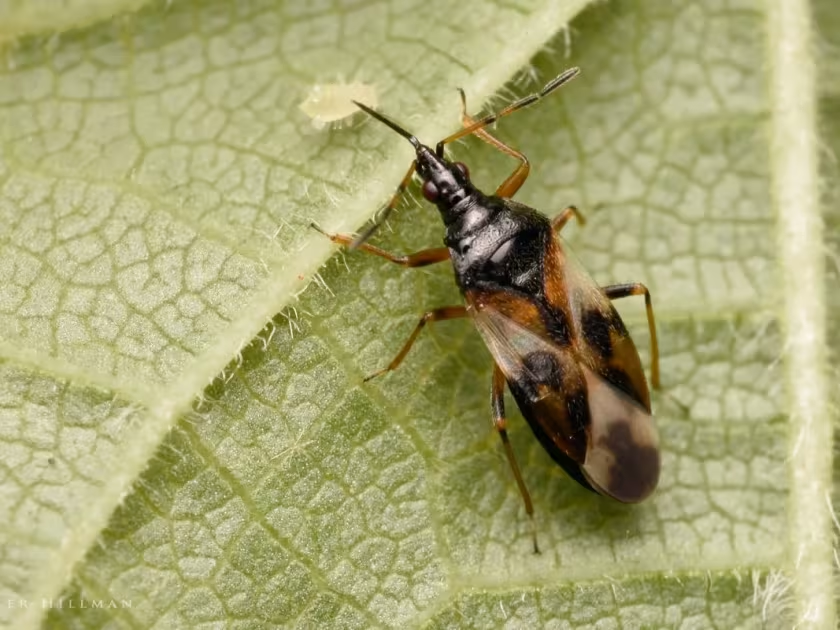
Description
How to identify
The Common flower bug (Anthocoris nemorum) is a predatory insect belonging to the family Anthocoridae within the order Hemiptera.
Adult bugs are small, measuring approximately 3 to 4 millimeters in length, with a distinct oval body shape and shiny wings.
They are generally dark brown to black in coloration with yellowish-brown legs, which helps them blend into tree bark and foliage.
The nymphs go through five distinct stages of development, and they are easily identified by their bright orange-red coloration.
This species is widely distributed across Europe and Asia, often residing in hedges, deciduous trees, and agricultural crop fields.
What it damages
While primarily recognized as a beneficial predator of aphids, spider mites, and thrips, it can cause damage when prey populations are low.
The bug uses its piercing-sucking mouthparts to feed on the sap of young plant tissues, including buds, blossoms, and tender shoots.
Berries such as strawberries and raspberries are susceptible to injury, resulting in discolored patches and malformed fruit development.
Feeding can lead to stunted growth in apical buds and may weaken the plant's overall resistance to pathogens.
In commercial orchards, minor cosmetic damage to fruit can reduce marketability despite the bug's role as a natural pest controller.
When it appears
The species overwinters as adults in sheltered locations, such as under leaf litter, in crevices of bark, or in dry plant debris.
Activity begins in early spring as temperatures rise, typically coinciding with the development of the first spring aphids.
Anthocoris nemorum is bivoltine or trivoltine depending on the climate, producing two to three generations per year.
Peak populations are usually observed mid-summer, following the lifecycle of their primary prey sources in the garden ecosystem.
As daylight hours decrease and temperatures drop in autumn, adults seek out secure overwintering sites to survive the cold season.
Signs of infestation
Symptoms of feeding include minute, light-colored punctures on leaf surfaces that may expand into necrotic spots.
Distortion of young leaves and flower buds is a key indicator of activity, often resulting from the injection of saliva during feeding.
- Yellowing of leaf tips and edges.
- Deformed fruit and blossoms dropping prematurely.
- Presence of tiny orange-colored nymphs on the underside of leaves.
The visual impact of feeding is often localized and should be monitored to differentiate it from severe pest infestations.
Gardeners should observe whether aphids or mites are also present, as the bug often focuses on these pests rather than plants.
Control measures
Integrated pest management (IPM) is the best approach, prioritizing the preservation of natural predator populations over chemical intervention.
Avoid the use of broad-spectrum synthetic insecticides, as these will eliminate the beneficial bugs along with their prey.
Maintain high biodiversity in the garden by planting nectar-rich borders, which support the bug's population throughout the season.
If damage exceeds economic thresholds, organic contact sprays such as insecticidal soaps may be used to reduce localized populations.
Regular monitoring of plant health and removing heavily infested plant parts can minimize the spread of potential damage.
Taxonomy
- Latin name
- Anthocoris nemorum
- Order
- Hemiptera (bugs, aphids, leafhoppers)
- Family
- Anthocoridae
- EPPO code
- ANTONE
Discussion
No discussions yet — be the first.