
Flower bug
Anthocoris musculus
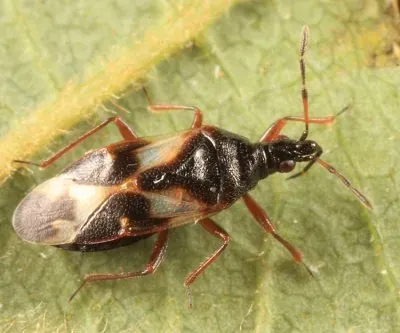
Description
How to identify
The flower bug Anthocoris musculus is a species within the Anthocoridae family, commonly known as minute pirate bugs, belonging to the order Hemiptera.
These insects are very small, typically measuring between 3 and 4 millimeters in length, with an oval-shaped body that varies from dark brown to black.
The life cycle involves incomplete metamorphosis, meaning the nymphs closely resemble adults but lack wings and are generally paler in color.
Females lay eggs inside plant tissues, such as shoots or leaf petioles, making them highly protected from environmental changes and many topical pesticides.
While often predatory by nature, this species can exhibit phytophagous behavior, damaging vegetation when natural prey populations are insufficient.
What it damages
The flower bug primarily targets various fruit trees, including apples, pears, and plums, as well as several berry-producing shrubs.
By piercing and sucking sap from young shoots, buds, and fruit stalks, the bugs cause significant stress to the host plants during crucial growth phases.
Feeding damage often manifests as necrotic spots, tissue deformation, and the premature shedding of leaves and developing fruitlets.
Repeated feeding leads to stunted growth in young nursery stock and reduces the overall vigor of mature trees within the orchard.
Wounds caused by the insect's mouthparts serve as entry points for secondary pathogens, potentially leading to fungal or bacterial infections.
When it appears
These insects overwinter as adults, seeking refuge under tree bark, in leaf litter, or within other protected areas around the orchard.
Activity begins in early spring as temperatures rise, usually when the thermometer consistently stays above 10-12 degrees Celsius.
The peak period for feeding and reproduction coincides with the budding and flowering stages of most fruit crops, increasing the risk of damage.
Multiple generations can occur throughout the summer, necessitating consistent monitoring throughout the entire growing season.
As autumn approaches and temperatures drop, the bugs actively seek out suitable overwintering sites to survive the cold months.
Signs of infestation
Visual signs of infestation include small, light-colored stippling on the leaves, which may eventually develop into dry, necrotic spots.
Curled leaves and distorted shoot tips are common indicators that the plant is being attacked by piercing-sucking insects.
Unexplained fruit drop on young trees is often a sign of damage to the pedicels, preventing essential nutrients from reaching the fruit.
Searching the undersides of leaves or leaf axils during the day often reveals the presence of small, active nymphs hiding from direct light.
Small, dark fecal spots left on leaves or stems are a tell-tale sign of the presence and long-term activity of these bugs on the plant.
Control measures
Good sanitation practices, such as clearing leaf litter and removing loose bark, are essential to eliminate common overwintering sites.
Applying sticky bands to tree trunks in early spring can effectively trap bugs as they crawl upward from their winter hiding places.
Chemical control should be used judiciously, targeting only heavily infested areas to minimize impact on beneficial insects within the garden.
Promoting a diverse ecosystem by encouraging natural predators helps keep the population of flower bugs under control naturally.
Using yellow sticky traps throughout the orchard is a reliable method for monitoring population density and timing potential control measures.
Taxonomy
- Latin name
- Anthocoris musculus
- Order
- Hemiptera (bugs, aphids, leafhoppers)
- Family
- Anthocoridae
- EPPO code
- ANTOMU
Discussion
No discussions yet — be the first.