
Bar-headed goose
Anser indicus
Description
How to identify
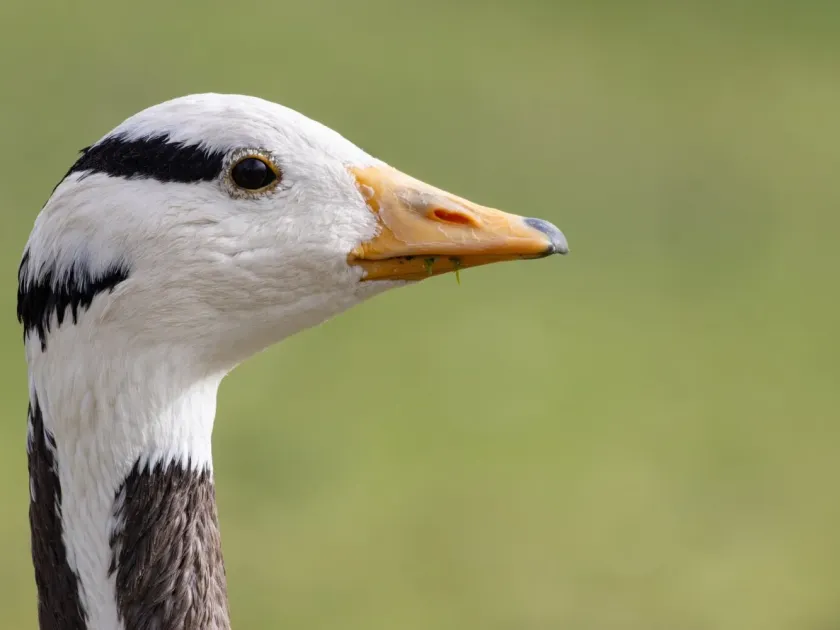
The Bar-headed goose (Anser indicus) is a waterfowl species within the Anatidae family, belonging to the Anseriformes order. The species is recognized by its white head featuring two distinctive black horseshoe-shaped bars.
Adults weigh up to 3 kilograms with a wingspan of approximately 150 centimeters. These birds possess an extraordinary ability for high-altitude flight, which makes them difficult to manage in open field conditions.
The adult plumage is predominantly grey with dark-edged feathers. The legs and bill are bright yellow or orange, serving as a key visual identification feature for field observations.
While their natural habitat includes high-altitude lakes, they frequently utilize agricultural landscapes during migration and wintering, creating intense competition for foraging resources.
Juveniles exhibit duller coloring, lacking the prominent dark head bars, and have a greyish bill tint, though they reach adult appearance by the end of their first season.
What it damages
The primary damage is inflicted on winter grain crops like wheat and barley, especially during the sprouting phase. Geese completely pluck young shoots along with the root system, causing crop failure.
The birds actively consume fresh shoots of forage grasses in pastures and meadows, significantly reducing green mass availability for livestock. This creates forage shortages for farm operations.
During the grain-filling stage, geese may damage corn and rice fields by trampling crops and consuming grain heads. Due to their collective feeding behavior, flocks can devastate large portions of a harvest in a short timeframe.
Beyond direct consumption, flocks significantly compact the soil with their feet, which negatively impacts soil aeration. Furthermore, high concentrations of bird droppings can lead to chemical plant burns.
Trampling leads to sparse stands, which provides a competitive advantage to weeds and lowers the overall phytosanitary resilience of the field against diseases and pests.
When it appears
Peak pest activity on agricultural land occurs during the spring migration period when the first sprouts of agricultural crops begin to emerge.
During the autumn, birds move through harvested fields scavenging for leftover grain, but they may also damage winter crops planted at the beginning of the season.
Daily bird activity is most pronounced during early morning and late evening hours when flocks commute from roosting sites (water bodies) to foraging fields.
The seasonality of attacks directly correlates with climatic conditions and plant phenology in specific migration or wintering regions.
Bar-headed goose migration routes are relatively stable, allowing agronomists to predict the periods of most intense bird pressure on cultivated areas.
Signs of infestation
The main indicator of goose presence is the discovery of characteristic footprints in moist soil and high concentrations of bird droppings along the perimeter and inside damaged field sectors.
Field inspections reveal "bald spots" or grazed areas where plants have been entirely consumed. Leaves exhibit jagged, uneven edges characteristic of bird bill grazing.
Audible flock calls during night or early morning hours serve as an indirect warning of imminent arrival at nearby fields, as the birds are quite noisy while feeding.
Disturbed soil surface integrity, particularly on soft ground, is a clear sign of a large bird group remaining in one location for an extended period.
Finding feathers in the field allows for the accurate identification of the bird species responsible for crop damage.
Control measures
The most effective strategy involves utilizing visual repellents such as predator decoys, flapping ribbons, and reflective materials to discourage landing.
The deployment of acoustic systems that broadcast bird distress calls or artificial gunshot sounds allows for the rapid dispersal of flocks from protected areas.
Using timer-based gas cannons helps minimize pest habituation to noise, maintaining a continuous sense of threat to the birds.
Regular monitoring and patrolling of fields during critical growth stages, especially near large bodies of water that serve as resting sites, are vital protection elements.
Modern agrotechnological approaches also include the establishment of "buffer zones"—specially planted sites far from commercial crops—designed to distract birds from primary harvest areas.
Taxonomy
- Latin name
- Anser indicus
- Family
- Anatidae
- EPPO code
- ANSEIN
Discussion
No discussions yet — be the first.