
Greylag goose
Anser anser
Description
How to identify
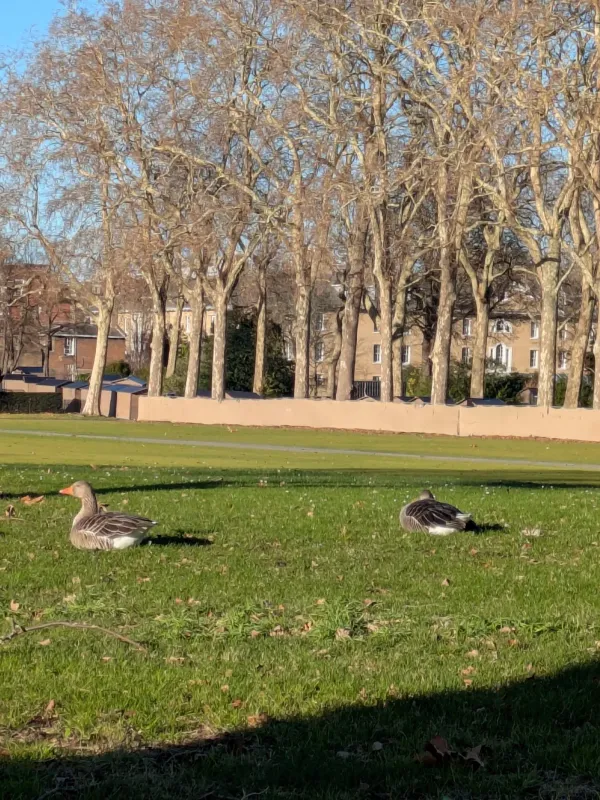
The Greylag goose (Anser anser) is a large waterfowl species belonging to the Anatidae family. Recognizable by its grey-brown plumage, large body size, and orange-pink bill, it is a dominant species in many wetland areas.
In agricultural contexts, the Greylag goose is known for its social behavior, traveling in large flocks that can exert significant grazing pressure on commercial farmland.
These birds are highly adaptable and have successfully expanded their feeding grounds to include high-quality agricultural crops, often leading to conflicts with farmers near migration routes.
The species is particularly noted for its intelligence, making simple scarecrows or static deterrents ineffective over time as the birds learn to recognize non-threatening objects.
Field identification is relatively straightforward due to the birds' large size, characteristic loud calls, and their preference for open, flat areas where they can easily spot potential predators.
What it damages
Winter cereals, particularly wheat and barley, are the primary targets for Greylag geese, especially during the spring green-up when nutrient-rich shoots are scarce elsewhere.
Young maize and oilseed rape are also vulnerable; birds often graze these crops to the ground, necessitating replanting or resulting in significant reductions in plant density.
Trampling damage is a hidden but major contributor to losses, as the sheer weight of a flock of geese can crush seedlings and compact the soil, hindering root development.
During the harvest period, geese can consume spilled grain and damage standing crops, which not only lowers yields but also spreads pathogens through damaged plant tissue.
The economic impact of goose grazing is magnified when the fields are in close proximity to roosting sites, as the birds create a continuous cycle of grazing that prevents crop recovery.
When it appears
The peak activity for the Greylag goose occurs during the spring migration months of March and April, which coincides with the critical early growth stage of winter cereals.
Autumn is the second major period of concern, as birds congregate before their southward migration, feeding on leftover harvest stubble and newly sown winter crop fields.
In mid-summer, while geese are molting and raising goslings, they are generally restricted to aquatic habitats, reducing their impact on large-scale commercial farming.
Daily routines are highly consistent; geese typically fly from water bodies to feeding grounds at dawn and dusk, making these the most important times for monitoring.
Weather patterns can influence their presence, with harsh winters or cold springs often forcing the birds to rely more heavily on cultivated fields than on natural forage.
Signs of infestation
The most obvious signs of a Greylag goose infestation include large amounts of droppings covering sections of the field and distinct webbed footprints in soft soil.
Grazing patterns are visible as large, uneven bare patches where the vegetation has been stripped to the soil surface, leaving a clear "nibbled" edge.
Frequent, loud vocalizations from flocks flying over or resting on the field confirm their presence as the source of the crop damage.
Missing or shredded leaves in a concentrated area often indicate that a flock has spent several hours feeding in that specific location.
The presence of scattered feathers on the field margins is a reliable indicator that the area is being used as a landing or takeoff point for the feeding flock.
Control measures
Acoustic deterrents such as propane cannons that fire at irregular intervals are effective at preventing the birds from settling on the field.
Laser technology is increasingly used in modern agriculture to humanely disperse geese by creating a visual stimulus that they perceive as a physical threat.
Implementing a rotation of different deterrent methods is crucial to prevent the birds from habituating to a single, static warning signal.
Physical barriers or stringing lines across small, high-value fields can be effective, though this is often impractical for large-scale cereal farming.
Integrated management plans, which include monitoring flocks and deploying active scaring techniques early, are the most successful approach to minimizing significant yield loss.
Taxonomy
- Latin name
- Anser anser
- Family
- Anatidae
- EPPO code
- ANSEAN
Discussion
No discussions yet — be the first.