
Geese
Anser
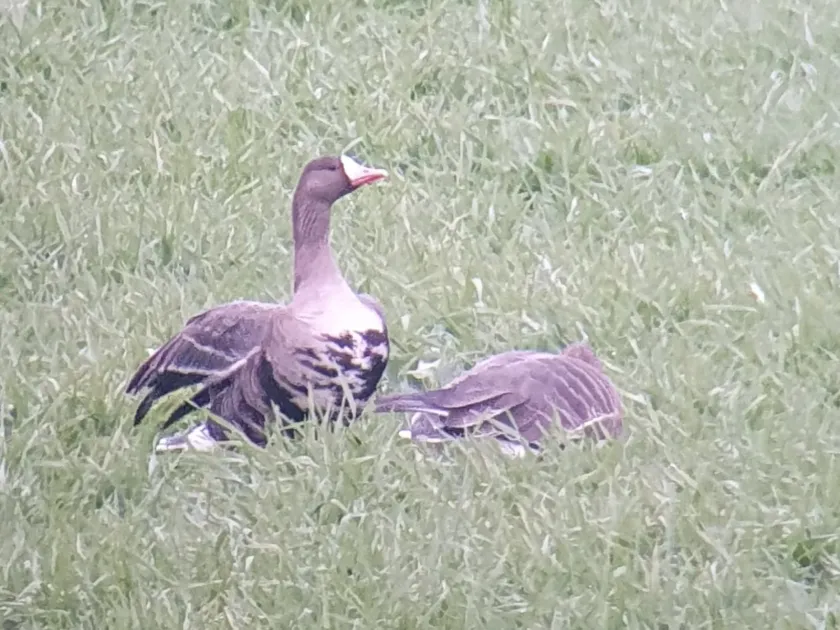
Description
How to identify
Geese (genus Anser) belong to the order Anseriformes and the family Anatidae. These large waterfowl have strong beaks evolved for grazing on grasses and various plants.
Common species such as the Greylag goose or the Greater white-fronted goose often gather in large flocks on agricultural lands during their seasonal migrations.
These birds are known for their high intelligence and caution, often acting in groups to maximize safety while foraging in open fields.
Their biological cycle is tied to migratory routes, which frequently intersect with vast agricultural regions, turning productive fields into stopover feeding grounds.
High mobility and large flock sizes make them particularly difficult to manage, as they can quickly relocate to safer or more abundant feeding areas.
What it damages
Geese cause significant damage to winter cereal crops like wheat and barley, especially in early spring when young shoots provide high nutritional value.
Rapeseed crops are also frequently targeted, with geese grazing on young plants, which can result in severe yield reduction or total loss of patches.
Damage is not limited to grazing; the weight of the flock leads to soil compaction, which hinders root development and degrades the physical structure of the field.
Trampling by large flocks physically destroys the vegetation, leaving the ground bare and vulnerable to erosion or weed encroachment.
Large accumulations of bird droppings can alter soil nutrient concentrations and contaminate fields, creating long-term management challenges for producers.
When it appears
The peak period for crop damage occurs during the spring migration, when geese travel from wintering grounds to their northern breeding habitats.
A secondary period of damage happens during the autumn migration, when geese move south and utilize post-harvest fields and young winter crops for feeding.
Weather conditions play a crucial role: cold springs often force geese to stay in specific areas for longer periods, intensifying the impact on local crops.
The daily foraging cycle shows two distinct peaks: early in the morning and late in the evening, when birds move between water bodies and feeding fields.
March and April are generally the most critical months for crop loss, as plant growth is slow and grazing pressure from migrating flocks is at its maximum.
Signs of infestation
Key indicators include the presence of webbed footprints on moist soil and widespread droppings within the feeding zones of the field.
The vegetation shows a distinct grazing pattern, with leaves and shoots clipped cleanly, a clear sign of avian feeding rather than insect or mammalian activity.
Fields exhibit patchy areas of denuded soil where the crop stand has been entirely removed or significantly thinned by the birds.
Visual confirmation of large flocks taking flight as observers approach is a primary indicator of their presence and active feeding on the land.
Visible furrows in the soil and flattened, trampled plant debris throughout the area confirm the physical presence and size of the flock.
Control measures
Propane cannons are one of the most effective tools, using timed loud explosions to mimic gunshots and frighten geese away from the crops.
Visual deterrents, including predator decoys, reflective tapes, and flashing lights, can be used to disrupt the birds' sense of security in the field.
Active human presence and regular patrolling of fields are essential to keep the flocks moving and prevent them from settling in for extended periods.
Integrated strategies are vital because geese quickly habituate to static deterrents, requiring farmers to frequently change the location and type of protection used.
Laser systems and specialized acoustic devices emitting distress calls are increasingly employed to create a "no-go zone" for birds around high-value crop areas.
Taxonomy
- Latin name
- Anser
- Family
- Anatidae
- EPPO code
- ANSESP
Discussion
No discussions yet — be the first.