
Anoplodera
Anoplodera
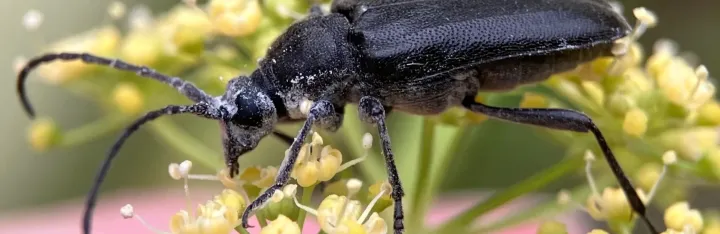
Description
How to identify
Anoplodera is a genus of longhorn beetles belonging to the family Cerambycidae, subfamily Lepturinae. These beetles are characterized by their elongated bodies and long, prominent antennae.
Adult Anoplodera beetles are often seen during the summer months, frequently visiting flowers to feed on pollen. Their appearance can vary by species, with many displaying distinct black and yellow patterns.
The larval stage is the most destructive, as the larvae are specifically adapted to boring into wood. They possess hard, sclerotized mouthparts that allow them to consume tough tree tissues efficiently.
The life cycle of these beetles generally spans one or more years, depending on environmental conditions and the type of host tree they inhabit.
Systematically, they are recognized as secondary pests, which means they usually target trees that are already stressed by environmental factors or other pathogens.
What it damages
Anoplodera larvae feed primarily on the inner bark and cambium layers of various deciduous and coniferous trees, including pine, spruce, birch, and alder.
By boring into the wood, the larvae disrupt the vascular system of the tree, which hinders the transport of water and nutrients, eventually weakening the host plant significantly.
Their presence can lead to the rapid decline of infested trees, turning healthy-looking forests into zones of dieback and decay within a few seasons.
In the timber industry, infestation by these beetles reduces the commercial value of wood, as the larvae create extensive galleries that compromise the structural integrity of the boards.
Furthermore, they create entry points for secondary fungal infections, which accelerate the rotting process and further damage the vitality of the tree.
Signs of infestation
One of the clearest signs of an infestation is the appearance of small, oval-shaped exit holes in the tree bark, indicating where adult beetles have emerged.
Frass, or wood dust produced by the larvae, is often visible around the base of the tree or tucked into the crevices of the bark, marking the active boring sites.
Canopy thinning and leaf yellowing are common symptoms that suggest internal damage has become severe enough to interfere with the tree's vital functions.
In some cases, trees may exhibit localized weeping or resin flow, which is a defensive reaction to the larvae’s initial attempts to breach the bark.
Removing a patch of bark from an affected tree will reveal complex, winding tunnels filled with frass, which are classic indicators of a longhorn beetle presence.
Control measures
Sanitary forest management is the primary strategy for control, involving the removal and destruction of infested logs and standing dead trees before the beetles emerge.
Maintaining high forest health through proper silvicultural practices prevents the stress factors that attract Anoplodera, such as overcrowding or drought susceptibility.
In ornamental settings, systemic insecticides applied to the trunks can effectively kill larvae, while contact insecticides can be used to target adults during their mating season.
Fheromone traps are used in integrated pest management programs to monitor beetle population levels and time the application of protective measures accurately.
- Regular forest health surveys.
- Swift removal of infested debris.
- Targeted insecticide treatments.
- Enhancing natural forest resistance.
Taxonomy
- Latin name
- Anoplodera
- Order
- Coleoptera (beetles)
- Family
- Cerambycidae
- EPPO code
- ANPDSP
Discussion
No discussions yet — be the first.