
Anelaphus
Anelaphus
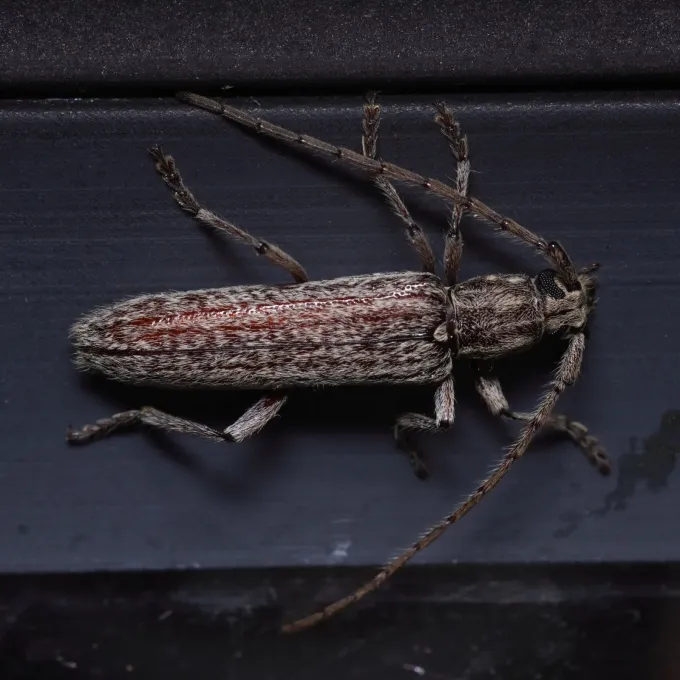
Description
How to identify
Anelaphus is a genus of beetles belonging to the longhorned beetle family (Cerambycidae), order Coleoptera. These wood-boring insects are characterized by their elongated bodies and long antennae, which often exceed the length of the beetle itself.
Adults typically exhibit colors ranging from brown to reddish-tan, often featuring distinct pubescence on the elytra. Their size varies significantly depending on the species, generally ranging from 10 to 20 millimeters.
The larvae are typical of the longhorned family: legless, fleshy, and equipped with a well-developed head capsule and powerful mandibles designed for chewing through dense woody tissue.
Identification is often based on their habit of boring tunnels deep into the sapwood and heartwood of tree branches, causing significant structural damage from the inside out.
The genus includes numerous species primarily distributed in the New World, where they occupy a niche as both secondary and primary pests of forest and orchard trees.
What it damages
The primary damage is caused by larvae developing within living or stressed tree branches. The host range includes both forest trees and various commercially important orchard crops.
Citrus, nut-bearing trees, and hardwood species such as oak or maple are frequently targeted, with the severity of damage depending on the specific Anelaphus species involved.
Damage manifests as circular tunnels under the bark or deep galleries in the wood, disrupting nutrient flow and leading to the premature dieback of affected branches.
Heavy infestations can lead to a complete loss of tree productivity, as the wood becomes brittle and susceptible to breakage during wind events or under the weight of fruit.
In nursery settings, Anelaphus poses a severe threat, as damage to young saplings often results in the death of the tree due to the interruption of the vascular system.
When it appears
The life cycle of Anelaphus typically ranges from one to two years, depending on regional climatic conditions and the specific biological characteristics of the species.
Adult emergence and flight occur during the warmer months, usually from late spring through mid-summer, when beetles mate and lay eggs in bark crevices.
Newly hatched larvae immediately bore into the plant tissue, where they spend the majority of their life cycle feeding on the internal layers of the wood.
Pupation takes place inside the wood, near the surface, after which the adult beetle chews an exit hole to emerge and initiate the reproductive cycle.
Overwintering occurs as larvae within the wood, which provides them with essential protection against harsh winter temperatures and environmental fluctuations.
Signs of infestation
The first indication of an infestation is often the sudden wilting of individual branches in the canopy, which may otherwise appear healthy but contain internal damage.
Small, circular or oval holes may be visible on the bark of affected branches, marking the locations where adult beetles have emerged from the wood.
Frass, or fine wood shavings pushed out by the larvae as they feed, can often be found at the base of the tree or in branch crotches.
Examination of the bark may reveal scarring where larvae have disrupted the vascular tissues, often leading to localized necrotic spots.
- Yellowing and premature leaf drop on specific branches.
- Reduced annual shoot growth.
- Visible cracks in the bark along larval feeding galleries.
Control measures
Sanitary pruning and the prompt removal and destruction of infested branches are the primary methods for managing Anelaphus populations.
Maintaining high standards of horticultural care is vital, as these beetles typically prefer trees already weakened by drought, cold damage, or improper nutrition.
In cases of significant outbreaks, insecticidal treatments applied during the adult flight period can help prevent females from laying eggs on the bark.
Monitoring populations using light or pheromone traps can assist growers in identifying the optimal timing for protective control measures.
Biological control options, such as the use of entomopathogenic nematodes, can be effective when introduced into larval galleries to reduce the overall pest pressure.
Taxonomy
- Latin name
- Anelaphus
- Order
- Coleoptera (beetles)
- Family
- Cerambycidae
- EPPO code
- ANELSP
Discussion
No discussions yet — be the first.