
Aneflomorpha subpubescens
Aneflomorpha subpubescens
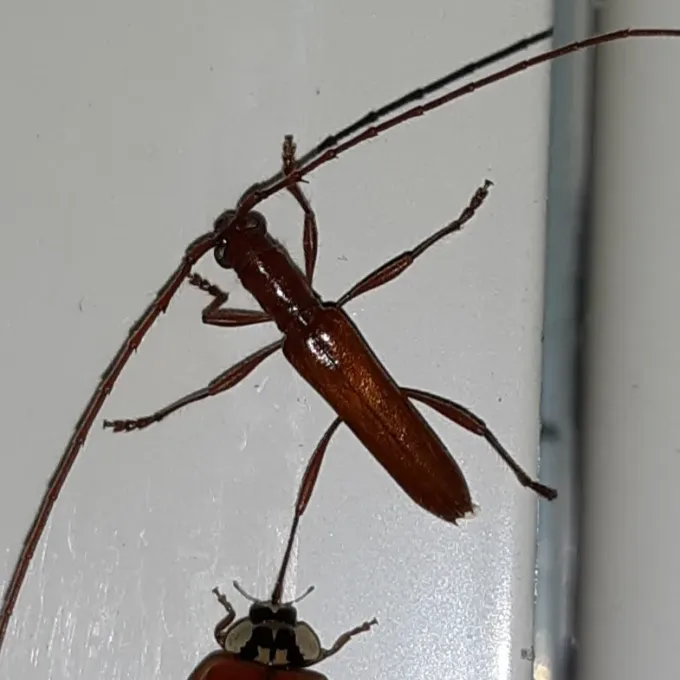
Description
How to identify
Aneflomorpha subpubescens is a species of longhorned beetle belonging to the family Cerambycidae. These beetles are characterized by their elongated bodies covered in fine, light-colored pubescence, which gives the species its specific name.
Adult beetles typically measure between 15 and 20 millimeters in length. Their coloration ranges from reddish-brown to dark brown, allowing them to blend into the bark of host trees effectively.
The antennae are notably long, often exceeding the length of the body, which is a common trait among this subfamily. The legs are well-developed, designed for climbing and maneuvering on rough surfaces.
Larvae are legless, white, and feature a robust head capsule with strong mandibles. They are highly specialized for boring into timber, which makes them difficult to spot until significant damage has occurred.
Scientific identification usually relies on examining the pronotum sculpture and the arrangement of setae on the elytra, often requiring the use of a microscope for accurate classification.
What it damages
This pest primarily targets various deciduous hardwood species, particularly those that are already stressed or suffering from environmental factors. Common hosts include oak and maple trees.
The larvae are responsible for the damage, as they bore deep into the bark and the heartwood of the tree. By creating intricate tunnels, they disrupt the transport of nutrients and water within the trunk.
Such mechanical damage weakens the structural integrity of the tree, making it prone to breakage during storms or high winds. Furthermore, the tunnels serve as entry points for secondary fungal and bacterial pathogens.
In forest management, the presence of Aneflomorpha subpubescens can significantly degrade the quality of harvested timber, rendering it unsuitable for commercial use.
Severe infestations often occur in forests affected by drought, fire, or defoliation, where the trees' natural defense mechanisms are significantly compromised.
When it appears
The life cycle of Aneflomorpha subpubescens is tightly synced with the spring and summer months. Adult flight and mating activities typically occur from late spring through mid-summer.
Females lay eggs in bark crevices of suitable host trees. Once the larvae emerge, they immediately start boring into the wood, which is where they will spend the majority of their developmental stage.
Larval development is slow and can take one or more years, depending on the wood's moisture content and local environmental conditions. Pupation occurs within the wood, often in a specialized chamber.
Emergence of the adult beetle is marked by the creation of exit holes in the outer bark, timed specifically to coincide with the warmer season to maximize breeding success.
Monitoring efforts are most effective during the peak flight season, utilizing light traps or pheromone baits to track population levels in threatened forest areas.
Signs of infestation
Small, circular exit holes in the bark are the most visible sign of an infestation. Fresh sawdust or frass, often referred to as boring dust, is frequently found near these holes at the base of the tree.
The canopy of the infested tree may show signs of decline, such as yellowing leaves or the dying back of branches, indicating that the tree's vascular system is being compromised.
Removing the bark reveals extensive larval galleries that are tightly packed with wood shavings and excrement. These patterns are often diagnostic for wood-boring beetle activity.
The presence of woodpeckers actively pecking at the trunk is a common indicator of a larval population hidden beneath the surface, as they are a primary natural predator.
Technicians may use acoustic sensors to detect the sound of larval feeding within the trunk, a method often employed in high-value park settings to identify infested trees early.
Control measures
Effective management begins with strict forest sanitation. Removing and processing infested or dying trees before the adult beetles emerge is essential to prevent the spread of the population.
Logs and cut timber should not be stored near healthy trees during the peak flight season. Promptly moving or milling harvested wood minimizes the risk of colonization.
For high-value ornamental trees in urban landscapes, professional arborists may use systemic insecticide injections directly into the tree to kill larvae as they feed.
Promoting the health of the tree through proper watering and soil management helps boost its natural resin production and defensive capabilities, making it less attractive to borers.
Biological control, such as protecting the habitat of insectivorous birds and maintaining natural predators, plays a key role in keeping beetle populations at manageable levels in natural ecosystems.
Taxonomy
- Latin name
- Aneflomorpha subpubescens
- Order
- Coleoptera (beetles)
- Family
- Cerambycidae
- EPPO code
- ELAHSU
Discussion
No discussions yet — be the first.