
Ancylonotus tribulus
Ancylonotus tribulus
Description
How to identify
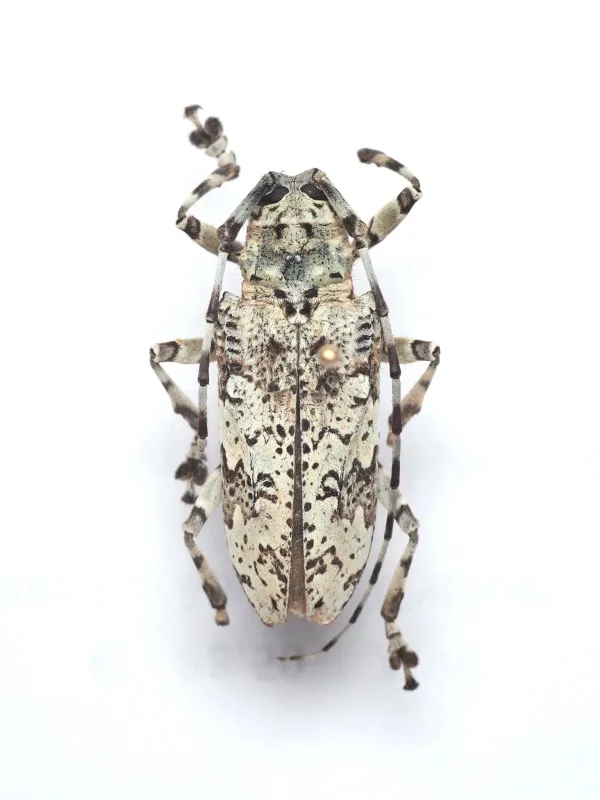
Ancylonotus tribulus is a species of longhorn beetle belonging to the family Cerambycidae, order Coleoptera. It is a well-known pest that primarily affects tropical trees, particularly in the cacao-growing regions of Africa.
The adult beetle is typically characterized by a robust body and long antennae, which are typical for the Cerambycidae family. Its coloration is adapted for camouflage against the bark of host trees.
The life cycle consists of the egg, larva, pupa, and adult stages. The larval stage is the most destructive, spending its time boring galleries inside the wood of the host plants.
These insects are highly adapted to humid tropical environments, where they can reproduce and thrive throughout the year, provided there is an adequate food source available.
The adults are nocturnal, meaning they are most active after sunset, which is a key factor to consider when designing monitoring and trapping programs for plantations.
What it damages
The primary host for Ancylonotus tribulus is the cacao tree (Theobroma cacao). It is considered a significant pest that can impact the commercial productivity of cocoa farms.
The larvae bore deep tunnels into the trunks and branches of the trees. This activity severs the vascular system, effectively cutting off the flow of water and nutrients to the canopy.
Infested trees lose their vigor, leading to stunted growth, leaf yellowing, and eventually the death of individual branches or the entire tree if the infestation is severe.
By creating entry points in the bark, the larvae facilitate the entry of opportunistic fungal infections, which further accelerate the decay and structural failure of the tree wood.
In young cocoa plantations, a heavy infestation of these beetles can lead to significant economic losses, as young trees are often unable to survive the structural damage caused by the borers.
Signs of infestation
The most reliable sign of an active infestation is the presence of frass—a mixture of wood dust and excrement—that accumulates at the base of the tree or in branch crevices.
Small exit holes on the bark are visible, often accompanied by the sap or gum exudation, which is the tree's attempt to seal off the damage caused by the boring larvae.
The canopy of an infected tree often shows signs of distress, such as wilting, chlorosis, and premature leaf drop, which are classic symptoms of blocked vascular flow.
Bark swelling and deformation are frequently seen on the surface of the trunk, indicating areas where the larvae have been feeding just beneath the protective bark layer.
Adult beetles may be spotted on the tree surfaces during the night, as they engage in feeding on the bark, which can provide an early warning of an ongoing infestation.
Control measures
Effective management begins with rigorous field sanitation, which involves the pruning and destruction of branches already occupied by the larvae to limit the spread.
Biological control options, such as the use of entomopathogenic fungi or the conservation of natural predators, are increasingly prioritized in sustainable cocoa farming systems.
Chemical control, when necessary, involves systemic insecticides. These must be applied carefully to ensure efficacy while minimizing the impact on non-target pollinators and the ecosystem.
- Regular inspection of plantations for signs of wood dust
- Physical removal and incineration of infested biomass
- Implementation of pheromone-based monitoring systems
- Improving tree health through proper fertilization and pruning
Integrated Pest Management (IPM) is the most sustainable approach, combining cultural practices, biological agents, and judicious chemical use to keep pest populations below economic thresholds.
Taxonomy
- Latin name
- Ancylonotus tribulus
- Order
- Coleoptera (beetles)
- Family
- Cerambycidae
- EPPO code
- ANCNTR
Discussion
No discussions yet — be the first.