
Yellow-billed duck
Anas undulata
Description
How to identify
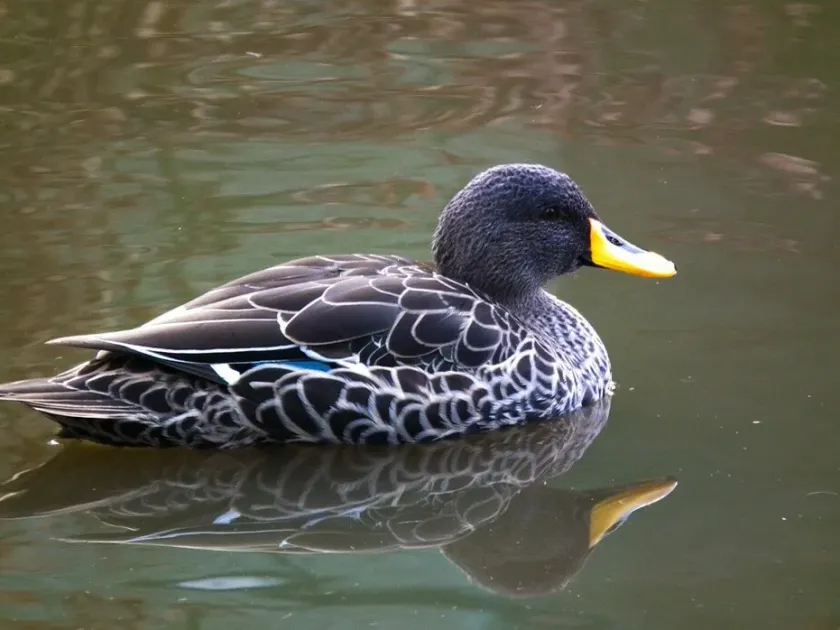
The yellow-billed duck (Anas undulata) is a dabbling duck species in the Anatidae family. It is easily recognized by its dark plumage, lighter-colored head, and a distinctive bright yellow bill.
This species is predominantly sedentary within its range, which means it remains in agricultural regions year-round, posing a continuous threat to local crops.
They are highly mobile birds, often moving between wetlands and adjacent farmlands, taking advantage of the proximity of food and water sources.
As part of the Anseriformes order, these birds are well-adapted to environments heavily modified by humans, including agricultural landscapes and irrigation systems.
Their breeding biology is opportunistic, allowing them to maintain high population levels, which directly contributes to the pressure they exert on agricultural fields.
What it damages
Yellow-billed ducks are known to cause significant damage to grain crops such as wheat, barley, and maize, particularly during the germination and seedling stages.
By consuming freshly sown seeds and young sprouts, these birds can cause significant stand reduction, often requiring replanting of the affected areas.
In addition to feeding, the ducks cause mechanical damage by trampling young crops and compacting the soil, which inhibits root growth and plant development.
As the crops mature, the birds may cause further loss by consuming grains directly from the heads or ears of the plants during the milking and dough stages.
The aggregation of these ducks in large flocks near irrigation ditches exacerbates the damage, as they turn productive fields into resting and feeding sites.
When it appears
The peak period for damage occurs during the planting season when seeds are easily accessible, followed by the early seedling development phase.
Dry seasons increase the risk of bird pressure, as natural water bodies dry up, forcing the ducks to congregate around irrigated crop fields.
The stage of crop maturation, specifically when grain begins to fill, represents another high-risk window for significant agricultural losses.
Feeding intensity is usually highest during the early morning and late evening hours, requiring farmers to be vigilant during these specific times of the day.
Seasonal breeding cycles also influence the number of birds present in an area, as the demand for high-protein food increases for raising ducklings.
Signs of infestation
The most evident sign of a yellow-billed duck infestation is the presence of cleared patches or thin stands in fields where seedlings have been completely eaten.
Damage to individual plants often appears as torn leaves and severed stems, which are typical indicators of grazing by waterfowl, frequently accompanied by bird droppings.
Evidence of soil compaction and flattened trails through a crop canopy indicates that large flocks have been moving through the field to forage.
Finding feathers left behind by the ducks is a clear, diagnostic sign that they are responsible for the damage to the vegetation in that location.
A sudden decline in plant population density, coupled with the presence of hoof-like footprints in the mud or soil, confirms the presence of these pests.
Control measures
The use of propane cannons that emit periodic loud bangs is one of the most effective ways to deter ducks from settling in large groups in a field.
Visual deterrents, including hawk kites, reflective streamers, or scarecrows, help to create a perceived threat that keeps the birds away from crops.
Effective management includes regular monitoring of high-risk fields and deploying non-lethal deterrents immediately upon the arrival of the first flocks.
Modifying habitat by reducing access to unnecessary water pools near crops can decrease the attractiveness of the field for feeding and resting.
- Consistent field scouting and monitoring
- Installation of bioacoustic bird scarers
- Placement of visual repelling devices
- Barrier fencing for high-value areas
Taxonomy
- Latin name
- Anas undulata
- Family
- Anatidae
- EPPO code
- ANAXUN
Discussion
No discussions yet — be the first.