
Gadwall
Anas strepera
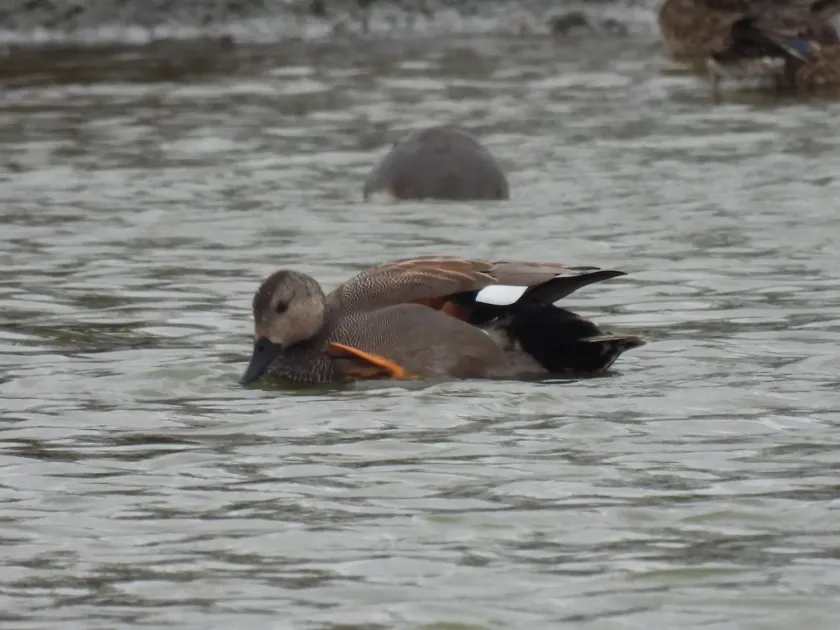
Description
How to identify
The Gadwall (Anas strepera) is a bird species belonging to the Anatidae family, widely distributed across temperate regions and frequently found near water bodies adjacent to farmlands.
These birds are mid-sized ducks with a generally brownish-grey plumage, making them difficult to spot in tall grasses or shoreline vegetation where they often nest.
They are characterized by a distinct white speculum on their wings, which is visible during flight and serves as a primary feature for distinguishing them from other duck species.
Gadwalls are migratory birds, and their occurrence in agricultural settings is highly dependent on seasonal patterns and the availability of food sources in their natural habitats.
While they are primarily aquatic, they exhibit behavioral plasticity by foraging on terrestrial crops when natural food sources in wetlands become depleted or inaccessible.
What it damages
The Gadwall can cause significant agricultural damage by grazing on cereal crops, especially during the sprouting phase of winter wheat and other small grains.
As they forage in groups, they often trample crops in addition to consuming them, leading to uneven stands and reduced overall yields at the time of harvest.
Rice cultivation is particularly vulnerable to Gadwall activity, as the birds consume germinating seeds and can disrupt the water management in flooded paddy fields.
The deposition of fecal matter by large flocks of ducks creates sanitary issues, potentially introducing pathogens or encouraging fungal growth in dense crop stands.
The severity of damage is typically greatest in the margins of fields bordering ponds or rivers, where the birds have easy access to both cover and food.
When it appears
The presence of Gadwalls in fields is most pronounced during spring migration and the period when crop seedlings are emerging and highly susceptible to grazing.
During autumn, the birds often congregate on post-harvest fields, scavenging for remaining grain, which can interfere with autumn tillage operations and field preparation.
The timing of these bird visits is influenced by the breeding cycle, with increased local activity during the nesting period near water bodies, followed by larger migratory gatherings.
Environmental fluctuations, such as drought, can drive Gadwalls to expand their foraging range into crops earlier than usual, increasing the pressure on local farmers.
Monitoring regional migration reports can help farmers predict when Gadwalls are likely to arrive and take preventative measures to protect their crops.
Signs of infestation
Field evidence of Gadwall activity includes patches of completely bare soil in cereal fields, indicating heavy grazing near water bodies.
Distinctive webbed footprints on damp soil around the edges of the field provide clear identification of the presence of waterfowl as the cause of crop loss.
Flattened vegetation patterns along the perimeter of the field suggest paths where the birds have walked between the water source and the interior of the cultivated area.
The accumulation of bird droppings on the leaves and stems of young crops serves as a definitive indicator of high-intensity foraging activity in that area.
Sightings of ducks taking off from the field at dawn or dusk often correlate with the areas where the most severe crop damage is observed.
Control measures
The most effective management strategy involves the deployment of auditory deterrents, such as propane cannons or bio-acoustic devices that simulate predator calls.
Visual deterrents, including reflective tape and scarecrows, can be effective in the short term, provided they are frequently repositioned to prevent bird habituation.
Maintaining a buffer strip of non-target or less palatable vegetation between the water source and the primary crop can help divert birds away from the main field.
Active patrol of the fields, particularly during the early morning and evening hours, can disrupt feeding behavior and discourage the formation of large flocks.
- Installation of perimeter motion-activated sprinklers.
- Strategic placement of predatory decoys.
- Management of field edges to reduce immediate accessibility for birds.
Taxonomy
- Latin name
- Anas strepera
- Family
- Anatidae
- EPPO code
- ANAXST
Discussion
No discussions yet — be the first.