
American black duck
Anas rubripes
Description
How to identify
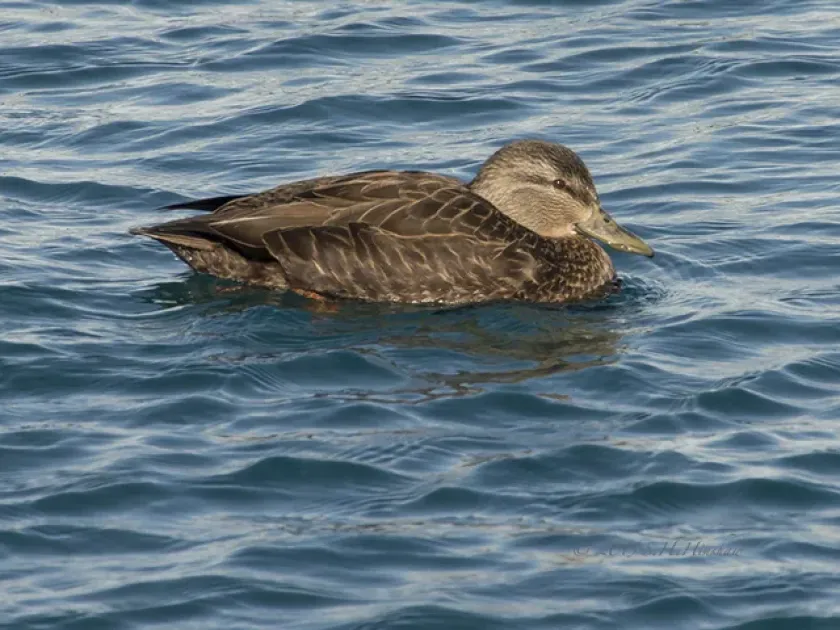
The American black duck (Anas rubripes) is a large dabbling duck of the family Anatidae. It is characterized by dark brown plumage with paler, buff-colored heads and necks.
The most distinctive identification feature is the iridescent violet speculum on the wing, which lacks the white border typically found in other duck species.
They are primarily found in the eastern part of North America, where they inhabit wetlands and coastal areas that are often adjacent to productive farmlands.
These birds are highly adaptable and display gregarious behavior, often congregating in large flocks when food resources, such as agricultural crops, become available.
Their flight behavior is robust, and they frequently travel long distances between their roosting sites and the feeding grounds located in agricultural fields.
What it damages
The American black duck can cause significant damage to small grains, corn, and legume crops, particularly in areas near riverbanks or irrigation canals.
They often target newly planted seeds or tender seedlings, pulling them from the ground and causing crop loss that requires expensive reseeding efforts.
As the plants grow, the birds continue to cause physical damage by trampling large areas of the field, which results in uneven crop stands and potential yield reduction.
During the harvest period, they may consume mature grains from heads or cobs, directly reducing the volume of the harvest and lowering overall profitability.
Accumulated waste from large flocks on crop fields can introduce pathogens and affect the soil quality, potentially leading to plant health issues in affected zones.
When it appears
Their impact is most severe during the spring migration when they are actively seeking high-energy food sources to fuel their breeding efforts and movement north.
Fall migration is another period of intense crop activity, as the birds forage heavily on crop residues and remaining late-season grain crops before the winter freezes.
The severity of the damage often depends on local weather patterns; prolonged cold spells may cause the birds to remain in agricultural zones longer than usual.
While they nest during the warmer months, their presence in fields is less erratic then, but they remain a consistent threat to fields located near their nesting sites.
The critical timing for damage management is early spring for germinating seeds and autumn for harvesting stage, requiring constant monitoring during these windows.
Signs of infestation
Webbed footprints in muddy areas of the field or around irrigation sites are the primary indicator of a recent visit by a flock of American black ducks.
Evidence of feeding includes clipped seedlings, torn foliage, and uneven patches where the plants have been trampled by the weight of the flock.
Presence of feathers and droppings near the perimeter of the field suggests regular usage of the area as a feeding or loafing ground.
Scattered grain hulls or partially consumed plant parts across the surface of the soil indicate that the birds have been feeding in that specific area.
Distinctive noise levels from the flocks, especially at dawn and dusk, can serve as an auditory signal of their activity in proximity to the crops.
Control measures
Integrated pest management strategies are recommended, starting with visual scare tactics such as predator decoys and reflective deterrents placed strategically.
The use of propane cannons or bio-acoustic devices that broadcast alarm calls can be highly effective in dispersing the ducks from critical crop fields.
Physical exclusion measures, such as netting or bird-proof fencing, can protect smaller or high-value experimental crop plots from avian damage.
Maintaining clean borders around fields helps by removing secondary food sources and cover, making the area less attractive for the ducks to settle.
Strategic timing of planting or selecting more resistant crop varieties can sometimes mitigate the impact during peak migration windows when bird pressure is highest.
Taxonomy
- Latin name
- Anas rubripes
- Family
- Anatidae
- EPPO code
- ANAXRU
Discussion
No discussions yet — be the first.