
Garganey
Anas querquedula
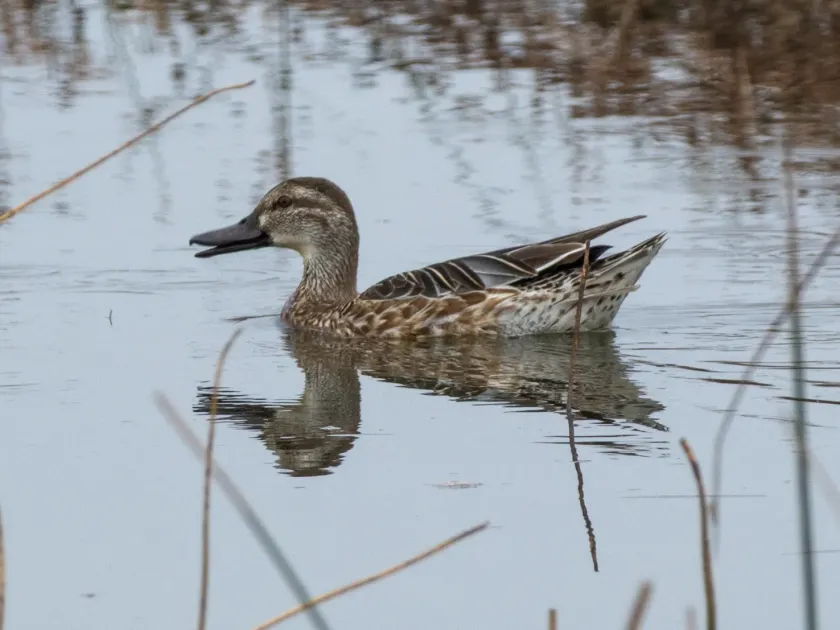
Description
How to identify
The Garganey (Anas querquedula) is a small dabbling duck species known for its distinctive white eyebrow-stripe visible on the males.
Belonging to the Anatidae family, this bird is a migratory species that inhabits wetlands and is often found near agricultural landscapes.
They weigh between 300 and 600 grams and are highly adaptable to various water-logged habitats, including flooded agricultural plains.
Garganeys typically breed in the spring and early summer, often selecting sites with dense vegetation for their nesting activities.
In agronomy, they are classified as opportunistic pests that utilize irrigation systems and flooded fields as primary sources of food and shelter.
What it damages
The primary economic damage occurs in rice cultivation, particularly during the germination phase and the milk maturity of the grain.
Flocks of Garganeys trample young sprouts, creating bare patches in the field that significantly reduce total crop density and yields.
They can cause structural damage to irrigation embankments and dams by nesting in the soil, which leads to water leaks and drainage issues.
By consuming seeds and young seedlings, they directly impact the crop stand establishment and increase the need for replanting.
Furthermore, the presence of large flocks causes soil compaction and contamination, which can interfere with the plants' nutrient uptake.
When it appears
The spring migration period, typically from April to May, represents the highest risk of damage to newly planted rice fields.
During the summer months, the presence of nesting pairs and their offspring keeps the pressure on crops near water sources.
The autumn migration in late summer and early autumn leads to temporary congregations on fields that are being harvested or are recently drained.
Diurnal activity peaks during the early morning and dusk, which are the primary feeding times for these migratory birds.
The risk factor is seasonally correlated with water levels: higher water levels in rice paddies attract more ducks, increasing the chance of damage.
Signs of infestation
Visual identification is possible by observing patches of stunted or flattened rice plants caused by the birds' activities.
Droppings, shed feathers, and footprints along the edges of the paddy water are clear indicators of their recent presence.
Audible signals during night hours near the fields often indicate that the flock has returned to the site for rest or feeding.
Damage to the sides of irrigation ditches and dykes is another strong indicator that the birds have established a presence on the farm.
A reduction in overall shoot density in specific areas of the field serves as a quantitative measure of the damage inflicted by the ducks.
Control measures
The most effective strategy involves using acoustic deterrents that emit distress calls or predator sounds to discourage the birds from landing.
Visual deterrents, such as reflective tapes or moving scarecrows, are widely used but must be relocated periodically to prevent habituation.
Good agricultural practices include regular field monitoring and controlling water depth to make the fields less attractive for dabbling.
- Regular patrols of rice irrigation systems
- Deployment of bio-acoustic scare devices
- Clearing excessive vegetation near drainage channels
Implementing an integrated approach is necessary, combining structural defenses with behavioral deterrents to minimize crop loss effectively.
Taxonomy
- Latin name
- Anas querquedula
- Family
- Anatidae
- EPPO code
- ANAXQU
Discussion
No discussions yet — be the first.