
Spot-billed duck
Anas poecilorhyncha
Description
How to identify
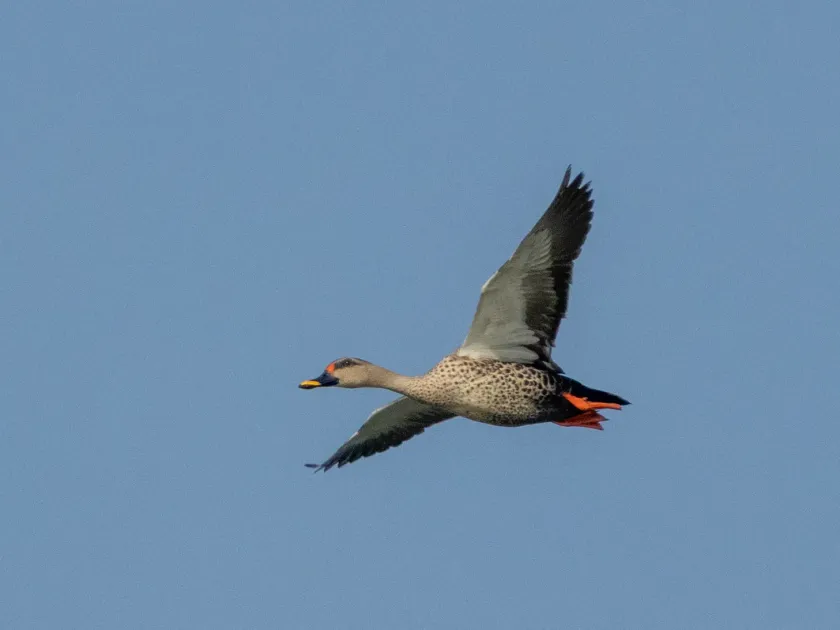
The spot-billed duck (Anas poecilorhyncha) is a dabbling duck of the Anatidae family, belonging to the Anseriformes order. It is identified by its dark plumage with a scaly appearance and a bright yellow tip on its bill, which serves as a key diagnostic feature.
This species typically resides near freshwater bodies adjacent to agricultural landscapes. The adults are highly mobile, frequently moving between their nesting sites and various feeding grounds to find nutrition.
The biology of this species is tied to wetland environments; however, they often forage on terrestrial agricultural crops, especially in flooded fields. They reach sexual maturity within their first year, which supports rapid population growth.
Breeding occurs during the spring and summer seasons, resulting in broods of up to twelve ducklings. The rapid development of the offspring requires substantial caloric intake, which the ducks often source from nearby cultivated crops.
Populations are particularly dense in regions with intensive rice cultivation, where the man-made landscape provides an ideal habitat for both resting and foraging.
What it damages
The spot-billed duck causes significant damage to rice (Oryza sativa) crops, particularly during the germination phase. The birds consume newly sown seeds, which drastically reduces plant density and overall yield.
Besides rice, the pest can damage winter cereal crops like wheat and barley by pecking at sprouting grains or young, tender seedlings. This results in significant gaps in the field, undermining the success of the agricultural season.
Mass congregating of ducks on fields leads to the trampling of seedlings, causing physical damage and soil compaction. This disrupts the uniformity of the agro-ecosystem and lowers the economic value of the produce.
These birds can also facilitate the spread of weed seeds across fields through their feet and digestive tracts, further complicating weed management for farmers.
Economic damage is most severe during the spring sowing period when natural food sources for the ducks are limited, driving them to congregate on vulnerable fields.
Signs of infestation
Key indicators of duck presence include distinct footprints in wet soil and clear patches of "grazing" where seedlings have been entirely stripped or destroyed.
Droppings and discarded feathers are commonly found on the fields, serving as clear evidence that the flock has been frequenting the specific area for feeding or resting.
Damaged seedlings appear as cleanly removed or pulled-up plants, and small holes in the ground made by the ducks' bills as they dig for seeds are often visible.
The active vocalization of flocks during early morning or evening transition flights is a reliable sign that the birds are utilizing the nearby fields as a resource.
Regular visual scouting of the fields allows farmers to identify bird activity early, helping to predict the scale of the threat before massive damage occurs.
Control measures
Visual deterrents such as predator decoys, holographic tapes, or reflective elements are effective in disrupting the ducks' confidence and keeping them away from crop areas.
Acoustic deterrents, including systems that broadcast distress calls or mimic gunshot sounds, are highly efficient in protecting large acreage from feeding flocks.
Agrotechnical strategies, such as precise seed depth management and optimizing sowing dates, can minimize the accessibility of grains to the birds during their most vulnerable stage.
Consistent field patrols, particularly during peak arrival times, prevent the birds from habituating to the location and force them to seek alternative food sources.
Establishing lure crops or sacrificial feeding plots away from the main commercial fields can be a viable strategy to divert the ducks' attention and protect high-value harvests.
Taxonomy
- Latin name
- Anas poecilorhyncha
- Family
- Anatidae
- EPPO code
- ANAXPO
Discussion
No discussions yet — be the first.