
Eurasian wigeon
Anas penelope
Description
How to identify
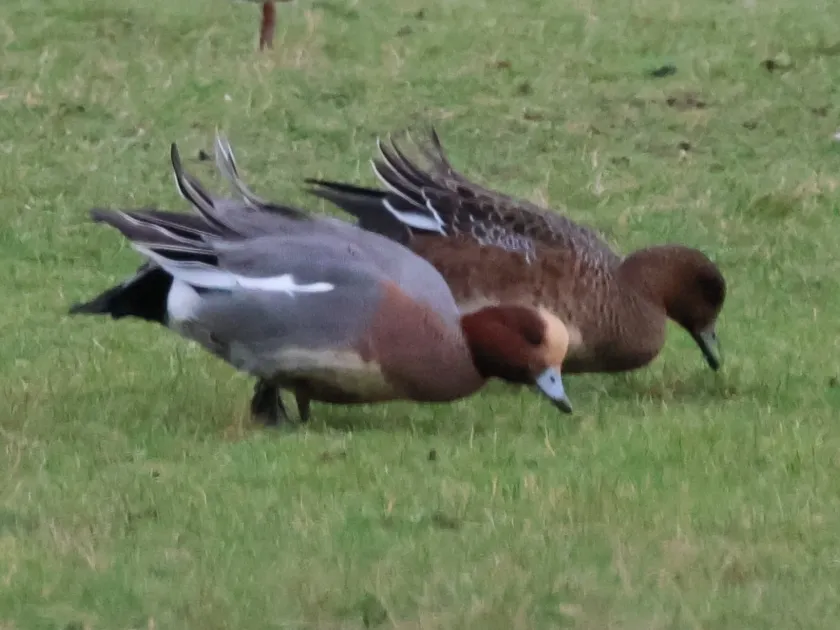
The Eurasian wigeon (Anas penelope) is a medium-sized dabbling duck belonging to the Anatidae family. It is easily recognized by its compact body and distinct behavioral patterns.
The male, or drake, has a rich chestnut-colored head with a prominent creamy-yellow crown, while the female has a more mottled, brownish plumage for camouflage.
They are highly migratory birds, often forming large flocks that travel across vast distances and stop in agricultural landscapes to graze on available vegetation.
Eurasian wigeons are known for their agile and noisy flight, often accompanied by the male's characteristic whistling call, which sounds like "whee-oo".
Unlike many other duck species that prefer deep water, wigeons are frequently observed feeding on open fields and grassland, making them a potential agricultural nuisance.
What it damages
The primary agricultural damage caused by the Eurasian wigeon occurs on winter cereal fields, specifically wheat, barley, and rye during their early growth stages.
The birds graze on the tender green shoots, which are high in nutritional value. Frequent grazing can lead to significant biomass loss in young crops.
Besides direct consumption, the weight of large flocks causes mechanical damage through trampling, resulting in stunted plant growth and localized crop failure.
Damage is often concentrated in fields adjacent to wetlands or rivers, as these provide safe resting spots for the birds between their foraging excursions.
The cumulative effect of a large flock feeding for several days can lead to bare patches in the field, which may require reseeding in extreme cases.
When it appears
The risk of damage is highest during the spring and autumn migration periods, when wigeons stop over on agricultural lands to feed and replenish fat reserves.
In spring, the arrival of these birds coincides with the critical early growth phase of winter cereals, making the young plants particularly susceptible.
Autumn migration sees the birds using harvested fields or early-sown winter crops as foraging grounds before they continue their journey to wintering sites.
Weather patterns heavily influence the duration of their stay; delayed springs often result in longer residence times on the fields, increasing potential losses.
Daily activity is most intense during dawn and dusk, as the birds commute between their aquatic roosting sites and the target foraging fields.
Signs of infestation
Detection is possible by identifying webbed footprints left on moist soil, which are distinct from the prints of typical terrestrial bird pests.
The presence of damaged plants with jagged, uneven leaf edges indicates grazing by ducks, rather than insect or rodent damage.
Droppings scattered across the soil in affected areas provide clear evidence of a large flock's presence and duration of foraging.
The appearance of "grazed" or trampled zones, where the crop density is significantly lower than in the rest of the field, is a classic sign of wigeon activity.
Visual observation of large flocks on the fields, accompanied by the birds' distinct whistling calls, is the most direct indicator of a potential infestation.
Control measures
Acoustic deterrents such as broadcast alarm calls or predator sounds are commonly used to discourage wigeons from settling on specific fields.
Visual repellents, including predator decoys, hawk kites, and reflective tapes, can be effective if moved periodically to prevent habituation.
Propane cannons that produce sudden, loud explosions are highly effective at scaring away flocks, provided they are managed correctly to maintain the birds' fear response.
Agricultural management, such as maintaining high crop vigor through fertilization, can help plants withstand moderate grazing pressure.
Integrated bird management strategies, involving the rotation of different scaring devices, offer the best protection against recurring damage in vulnerable areas.
Taxonomy
- Latin name
- Anas penelope
- Family
- Anatidae
- EPPO code
- ANAXPE
Discussion
No discussions yet — be the first.