
Florida mottled duck
Anas fulvigula
Description
How to identify
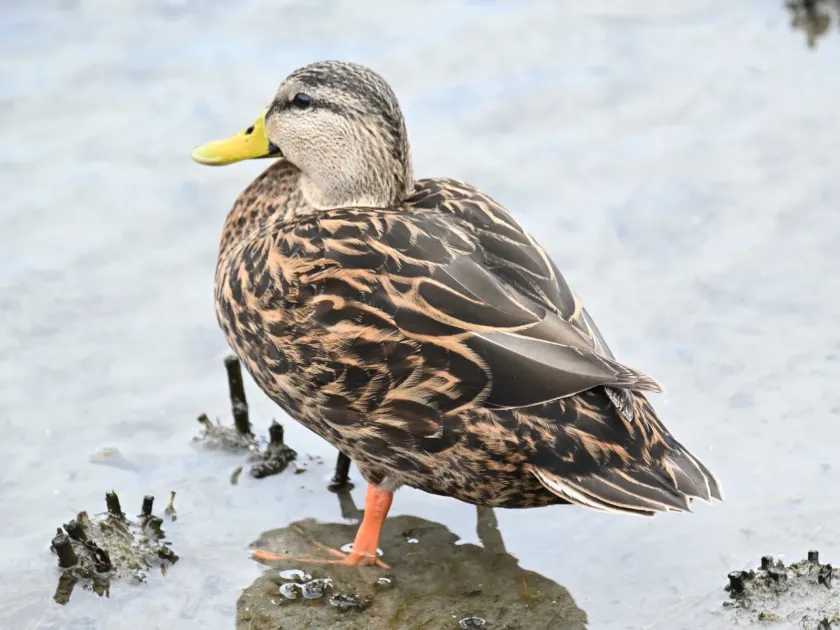
The Florida mottled duck (Anas fulvigula) is a non-migratory waterfowl species belonging to the Anatidae family. It closely resembles the mallard but is distinguished by its darker, mottled brown plumage and a bright yellow bill with a black spot at the base.
This species is native to the coastal regions of Florida and the Gulf Coast. Their non-migratory nature means they remain in the vicinity of agricultural land throughout the year, posing a constant challenge for local farmers.
Adults reach a length of 50–60 centimeters. Both sexes share similar coloration, making identification in the field based solely on plumage difficult without observing behavioral patterns.
Breeding occurs from March to July. Nests are typically built in dense vegetation near water sources, which often brings them into direct proximity with rice irrigation systems and fields.
Their adaptive feeding habits allow them to capitalize on the nutrient-rich environment of rice paddies, transitioning them from wetland foragers to agricultural pests.
What it damages
Rice crops are the primary target for the Florida mottled duck. They cause significant damage during the early seedling stage by pulling up young rice plants, which results in thin and uneven stands.
During the milk and dough stages of grain development, these ducks congregate in large flocks to feed on the ripening heads. This leads to substantial yield loss through both direct consumption and physical trampling of the plants.
The birds' presence causes soil compaction in the paddies and pollutes the water with excrement, potentially altering the water quality and stressing the developing rice crop.
Economic damage can be severe, with some reports suggesting losses of 15 to 30 percent in untreated fields. This requires farmers to implement consistent protection measures to preserve grain quality and volume.
Furthermore, they can interfere with irrigation infrastructure by damaging water control structures or clogging channels with plant debris used for loafing and nesting purposes.
When it appears
The most critical period for crop protection is the spring planting season. Young rice seedlings are highly vulnerable to being uprooted by ducks searching for food in newly flooded paddies.
A second peak in activity occurs in late summer and early autumn when the rice crop reaches maturity. During this time, the grain is highly attractive to the birds, and flocks become more persistent.
Since the species is resident, its activity is dictated by food availability and environmental conditions rather than long-distance migration. Droughts or heavy rain can push populations from natural wetlands into agricultural areas.
Seasonal shifts in water levels across the landscape directly influence the concentration of ducks on rice farms. Managing these water resources is a key part of limiting their access to the fields.
Field monitoring should be continuous throughout the growing season to identify early signs of flock formation and initiate deterrent measures before the damage becomes widespread.
Signs of infestation
The most prominent sign of damage is the appearance of bare patches or depleted areas within the rice field. These spots are usually concentrated in areas with shallow water where the ducks feed most comfortably.
Ragged edges on young leaves indicate that the plants have been nipped by ducks. Tracks and footprints in the soft mud along the borders of the paddies are clear evidence of their foraging activity.
Accumulated feathers and waterfowl droppings on the water surface and along the dikes serve as indicators of frequent use of the field by duck populations.
Observing flocks taking flight from a field at dawn or dusk is a reliable indicator that the area is being used as a primary feeding ground, necessitating immediate intervention.
- Presence of bare spots in rice stands.
- Trampled and broken stalks during the grain-filling stage.
- Specific waterfowl tracks in the mud.
- Reduced plant density in shallow ponding areas.
Control measures
Management strategies for the Florida mottled duck focus on non-lethal deterrent methods, as the species is subject to wildlife protection regulations in many areas.
Propane cannons are the most effective tool for protecting large rice acreages. The random, loud reports effectively scare off flocks and prevent them from settling in the fields.
Visual deterrents, such as scarecrows, reflective ribbons, and predator decoys, provide short-term relief but must be rotated frequently to prevent the ducks from habituating to them.
Cultural control involves field leveling to eliminate deep-water pockets where ducks prefer to congregate. By reducing these sites, farmers make the fields less attractive to the birds.
Timely harvesting of the crop is crucial to minimize the duration that grain is exposed to potential damage, effectively narrowing the window of opportunity for the pests.
Taxonomy
- Latin name
- Anas fulvigula
- Family
- Anatidae
- EPPO code
- ANAXFU
Discussion
No discussions yet — be the first.