
Mexican duck
Anas diazi
Description
How to identify
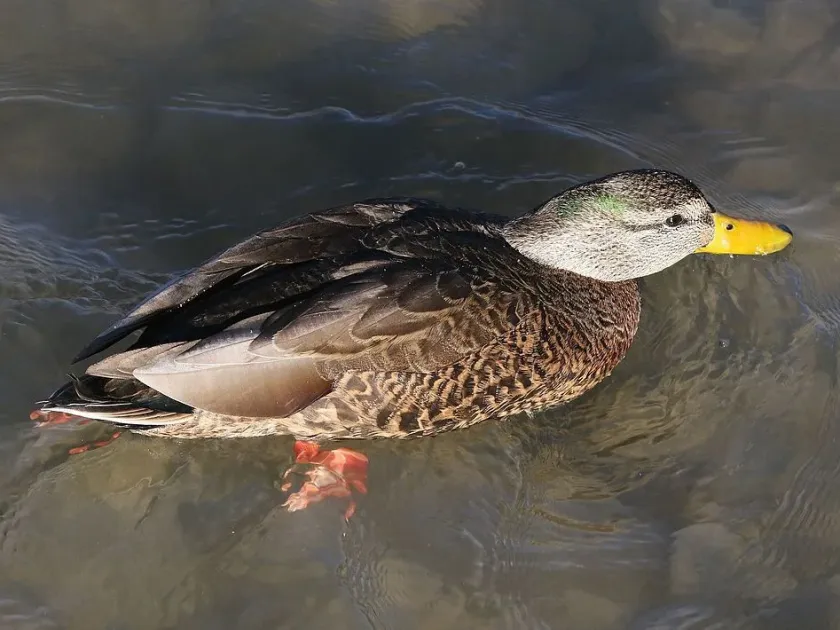
The Mexican duck (Anas diazi) is a dabbling duck species in the Anatidae family. It closely resembles the Mallard but is distinguished by its darker, grayish-brown plumage, which provides effective camouflage in its natural habitat.
Males and females share similar coloration, a common trait for this species. An adult bird measures approximately 50–55 centimeters in length, with a wingspan that allows for extensive seasonal movements in search of food.
The bill is specifically adapted for filter-feeding, allowing the duck to consume a wide range of aquatic and terrestrial vegetation. They often form groups, which increases their potential impact on agricultural fields during migration or nesting seasons.
For accurate identification, one should look for the speculum on the wings, which features a greenish tint with a white border. These birds prefer to inhabit areas near water bodies that border agricultural landscapes.
Monitoring bird behavior during dawn and dusk allows agronomists to detect their presence in the fields. Identification can be challenging due to their secretive nature when nesting in dense vegetation near irrigation canals.
What it damages
The Mexican duck primarily causes damage to cereal crops such as wheat, barley, and rice. Birds consume young seedlings, leading to thin crop stands and the potential need for reseeding entire areas.
A significant threat involves the consumption of sprouting seeds directly from the soil. A flock feeding on a field after sowing can destroy a large percentage of the future yield within a few days.
During the grain maturation phase, the birds damage the heads by eating the grains and breaking the stems. This not only reduces yield volume but also invites secondary fungal infections in the damaged tissue.
Beyond crop consumption, the birds cause soil compaction in resting areas and contaminate fields with droppings. This negatively impacts the overall phytosanitary condition of the field.
Corn in the milk stage is also vulnerable to this pest. Ducks damage the ears, which provides entry points for harmful insects and pathogens, substantially reducing the market quality of the harvest.
When it appears
Peak activity in agricultural fields is observed during the spring when seeds germinate. The fresh greenery provides a vital energy source for migrating populations of this species.
The autumn period involves active feeding on fields after the main harvest, where birds glean leftover grains. However, the most critical damage occurs when the crops are in the sensitive "seedling-to-tillering" phase.
In regions with extensive irrigation networks, Mexican ducks may linger for longer periods. This increases the contact time between the birds and the crops, leading to higher economic losses.
The seasonality of their appearance is also influenced by weather conditions and water availability. Drought years force the birds to utilize agricultural fields more intensively as a water and food source.
The species' life cycle is tied to migration, meaning peak infestation times often coincide with mass movement periods. Agronomists should intensify monitoring efforts during these specific windows.
Signs of infestation
Initial signs of infestation include bare patches in fields, with visible traces of grain or seedling consumption. Characteristic webbed footprint patterns on moist soil are often visible near these damaged zones.
The presence of feathers and specific droppings at the edges of fields bordering water is a reliable indicator of flock presence. Birds typically select areas with easy access to water for their feeding activities.
Damaged cereal stems have ragged edges, which distinguishes them from insect damage. Unlike insect pests, ducks act aggressively, often pulling entire plants out by the roots, causing immediate plant death.
Trampled areas where birds have rested or preened are clear indicators of their activity. In these zones, crops are often found completely destroyed or flattened beyond recovery.
Bird vocalizations or their presence in the sky at dusk should serve as a signal for immediate field inspection. Early detection is key to implementing control measures before major losses occur.
Control measures
Effective protection methods include visual repellents such as predatory bird decoys or reflective tapes. It is essential to periodically relocate these devices to prevent the birds from becoming habituated to them.
The use of acoustic cannons or systems that mimic predator distress calls produces good results on larger fields. This creates a zone of discomfort that encourages the flock to abandon the area.
Agronomic measures include creating buffer zones and limiting access to open water within the fields. Clearing canal banks of dense vegetation makes the site less attractive for duck nesting.
When threat levels are high, protective netting may be used on small high-value plots. Additionally, scheduling planting dates to ensure crops pass the vulnerable stage as quickly as possible is recommended.
Biological control methods, such as utilizing trained raptors, require professional intervention but offer high effectiveness without chemical exposure. Combining multiple methods provides the best results for pest management.
Taxonomy
- Latin name
- Anas diazi
- Family
- Anatidae
- EPPO code
- ANAXNO
Discussion
No discussions yet — be the first.