
Northern shoveler
Anas clypeata
Description
How to identify
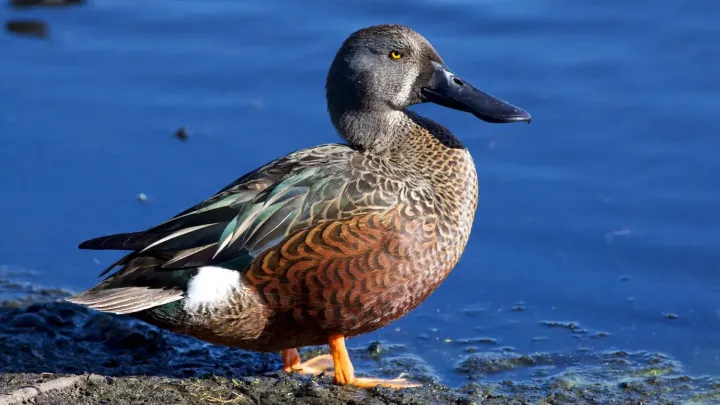
The Northern shoveler (Anas clypeata) is a species of dabbling duck within the family Anatidae, characterized by its distinctive, long, spoon-shaped bill. This unique anatomical feature is adapted for filtering small organisms from shallow water.
Males in breeding plumage are striking, featuring dark green heads, white chests, and rich chestnut-colored flanks. Females are mottled brown, providing excellent camouflage in marshy habitats.
These birds primarily inhabit shallow, nutrient-rich wetlands, but they are known to exploit flooded agricultural fields, particularly rice paddies, as opportunistic feeding grounds.
Their flight is direct and swift, and they often forage by swimming with their heads submerged, using their specialized bill to sift through the mud and water for seeds and invertebrates.
Population density and movement patterns are driven by migratory cycles and the availability of water, which influences the frequency of their interaction with agricultural systems.
What it damages
The primary economic impact of the Northern shoveler is observed in rice production areas. These ducks frequent flooded fields during the germination phase, consuming young rice sprouts.
Beyond ingestion, substantial damage occurs through trampling. As large flocks move through the shallow water of a paddy, they crush young seedlings, leading to reduced plant density and uneven crop establishment.
Damage to irrigation infrastructure is another negative consequence. Continuous activity in water channels can lead to the erosion of earthen levees and the clogging of water intake structures.
Frequent disturbance and consumption of the crop on edges adjacent to wetlands can result in significant yield losses, often requiring costly replanting efforts by farmers.
The contamination of irrigation water by bird feces in high-density areas may also affect water quality, occasionally promoting undesirable algal growth or bacterial contamination in the paddy.
When it appears
Northern shovelers are most problematic during the spring migration season, which often coincides with the timing of rice seeding and initial seedling growth.
In spring, when natural food sources are transitioning, flooded rice fields provide a convenient and concentrated food supply that attracts migratory flocks.
While the breeding season occurs later in the year, the impact on crops is reduced as the plants mature and develop stronger, less palatable structures.
Autumn migration can bring birds back to the area, but by this time, the rice crop is generally resilient and nearing maturity, making it less vulnerable to bird damage.
Agricultural risk is highest when planting dates align precisely with the peak spring migratory surge, necessitating vigilant monitoring during these specific calendar windows.
Signs of infestation
Visual identification of their presence is characterized by the sighting of characteristic flocks on flooded fields and the distinct sound of their wings in flight.
The main indicator of crop damage is the appearance of bare patches in rice fields where seedlings have been uprooted or stripped entirely by foraging ducks.
Evidence of waterfowl presence includes the accumulation of droppings at the water's edge and in areas where the birds gather to rest.
Flattened vegetation paths and trampled mud around the water intake points are common signs that a field is being used as a staging or feeding area.
Ragged edges on damaged stems and the absence of seeds in the soil are definitive proof of avian feeding activity within the agricultural plot.
Control measures
Effective management includes the use of bioacoustic devices that broadcast predator calls or alarm signals to deter birds from landing on the fields.
Visual deterrents, such as predator decoys and reflective materials, can provide temporary protection when moved frequently to prevent habituation.
Agronomic strategies, such as maintaining optimal water depth and adjusting planting dates, can help minimize the attractiveness of the fields to foraging waterfowl.
- Deployment of automated bioacoustic sound systems.
- Frequent relocation of visual deterrents and scarecrows.
- Precision water management to reduce feeding efficiency.
- Early field monitoring during peak migration weeks.
- Installation of physical barriers for high-value research or small fields.
Taxonomy
- Latin name
- Anas clypeata
- Family
- Anatidae
- EPPO code
- ANAXCL
Discussion
No discussions yet — be the first.