
Anaglyptus verrucosus
Anaglyptus verrucosus
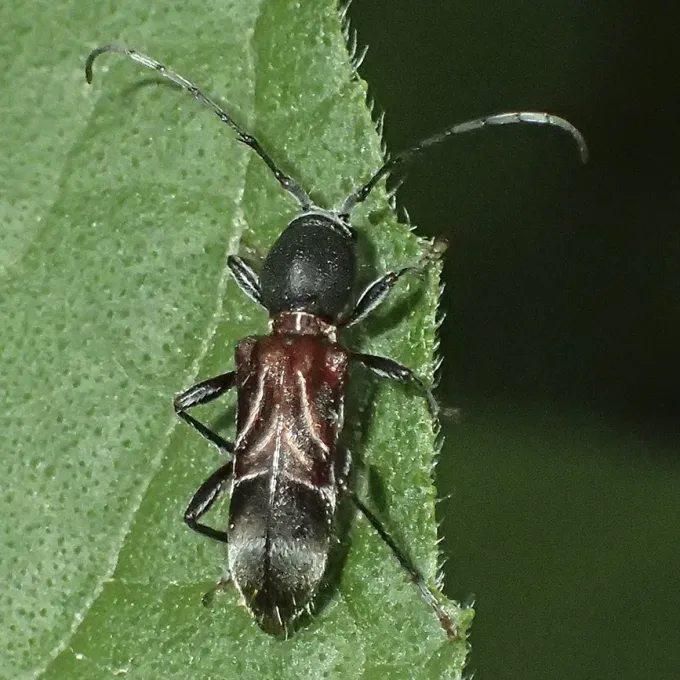
Description
How to identify
Anaglyptus verrucosus is a beetle belonging to the longhorn beetle family (Cerambycidae). The adult insect has an elongated body, typically ranging from 8 to 15 millimeters in length.
The beetle's body is covered in dense hairs, and it features a dark color scheme with distinct light bands on the elytra, providing excellent camouflage against tree bark.
The larva of this pest has a typical cerambycid structure: it is legless, white to yellowish in color, and possesses powerful mouthparts capable of tunneling through wood.
Systematically, this species belongs to the Cerambycinae subfamily. Unlike some other beetles, it maintains a hidden lifestyle, often remaining unnoticed until the tree shows severe decline.
Identification of this species in the field often requires a magnifying lens, as the morphological features of the antennae and pronotum are crucial for accurate classification.
What it damages
This pest is a xylophage that primarily attacks various deciduous trees. It is known to infest orchard species, including apple, pear, plum, and apricot trees.
In forest ecosystems, it frequently attacks oaks, where larvae create intricate galleries, disrupting nutrient flow and significantly weakening the host tree.
The beetle tends to target stressed, weakened, or dying trees, though in cases of high population density, it can also infest relatively healthy specimens.
The tunneling activities of the larvae create internal voids, which compromise the structural integrity of the trunks and branches, making the tree susceptible to wind breakage.
Economic damage is caused by the gradual loss of orchard productivity, degradation of wood quality, and the premature death of long-standing fruit trees.
When it appears
The adult emergence period occurs during late spring and early summer, typically peaking in May and June when the weather conditions are favorable.
During this stage, adults feed on pollen from various flowering plants to gain the necessary energy for reproductive maturation and egg production.
Females lay eggs in bark crevices or existing mechanical wounds on the tree, selecting sites that provide optimal moisture for the developing larvae.
The larval stage is prolonged and can last from one to two years, depending on regional climatic factors and the physiological status of the host tree.
Pupation occurs at the end of the larval gallery, often near the bark surface, after which the new adult beetle bores a characteristic exit hole to emerge.
Signs of infestation
The most prominent sign of infestation is the appearance of small, circular or oval exit holes on the bark of trunks and main scaffold branches.
Frass, often referred to as "wood flour," may accumulate at the base of the tree or within branch crotches, indicating active boring by larvae inside the wood.
Visual symptoms of infestation include premature yellowing, wilting, or thinning of the canopy, which signals that the tree's vascular system has been compromised.
In areas where larvae are highly active, the bark may appear sunken or start to peel, often accompanied by sap flow from the affected areas.
- Presence of circular exit holes in the bark.
- Fine wood dust at the base of the tree.
- Gradual dieback of individual branches.
- Swelling or cracking of the bark layer.
Control measures
The primary control strategy involves good arboricultural practices, such as proper pruning, removal of deadwood, and sealing mechanical wounds with pruning paint.
It is essential to identify, remove, and destroy heavily infested or dead trees to prevent the pest from spreading throughout the orchard or landscape.
For high-value specimens, preventative trunk sprays with contact or systemic insecticides during the peak flight season can help deter females from laying eggs.
Using pheromone traps can assist in monitoring beetle populations, allowing for better timing of interventions and reducing the need for broad-spectrum chemical applications.
Encouraging natural predators, such as woodpeckers and other insectivorous birds, is a sustainable way to manage beetle populations within a garden environment.
Taxonomy
- Latin name
- Anaglyptus verrucosus
- Order
- Coleoptera (beetles)
- Family
- Cerambycidae
- EPPO code
- ANALVE
Discussion
No discussions yet — be the first.