
Anacamptodes vellivolata
Anacamptodes vellivolata
Description
How to identify
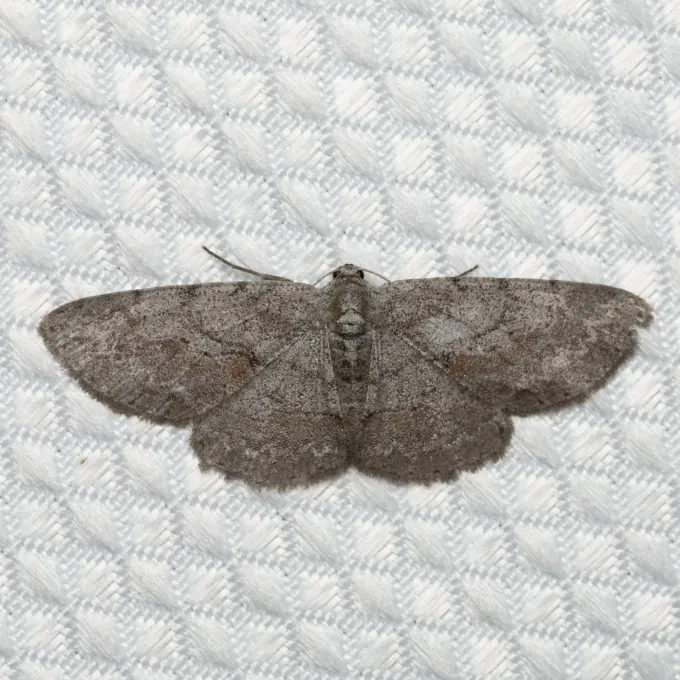
Anacamptodes vellivolata is a species of moth belonging to the family Geometridae. These moths are characterized by their cryptic coloration, which provides excellent camouflage against tree bark.
The larvae, commonly known as inchworms or loopers, exhibit a unique method of locomotion, pulling their rear segments toward their front legs during movement.
Larvae typically display shades of brown or gray, which allow them to blend seamlessly with twigs and foliage, serving as an effective defense mechanism against predators.
The insect undergoes a complete metamorphosis, passing through egg, larval, pupal, and adult stages. They often overwinter as pupae in soil or deep within bark crevices.
Adult moths are nocturnal and highly attracted to light sources, making light traps a useful tool for monitoring population density in agricultural or forestry settings.
What it damages
This pest primarily affects a variety of coniferous and some deciduous tree species, potentially causing widespread damage in forest stands and nurseries.
The larvae are the primary damaging stage, consuming needles or leaves, which can lead to severe defoliation of the host tree during peak feeding times.
Mass infestations can strip trees of their foliage, significantly reducing the tree's ability to photosynthesize and lowering its overall vigor and resilience.
Weakened trees are significantly more susceptible to secondary attacks from wood-boring insects, bark beetles, and various opportunistic fungal pathogens.
In ornamental settings, the visual damage caused by these caterpillars can lead to a loss of aesthetic value and long-term stunted growth in young saplings.
When it appears
Adult moth activity typically begins in the spring, coinciding with the onset of warmer temperatures and the availability of fresh vegetative growth.
Larval feeding is most intense during the late spring and early summer months, which is the period of maximum susceptibility for the host plants.
The number of generations per year is often climate-dependent, with warmer regions potentially experiencing multiple overlapping generations.
Monitoring should be conducted early in the growing season, focusing on the examination of new shoots and leaves for the presence of neonate larvae.
By late summer, most larvae transition into the pupal stage, leading to a marked decrease in observed feeding activity and visible damage until the next season.
Signs of infestation
One of the earliest signs of an infestation is the accumulation of frass (caterpillar excrement) appearing as tiny, dark pellets on branches or ground litter.
Ragged edges on needles or leaves provide clear evidence of larval feeding, even if the caterpillars themselves are difficult to spot during the day.
Larvae often remain motionless during the day, extending their bodies at an angle from branches to mimic small twigs, making visual identification challenging.
Noticeable thinning of the tree crown or sparse needle density is often indicative of a prolonged or severe infestation that has depleted the foliage.
Frequent sightings of adult moths near exterior lights at night serve as an early warning sign that egg-laying may be occurring, signaling a potential outbreak.
Control measures
Biological control measures, such as the application of Bacillus thuringiensis (Bt), are highly effective and environmentally friendly, targeting larvae specifically.
In cases of severe infestation, targeted chemical insecticides may be necessary, provided they are applied during the most vulnerable larval stages.
- Practice regular pruning to remove infested branches and reduce pupation sites.
- Utilize light traps or pheromone monitoring to track and suppress adult moth populations.
- Encourage the presence of natural predators, such as birds and parasitic wasps, to balance the population.
Proper timing is critical for control efficacy; treatments should be applied while caterpillars are young and actively feeding for maximum impact.
Maintaining high tree health through adequate irrigation and nutrient management helps trees naturally withstand and recover from minor infestations.
Taxonomy
- Latin name
- Anacamptodes vellivolata
- Order
- Lepidoptera (butterflies)
- Family
- Geometridae
- EPPO code
- ANCMVE
Discussion
No discussions yet — be the first.