
Anacamptodes moth
Anacamptodes
Description
How to identify
The genus Anacamptodes belongs to the Geometridae family, commonly known as inchworms or loopers. These moths are generally medium-sized and possess cryptic coloration, allowing them to blend perfectly with tree bark.
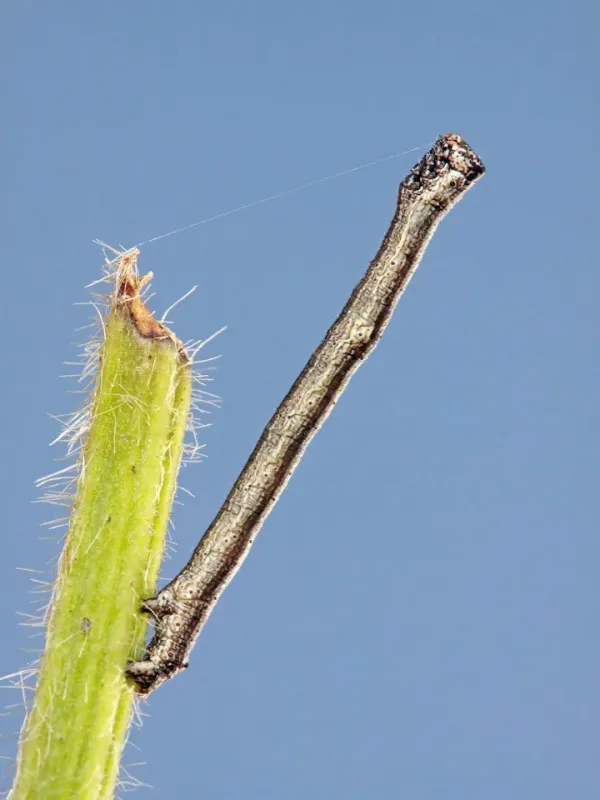
The larvae, or caterpillars, are characterized by their distinct movement pattern. Lacking several pairs of abdominal prolegs, they move by looping their bodies, which is a classic trait for this family of Lepidoptera.
Adult moths are primarily nocturnal. Their wingspan and wing patterns can be quite complex, serving as an effective camouflage against predators while resting during the daytime.
Species identification within this genus is often challenging, as many Anacamptodes moths share very similar external morphologies, requiring expert anatomical examination.
Larvae often exhibit a twig-like appearance, showing shades of brown, gray, or green, which helps them hide in plain sight on the branches of their host plants.
What it damages
These pests target a wide variety of deciduous and coniferous trees. They can be particularly destructive in orchards and ornamental garden settings where they feed on foliage.
The damage is caused during the larval stage. Caterpillars consume leaves, and when populations are high, they can cause significant defoliation, stressing the host plant.
Heavy feeding reduces the plant's ability to photosynthesize, which can lead to stunted growth, reduced fruit production, and lowered vitality over successive seasons.
In young trees or saplings, the destruction of terminal buds and leaves can lead to distorted growth patterns and make the plants more susceptible to secondary diseases.
Large-scale outbreaks of Anacamptodes in forest environments can result in substantial losses of wood volume and growth increment, impacting overall forest health.
When it appears
The lifecycle typically consists of one or two generations per year, strongly influenced by regional climate and temperature patterns.
They overwinter primarily as pupae, usually residing in the soil or leaf litter beneath the host tree, which protects them from the harshest winter elements.
Adult emergence typically begins in the spring, coinciding with bud break and the initial flushing of new growth on trees, providing a food source for emerging larvae.
The larval activity peaks in late spring and early summer. This is when the majority of foliage consumption occurs and the caterpillars are most visible.
Once the larval development is complete, they enter the pupal stage, staying in the soil until the next generation emerges or until the following spring.
Signs of infestation
One of the most obvious signs of infestation is the presence of frass (caterpillar droppings) on leaves or the ground beneath the tree canopy.
Leaves showing irregular holes or completely stripped margins are clear indicators. Often, only the primary veins of the leaf remain after severe feeding.
Observing larvae is difficult due to their protective mimicry; they often freeze and resemble small twigs when disturbed or when predators are nearby.
Finding adult moths around exterior lights at night can be an indicator of an active population in the immediate vicinity and potential future egg-laying.
Yellowing of foliage or thinning of the canopy during the peak summer months, when other environmental factors are stable, often points to a larval infestation.
Control measures
For small infestations in gardens, physical removal of larvae or using targeted traps can be an effective way to manage the population manually.
Biological control using Bacillus thuringiensis (Bt) is highly recommended as it targets caterpillars specifically while leaving beneficial predatory insects unharmed.
In cases of severe infestation, systemic or contact insecticides may be necessary. It is crucial to choose products specifically approved for the affected crop.
Cultivating the soil around the base of trees during the autumn months can disrupt the overwintering pupae, significantly reducing the population for the following year.
Promoting a healthy environment for natural predators, such as parasitic wasps and predatory beetles, is a long-term strategy for maintaining pest populations below damaging levels.
Taxonomy
- Latin name
- Anacamptodes
- Order
- Lepidoptera (butterflies)
- Family
- Geometridae
- EPPO code
- ANCMSP
Discussion
No discussions yet — be the first.