
Fall cankerworm
Alsophila pometaria
Description
How to identify
The fall cankerworm (Alsophila pometaria) belongs to the Geometridae family, order Lepidoptera. This species exhibits distinct sexual dimorphism.
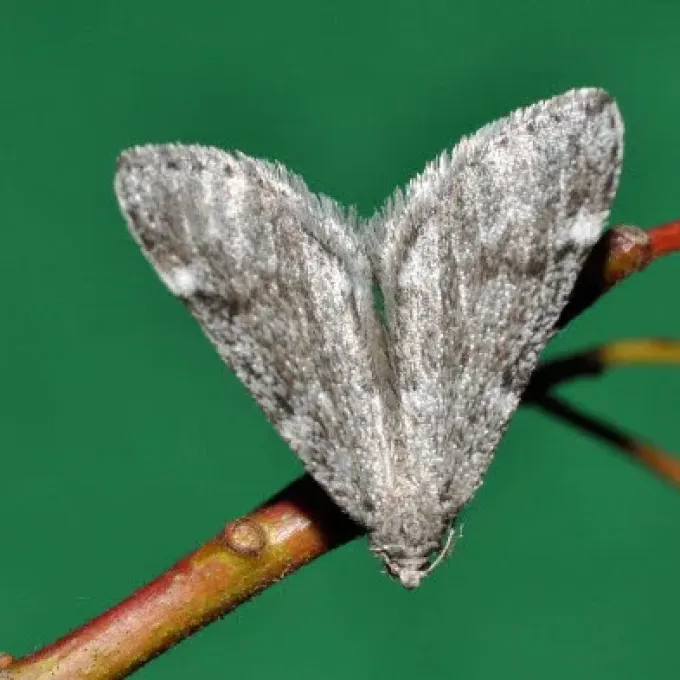
Adult males are winged, with a wingspan of about 35 mm, displaying grayish-brown wings with dark transverse lines. Females, however, are wingless and resemble small, spider-like insects.
Eggs are laid in clusters, often containing 100 to 200 units, arranged in neat, bark-colored masses on branches, making them difficult to spot.
The larvae, known as cankerworms, have three pairs of thoracic legs and only two pairs of abdominal prolegs, forcing them to move with a distinct "looping" motion.
Caterpillar coloration ranges from light green to dark brown or black, usually characterized by pale longitudinal stripes along the sides and a dark head capsule.
What it damages
This pest is a generalist defoliator, feeding on a wide variety of deciduous tree species, both in forest environments and orchards.
Primary hosts include apple, pear, cherry, and plum trees, alongside common forest trees like oak, linden, and maple.
The damage is most severe in early spring when larvae emerge and feed on newly developing buds, flowers, and tender young foliage.
High infestation levels can lead to complete defoliation, severely stressing the tree and reducing its capacity to produce energy for the upcoming seasons.
Repeated defoliation over several years can weaken the tree significantly, increasing its susceptibility to secondary diseases and environmental stressors.
When it appears
Adult moths are active in late autumn, typically appearing after the first frost, which is a key diagnostic feature of this species.
Wingless females crawl up tree trunks to deposit eggs in crevices, where they remain dormant throughout the winter months.
Larval emergence occurs in early spring, coinciding perfectly with the bud-break stage of host trees, ensuring an immediate food supply.
Caterpillars feed for approximately 30 to 40 days, after which they drop to the ground to pupate within the leaf litter and soil.
The fall cankerworm completes only one generation per year, making late autumn and early spring critical windows for effective pest management.
Signs of infestation
Early spring signs of infestation include tiny, irregular holes in leaves, which progressively expand as the larvae grow larger.
- Leaves that appear skeletonized or tattered.
- Silk webbing that binds leaves together in small clusters.
- Visible presence of small, looping caterpillars when branches are shaken.
- Presence of frass (droppings) on leaves or the ground beneath the tree canopy.
In late autumn, the main sign is the presence of wingless females crawling up trunks during evening hours to lay their eggs.
Control measures
Mechanical control using sticky bands applied to tree trunks in October is highly effective, as it prevents wingless females from reaching the canopy.
Chemical applications of insecticides are recommended during the early larval stages if monitoring reveals populations exceeding threshold levels.
Biological control agents, such as Bacillus thuringiensis, offer a selective way to manage larvae while minimizing impact on beneficial insects.
Encouraging natural predators, including birds and parasitic wasps, plays a vital role in keeping fall cankerworm populations in balance.
Maintaining healthy orchard conditions and tilling soil under the canopy can disrupt the pupal stage, reducing survival rates of the next generation.
Taxonomy
- Latin name
- Alsophila pometaria
- Order
- Lepidoptera (butterflies)
- Family
- Geometridae
- EPPO code
- ALSOPO
Discussion
No discussions yet — be the first.