
Mottled Beauty
Alcis repandata
Description
How to identify
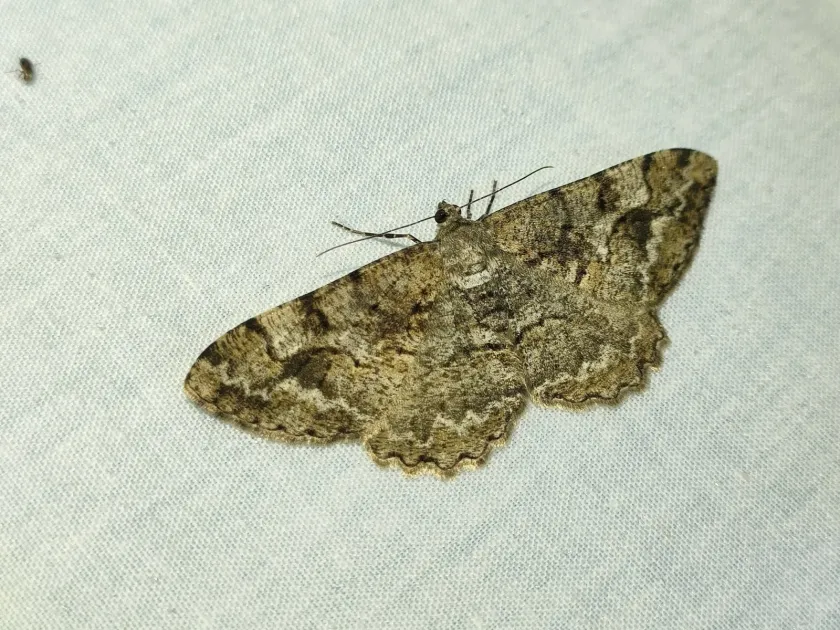
The adult Mottled Beauty moth has a wingspan ranging from 40 to 45 millimeters. Its wings exhibit a complex pattern of grey, brown, and ochre shades, often with wavy dark lines that provide excellent camouflage against tree bark.
The larva is a typical looper or measuring worm, reaching up to 40 millimeters in length. Its color is generally brown or greyish-brown, matching the twigs and branches of host plants perfectly, making it hard to spot during the day.
The pupa is dark, shiny, and usually hidden in the soil or in crevices of the tree bark. This stage is responsible for the insect's overwintering, allowing it to survive low winter temperatures and emerge in the following season.
Scientifically known as Alcis repandata, this species belongs to the family Geometridae within the order Lepidoptera. It is a common insect found in temperate forests, parks, and gardens throughout Europe and parts of Asia.
The life cycle includes complete metamorphosis: egg, larva, pupa, and adult. The species typically produces one generation per year, although developmental timing can vary depending on local climate conditions and available food sources.
What it damages
The larvae are polyphagous, feeding on a wide variety of deciduous trees and shrubs. Common host plants include willow, birch, alder, hawthorn, and sometimes fruit trees in managed orchards.
Caterpillars feed primarily on the leaves, starting from the edges or creating holes in the leaf blades. In cases of high infestation, they can cause significant defoliation, leaving only the primary veins of the leaves intact.
Severe defoliation stresses the host tree, leading to reduced photosynthesis and weakened overall vigor. This makes the trees less capable of producing the necessary reserves for winter dormancy and successful spring regrowth.
Weakened trees are significantly more susceptible to secondary damage from other pathogens, including wood-boring insects and various fungal infections that capitalize on the reduced defensive capabilities of the tree.
In forestry and nursery settings, the damage caused by Alcis repandata can result in stunted growth and diminished commercial value of the timber or nursery stock, necessitating careful monitoring and intervention.
When it appears
Adult moths are typically active during the summer months, primarily between June and July. They are nocturnal and are frequently attracted to artificial light sources during this period.
Larvae appear in late summer and continue their feeding activity into the autumn. They accumulate energy stores during this phase to support their development and subsequent pupation before the onset of winter.
The winter period is spent in the pupal stage, securely tucked away in sheltered locations. Adult emergence in the following year is timed with the warmer weather, allowing for the start of a new life cycle.
Environmental factors, particularly temperature and rainfall patterns, play a crucial role in determining the survival rates of larvae. Warm, mild autumns can extend the feeding period, leading to more pronounced damage.
Monitoring for the presence of the pest is best performed using light traps to track the population density of adults. Understanding the timing of the flight helps in planning control measures effectively.
Control measures
Cultural control involves maintaining healthy tree growth through proper irrigation and fertilization, which enhances the tree's natural resilience. Removing debris from the base of the tree can also eliminate pupation sites.
Biological control is highly recommended, utilizing microbial insecticides containing Bacillus thuringiensis. These products are highly specific to lepidopteran larvae and do not harm beneficial insects or pollinators.
Chemical intervention should be reserved for severe outbreaks where thresholds are exceeded. Use selective insecticides that have minimal impact on non-target species and follow all label instructions for environmental safety.
- Encouraging natural predators such as birds and parasitoid wasps.
- Installing pheromone or light traps to reduce the population of mating adults.
- Pruning infested branches in small-scale garden settings.
An integrated pest management (IPM) strategy is the most sustainable approach. By combining habitat management, biological solutions, and regular monitoring, the impact of the Mottled Beauty can be kept below the economic threshold.
Taxonomy
- Latin name
- Alcis repandata
- Order
- Lepidoptera (butterflies)
- Family
- Geometridae
- EPPO code
- ALKSRE
Discussion
No discussions yet — be the first.