
Thistle flat-body moth
Agonopterix subpropinquella
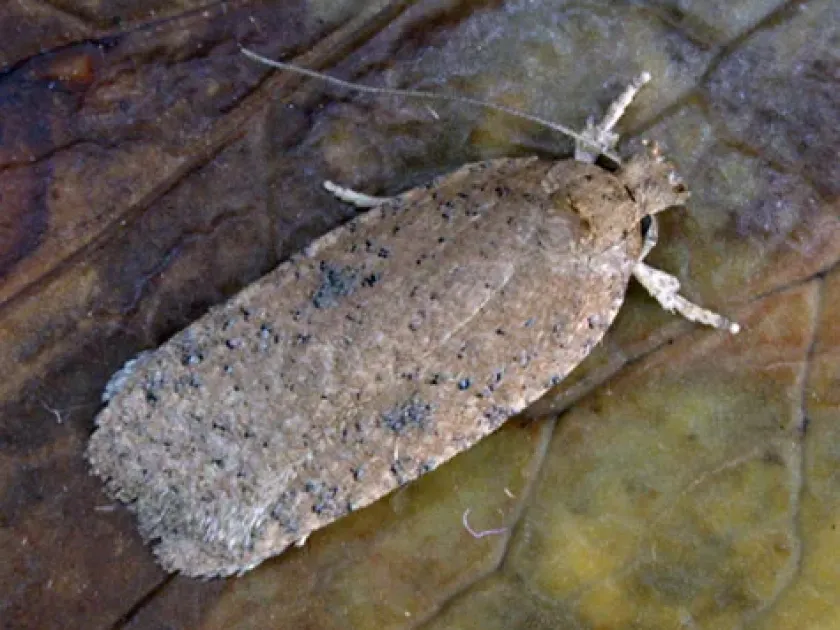
Description
How to identify
The thistle flat-body moth, Agonopterix subpropinquella, is a small lepidopteran belonging to the family Depressariidae. These moths are characterized by their flattened, elongated body shape that allows them to hide effectively in narrow crevices.
Adult moths possess wings with a span ranging from 15 to 20 millimeters. Their coloration is typically a mix of brownish-grey shades, which provides excellent camouflage against the dead stems and leaves of their host plants.
The larvae are slender and typically exhibit a pale green or yellowish coloration, which helps them blend in with the leaf surface or the structures of the host flower heads during their feeding stage.
Taxonomically, the species is classified within the diverse superfamily Gelechioidea. It maintains a strictly specialized relationship with plants of the Asteraceae family, particularly thistles.
The life cycle is univoltine in most temperate regions. Adults overwinter in sheltered locations, emerging in the spring to mate and lay eggs on the young foliage of host plants.
What it damages
Agonopterix subpropinquella primarily targets plants in the Carduus and related genera within the Asteraceae family. It is considered a specialist herbivore of thistles.
Larvae cause damage by feeding on young leaves, often webbing them together into protective shelters. This feeding behavior reduces the plant's photosynthetic capacity and weakens the host.
During the blooming season, the larvae penetrate the flower heads. By feeding on the developing seeds and floral parts, they significantly hinder the reproductive success of the weed plant.
While the aesthetic damage to wild plants is obvious, the impact on managed crops is minimal. In some cases, the moth is even studied for its potential in the biological control of invasive weeds.
Heavy infestations can lead to significant foliage loss in local populations of thistles, though this rarely poses a threat to surrounding agricultural systems.
Signs of infestation
The most visible sign of infestation is the presence of webbed, curled leaves on thistle plants. These webs act as shelters for the developing larvae during the day.
Frass (larval excrement) trapped within the webbed leaves is a definitive indicator of current feeding activity. It is often concentrated near the central vein of the leaf.
Flower heads appearing stunted or tied together by silken strands indicate that the larvae have migrated to the reproductive structures of the plant to feed.
Small, irregular holes or 'window-pane' damage on the leaves, where the upper epidermis is left intact, indicate the early developmental stages of the larvae.
Observing the moths during twilight hours near thistle patches is a reliable sign of a local population, as they become active during this time to mate.
Control measures
Because the thistle flat-body moth is not a pest of commercial crops, specific chemical control measures are generally unnecessary and not recommended.
Mechanical weed management, specifically cutting or removing thistles before the larvae reach maturity and seed heads form, is the most effective way to keep the population in check.
Sanitation practices that involve clearing crop residues and weeds from field edges help destroy the overwintering sites of adult moths.
Natural biological control, including predation by spiders and parasitic wasps, usually keeps the moth populations within balanced ecological limits.
- Regular mowing of weeds on fallow land and field margins.
- Proper disposal of plant debris to eliminate hibernating sites.
- Monitoring the health of local weed populations to observe natural decline.
Taxonomy
- Latin name
- Agonopterix subpropinquella
- Order
- Lepidoptera (butterflies)
- Family
- Depressariidae
- EPPO code
- DEPRSU
Discussion
No discussions yet — be the first.