
Purple parsnip moth
Agonopterix purpurea
Description
How to identify
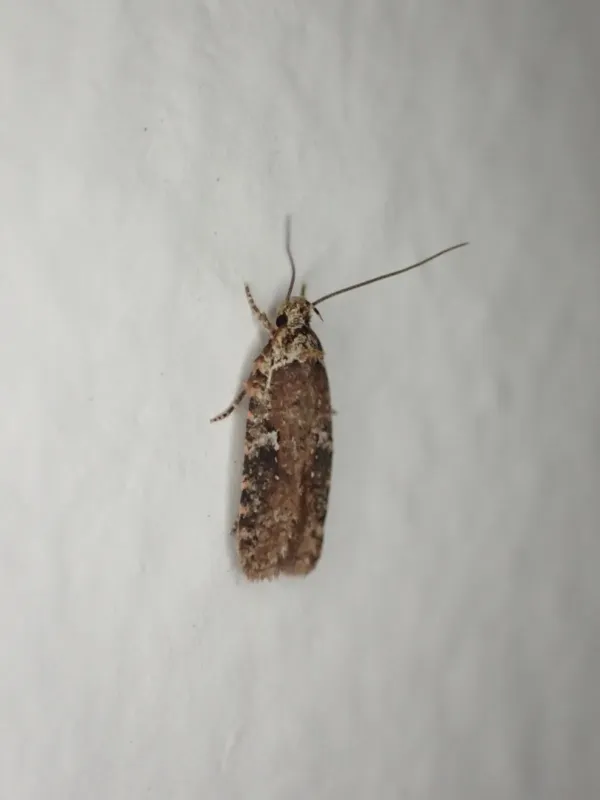
The purple parsnip moth (Agonopterix purpurea) belongs to the family Depressariidae within the order Lepidoptera. Adult moths typically have a wingspan of 16–20 mm.
The forewings of the adults display a complex pattern of purplish-brown and dark markings, which provides effective camouflage against dried plant materials.
Larvae are characterized by a cylindrical body shape and a distinct head capsule. Their coloration often ranges from pale green to brownish, adapting to their host.
These moths are primarily nocturnal and are rarely seen during the day unless disturbed, preferring to hide in secluded areas of the host plant.
Their life cycle consists of the egg, five larval instars, the pupal stage, and the adult moth, which is capable of long-distance dispersal in search of hosts.
What it damages
The species primarily affects plants belonging to the Apiaceae family, including carrots, parsley, parsnips, and wild species such as hemlock or hogweed.
The larvae are known for their leaf-rolling behavior, where they feed on the internal tissues of the leaves, eventually skeletonizing the leaf structure.
In addition to foliage, larvae often target flower heads, feeding on developing seeds and florets, which can severely impact seed production and yield.
Large infestations can result in stunted plant growth and overall reduced vitality, making the crops more susceptible to environmental stressors and diseases.
The economic impact is most significant in areas where commercial crops are grown near unmanaged field margins or wild patches of Apiaceae.
When it appears
Adult moths of this species overwinter in sheltered locations, such as leaf litter, bark crevices, or protected spaces in outbuildings or field sheds.
Spring activity typically commences as temperatures rise, with mating and oviposition taking place on host plants during the late spring months.
The larval stage is most prevalent during mid-summer, coinciding with the peak vegetative growth and flowering phases of most carrot and parsnip crops.
Multiple stages of development may overlap, but the most intense feeding period is generally observed during the warmer periods of the growing season.
As the season approaches autumn, the final generation of adults emerges, feeds briefly, and then searches for wintering sites to complete the cycle.
Signs of infestation
Infestation is first signaled by the presence of leaves being pulled together and held in place by fine silken threads produced by the larvae.
Dark fecal pellets, or frass, are often found deposited on the leaves or within the spun-up leaf nests, serving as a clear indicator of larval presence.
Flower heads showing damage often exhibit stunted development or wilting, with webs clearly visible between the individual flower stalks of the umbel.
As larvae mature, the damaged leaf tissue turns yellow or brown, and in severe cases, entire tips of plants may die back due to intensive feeding activity.
- silk webbing between leaves;
- leaf skeletonization;
- accumulation of larval frass on leaves;
- wilting of flower clusters.
Control measures
Cultural control is essential, including the removal of wild Apiaceae weeds from around the edges of crop fields to reduce the pest's reservoir.
Crop rotation helps break the life cycle by ensuring that host plants are not available in the same location for consecutive growing seasons.
Deep autumn plowing of fields is recommended to disturb pupation sites and expose overwintering stages to natural predators and frost conditions.
Regular field scouting should be conducted during the growing season to identify early signs of webbing before larval populations expand significantly.
When necessary, targeted insecticide applications should be timed to coincide with the hatching of the first larval generation to maximize effectiveness.
Taxonomy
- Latin name
- Agonopterix purpurea
- Order
- Lepidoptera (butterflies)
- Family
- Depressariidae
- EPPO code
- AGOXPU
Discussion
No discussions yet — be the first.